
Don't Wait for the Break: How to Conduct Preventive Maintenance
Why Waiting for Equipment Failure Is Costing You More Than You Think
To conduct preventive maintenance effectively, you need a structured approach that moves your team from reactive firefighting to proactive reliability. Here's what that process looks like:
The Core Steps to Conduct Preventive Maintenance:
Create a complete asset inventory — List all equipment with details on age, criticality, and failure history
Prioritize based on risk — Focus on assets where failure impacts safety, production, or compliance
Set maintenance triggers — Use time intervals, usage meters, or condition thresholds from OEM manuals
Build a digital schedule — Assign tasks with clear accountability and recurring deadlines
Execute and document — Capture work completion, parts used, and observations in real time
Review and refine — Adjust intervals based on actual performance data and technician feedback
Right now, more than 55% of maintenance resources in the average facility are still reactive. That means most teams are waiting for something to break before they act.
The problem? Unplanned downtime costs manufacturers an average of $125,000 per hour. When a critical machine goes down mid-shift, you're not just paying for the repair—you're losing production capacity, scrambling for overtime labor, and delaying customer orders.
Preventive maintenance flips that equation. Instead of reacting to failures, you schedule inspections, lubrication, calibration, and part replacements before problems happen. The U.S. Department of Energy estimates this approach can save facilities up to 18% in maintenance costs compared to reactive programs. Even better, planned maintenance programs have been shown to deliver a 10x return on investment and reduce breakdowns by 70-75%.
But here's the catch: preventive maintenance only works when your team can actually execute it. If your schedules live in spreadsheets, your technicians log work on paper, and your data gets entered days later—you're still flying blind. Real-time visibility beats real-late every time.
Why Proactive Maintenance Beats Firefighting
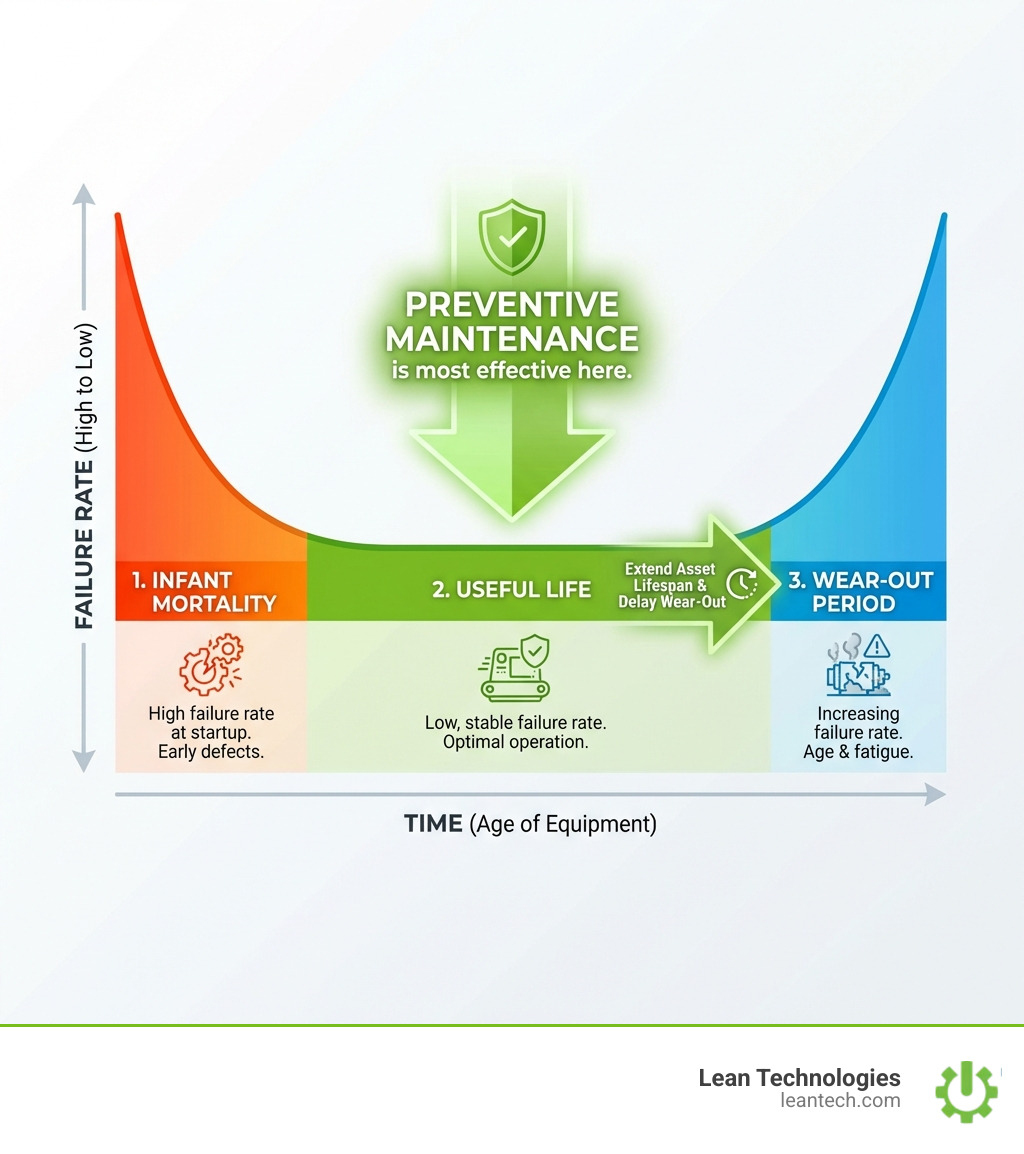
If you’ve ever worked on a shop floor where the culture is "if it ain't broke, don't fix it," you know the stress of the 2:00 AM emergency call. Firefighting isn't just exhausting; it's expensive. When you shift to a proactive model, you aren't just protecting the machines—you're protecting your margins.

According to the U.S. Department of Energy, preventive maintenance cost savings range from 12% to 18% over reactive programs. But the benefits go beyond the bottom line:
Extended Asset Lifespan: Regular oil changes, filter replacements, and belt adjustments ensure your equipment reaches its full design life.
Safety Compliance: Well-maintained machines are safer. You reduce the risk of catastrophic failures that lead to workplace injuries.
Production Capacity: When maintenance is planned, it happens during scheduled windows, not in the middle of a rush order. This stabilizes your production capacity.
Energy Efficiency: A machine that is struggling with friction or clogged vents pulls more power. Proactive care keeps energy consumption low.
If you’re looking for a way to manage these tasks without the headache of paper logs, check out more info about maintenance solutions to see how digital tools can help.
The Financial Impact of Downtime
Let’s talk numbers. Organizations that lean heavily into preventive and predictive maintenance see 52.7% less unplanned downtime. When you consider that manufacturers face an average downtime cost of $125,000 per hour, the ROI of a PM program becomes undeniable. You aren't just saving on repair parts; you're eliminating labor waste where operators stand around waiting for a machine to get back online.
Improving Shop Floor Safety
Safety isn't just about goggles and earplugs; it’s about mechanical integrity. A seized bearing or a frayed belt can lead to more than just a broken machine—it can lead to an incident. By conducting regular safety inspections, you mitigate risk and simplify compliance audits. This proactive stance boosts technician morale because they aren't constantly working in high-stress, "emergency" environments. You can find more info about safety modules to help track these critical safety checks.
The Core Strategies: From Time-Based to Predictive
Not every machine needs the same level of attention. To conduct preventive maintenance efficiently, you have to choose the right strategy for the right asset.
Strategy Trigger Best For Pros Cons Time-Based (TBM) Calendar (e.g., Monthly) HVAC, lighting, safety gear Simple to schedule Potential for over-maintenance Usage-Based (UBM) Meters (e.g., 500 hours) Forklifts, CNC spindles Aligns with actual wear Requires consistent meter tracking Condition-Based (CBM) Sensor data (e.g., Vibration) Critical motors, pumps Highly efficient; maintenance only when needed Higher upfront tech cost
Selecting the right strategy is about resource allocation. You don't need a vibration sensor on a manual drill press, but you definitely want one on your primary production line. For those ready to level up, there are practical applications of predictive maintenance that use AI and data analytics to forecast failures weeks in advance.
Time-Based and Usage-Based Approaches
Most PM programs start with Time-Based Maintenance (TBM). This is your "change the filter every 90 days" approach. It’s easy to understand and schedule. Usage-Based Maintenance (UBM) is more precise. It triggers work orders based on run-time, cycle counts, or mileage. Think of it like an oil change for your car—you do it every 5,000 miles, not necessarily every six months.
Advanced Condition-Based and Predictive Maintenance
Condition-based maintenance (CBM) uses real-time alerts. If a motor starts vibrating outside of normal parameters or a thermal imaging scan shows an electrical panel is overheating, the system triggers a check. Predictive Maintenance (PdM) goes a step further, using historical data to identify patterns that precede a failure. While these require more technology, they offer the highest ROI by ensuring maintenance happens exactly when it's most beneficial.
Step-by-Step: How to Conduct Preventive Maintenance Effectively
Implementing a PM program doesn't have to be a multi-year project. It’s about building a process that ensures accountability and data integrity.
Step 1: Inventory and Prioritize Critical Assets
You can't maintain what you haven't tracked. Start by creating a master equipment list. Once you have your inventory, conduct a criticality assessment. Ask:
What is the production impact if this fails?
Are there safety or environmental risks?
How often does it fail, and how long does it take to get parts?
Rank your assets. Focus your initial PM efforts on the "A" items—the ones that would shut the whole plant down if they broke.
Step 2: Use OEM Manuals to Conduct Preventive Maintenance Tasks
Don't reinvent the wheel. Your Original Equipment Manufacturer (OEM) manuals are the gold standard. They provide the exact specifications for lubrication types, calibration settings, and part replacement intervals. Use these to build your inspection checklists. If the manual says "grease every 200 hours," that becomes your usage-based trigger.
Step 3: Build a Digital Schedule and Assign Accountability
A schedule is just a wish list if nobody is assigned to it. Use a digital tool to generate recurring work orders.
Fixed Schedules: Tasks happen on the same day every month.
Floating Schedules: The next due date is calculated from when the last task was completed.
Standardize your procedures with digital SOPs so that every technician performs the task the same way, every time. This ensures that the data you collect is consistent and useful.
Identifying Which Assets Need a PM Plan
Not every asset belongs in a preventive maintenance program. Some items are better left to a "run-to-failure" strategy because they are cheap to replace and have zero impact on safety or production.
Assets that must have a PM plan include:
Critical Equipment: Machines that are bottlenecks in your process.
Hazardous Applications: Anything involving high pressure, high voltage, or chemicals.
Assets with Predictable Failure: Components like belts or filters that wear out at a known rate.
How to Conduct Preventive Maintenance Without Over-Servicing
One of the biggest traps in maintenance is over-maintenance. If you're replacing parts that still have 50% of their life left, you're throwing money away. To avoid this, use feedback loops. If your technicians report that the filters they're changing every month are always clean, extend the interval to two months. Use your data to find the "sweet spot" between reliability and cost.
Digitizing the Shop Floor with Thrive
At Lean Technologies, we built Thrive because we saw too many manufacturers struggling with paper binders and "Excel-based" maintenance. Thrive is a digital toolbox designed for the shop floor. It’s not an ERP that takes 18 months to set up; it’s a flexible platform that helps your team log issues, track actions, and drive continuous improvement in real time.
Moving Beyond Spreadsheets and Paper
Paper logs are where data goes to die. If a technician notices a small leak but only writes it on a paper form that sits in a bin until Friday, the machine might fail by Wednesday. Thrive provides mobile accessibility, allowing operators to log issues the second they see them. This creates a digital audit trail that is essential for compliance and safety.
Closing the Loop on Continuous Improvement
Real-time visibility is the key to lean manufacturing. When your maintenance data is structured and entered at the source, you can perform actual root cause analysis. Thrive helps you close the loop on continuous improvement by connecting your maintenance metrics to broader business goals. You can track KPIs like Mean Time Between Failures (MTBF) and Planned Maintenance Percentage (PMP) to see exactly how your PM program is boosting your bottom line.
Frequently Asked Questions about Preventive Maintenance
Will preventive maintenance eliminate all equipment failures?
No. No strategy can eliminate 100% of failures. Random events like power surges or hidden material defects can still cause issues. However, a solid PM program drastically reduces the risk of failure and ensures that when things do break, you have the parts and plans in place to fix them fast.
How do I determine the right maintenance interval?
Start with the OEM specifications. Then, layer in your historical data. If you operate in a harsh environment (high heat or dust), you may need to conduct maintenance more frequently than the manufacturer suggests. Talk to your operators—they usually know the "sounds" of a machine that's about to need attention.
Is preventive maintenance cost-effective for small shops?
Absolutely. In fact, it’s often more critical for small shops. A large plant might have three CNC machines, so if one goes down, they can shift production. A small shop might only have one. For a small business, a single breakdown can be a catastrophic financial event. PM provides budget predictability.
In Summary
If you want to conduct preventive maintenance that actually works, you have to stop managing your shop floor through spreadsheets and wishful thinking. Transitioning from reactive firefighting to a structured, digital preventive maintenance program is the fastest way to protect your margins and ensure equipment uptime.
By following a clear process of inventory, prioritization, and digital scheduling, you empower your team to own the equipment they run. You move from a culture of "fixing things" to a culture of "reliability."
What to do next:
Walk your shop floor and identify your top 3 most critical assets.
Dig up the OEM manuals for those machines.
Let your team run lean—with real-time visibility and fewer workarounds by digitizing those maintenance tasks today.