
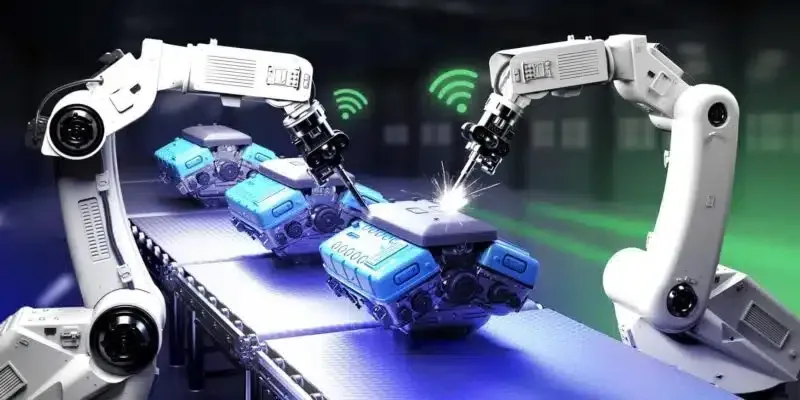
Digital Lean For Small Manufacturers: How To Compete In The Industry 4.0 Era
Small manufacturers often feel the pressure of doing more with less.
Limited resources, smaller teams, and rising competition from larger, digitally equipped companies create an environment where every wasted minute or defective product hurts more than it would in a larger operation.
At the same time, Industry 4.0 technologies—real-time data, connected machines, cloud platforms, and mobile tools—are reshaping how manufacturers operate. This raises the question: how can small manufacturers realistically adopt digital lean without breaking the bank? The answer lies in starting lean itself.
Digital lean doesn’t require massive investments in complex systems. It requires the same focus on waste elimination and value creation as traditional lean, but with the added power of modern digital tools. For smaller operations, digital lean is not just a competitive advantage—it’s a survival strategy.
What Is Digital Lean?
Lean manufacturing has always been about eliminating waste, improving flow, and empowering teams to create value efficiently. Digital lean is the natural evolution of those principles in a world where data and connectivity drive competitive advantage.
Instead of relying solely on manual audits, clipboards, or spreadsheets, digital lean leverages technology like IoT sensors, cloud-based dashboards, mobile apps, and predictive analytics to bring visibility in real time.
For small manufacturers, this means a shift from reactive firefighting to proactive problem-solving. Digital lean allows a five-person shop to operate with the kind of efficiency and agility once reserved for much larger organizations.
It transforms gut-based decisions into data-driven insights and ensures that small teams are spending their energy where it matters most.
Why Small Manufacturers Need Digital Lean Now
The challenges small manufacturers face are different from those of global corporations. Cash flow is tighter, labor is scarcer, and every investment must generate real, measurable returns. Traditional lean practices still apply—5S, kaizen, visual management—but on their own, they can plateau. Without the speed and visibility that digital tools bring, small operations risk falling behind competitors who can make faster, smarter decisions.
Digital lean creates immediate impact by reducing downtime, improving quality, and speeding up reporting. Imagine a shop where every machine’s performance can be tracked on a phone, or where quality data is instantly visible to the team rather than hidden in end-of-week reports.
That kind of responsiveness not only improves efficiency but also strengthens customer trust. When a small manufacturer can consistently deliver on time, with fewer defects, customers notice—and loyalty follows.
The ROI of Digital Lean for Small Shops
Many small manufacturers hesitate to invest in digital tools because of cost concerns. But the ROI (return on investment) is often clearer and faster than expected.
Consider a small fabrication shop with ten machines. If each machine averages $100 per hour in production value, then even one hour of unplanned downtime per week costs $1,000. Across the year, that’s more than $50,000 lost.
By implementing a basic digital monitoring system that flags maintenance issues before they cause breakdowns, the shop might prevent even half of those downtime hours.
That’s $25,000 saved annually. If the system costs $10,000 to implement, the ROI is achieved in less than six months. Beyond that, the benefits compound: fewer rush jobs, less overtime, and happier customers.
The math doesn’t need to be complicated. Small manufacturers can run straightforward calculations that show how much waste costs them today, then compare that to the projected savings from digital lean. The numbers almost always favor making the shift.
How To Get Started With Digital Lean
Step 1: Start Small and Focused
The essence of lean is to begin with a manageable scope. Don’t try to digitize the entire shop floor at once. Pick one line, one process, or even one machine as your pilot. The goal is to generate proof of value quickly and use that momentum to expand.
Step 2: Establish Clear Metrics
Before you roll out any digital tool, decide how you will measure success. Are you aiming to reduce downtime? Improve first-pass yield? Shorten changeover times? By creating a baseline of current performance, you’ll be able to quantify improvements and demonstrate ROI convincingly.
Step 3: Involve the Team
Digital lean is not about replacing people with technology. It’s about giving teams better tools to do their jobs. Employees should be involved in designing and testing digital lean solutions. When operators can see machine performance data in real time, or when supervisors can track work orders on a mobile app, they become active participants in the process rather than passive recipients of change.
Step 4: Scale Thoughtfully
Once the pilot proves successful, expand carefully. What worked in one process may need adjustments in another. Document lessons learned, standardize the best practices, and then bring other teams on board. Scaling digital lean in small steps ensures the improvements are sustainable rather than overwhelming.
Common Barriers (And How To Overcome Them)
Small manufacturers often cite three barriers to digital lean: cost, complexity, and culture. Cost concerns are valid, but as shown earlier, even modest investments can deliver substantial ROI.
Complexity can be managed by starting small and choosing tools designed for usability, not just enterprise-scale deployments. Culture is perhaps the hardest barrier—resistance to change is natural. The way to overcome it is by proving value early. When the team sees firsthand that digital lean makes their jobs easier rather than harder, resistance fades quickly.
Digital Lean In Action: A Small Manufacturer Example
Imagine a family-owned metal shop with twenty employees. They struggle with unexpected machine failures that delay orders and frustrate customers. By implementing a simple digital monitoring system, they begin tracking vibration and temperature data from their key machines. Within weeks, the system identifies patterns that predict when a spindle is about to fail. Maintenance can now act before breakdowns occur.
The result? Downtime drops by 40 percent, customer complaints decline, and delivery reliability improves. The investment is recouped in the first year, and the shop gains a competitive edge against larger firms that are slower to adapt. This example shows that digital lean isn’t about flashy technology; it’s about solving real problems in practical ways.
FAQs About Digital Lean For Small Manufacturers
How expensive is digital lean to implement?
It depends on the scope, but small manufacturers can start with affordable tools. Cloud-based dashboards, mobile apps, or even IoT starter kits can be implemented for a few thousand dollars. The ROI often pays back the investment in months rather than years.
Do small teams really have the time to manage digital tools?
Yes—if the tools are chosen wisely. Digital lean should simplify processes, not add complexity. The right systems reduce manual reporting, eliminate duplicate work, and free up time for value-added tasks.
Will digital lean replace workers?
No. The goal is not automation for its own sake but augmentation. Digital lean gives employees better visibility, more accurate data, and faster feedback. Instead of firefighting, workers focus on problem-solving and continuous improvement.
Can digital lean work in job shops or custom manufacturing?
Absolutely. While digital lean is often associated with high-volume production, its principles apply to any environment where waste exists. In custom shops, digital tools can streamline scheduling, track order progress, and improve communication with customers.
Conclusion
For small manufacturers, digital lean is no longer optional.
Competing in the Industry 4.0 era requires speed, visibility, and adaptability. By starting small, focusing on measurable ROI, and involving teams in the process, even the leanest operation can unlock the power of digital tools. The beauty of digital lean is that it doesn’t ask small manufacturers to become something they’re not—it allows them to do what they already do best, only faster, smarter, and more profitably.