
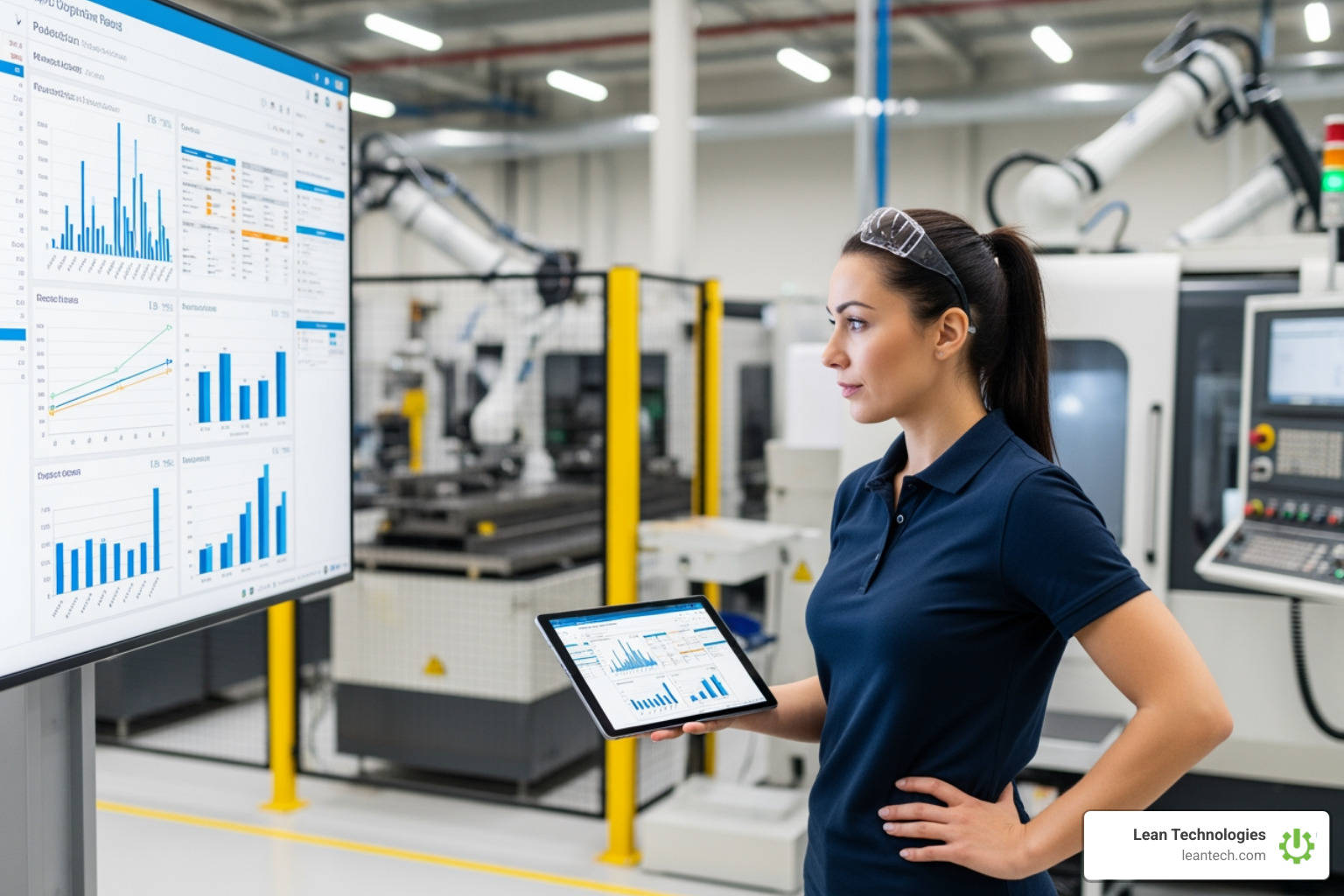
See It As It Happens: Real-Time Production Monitoring for Peak Performance
Stop Flying Blind on the Shop Floor
Real time production monitoring is the ability to see what's happening on your shop floor as it happens—not hours or shifts later. It means tracking machine status, downtime reasons, quality issues, and production counts in the moment, so your team can fix problems before they snowball.
If you're looking to implement real-time production monitoring, here's what you need to know:
What it is: A system that captures production data at the source (via operator input on tablets, mobile devices, or desktop terminals) and displays it instantly on dashboards, shop floor screens, or mobile apps
Why it matters: You can respond to issues immediately instead of finding them at shift end—turning reactive firefighting into proactive problem-solving
How it works: Operators log events like downtime reasons, scrap counts, and production milestones as they happen; supervisors and managers see live updates and can intervene fast
Key benefits: Reduced downtime, faster decision-making, better accountability, improved OEE, and a team that actually owns the data
Getting started: Pick a flexible platform that doesn't require replacing your ERP or MES, train your team to log data at the source, and start with one line or cell before scaling
Walk into most plants at shift change and ask, "Are we winning or losing today?"
You'll get blank stares. Or worse: "I'll check the paper logs and let you know tomorrow."
That's the problem.
Most manufacturers are still flying blind. Production data lives on clipboards, dry-erase boards, or in spreadsheets that get updated after the shift ends. By the time you see the numbers, the problems are already baked in. The jam that cost you 40 minutes? Already ancient history. The quality issue that scrapped 200 parts? Too late to fix the root cause.
You're not managing production. You're writing its obituary.
Manual data entry doesn't just slow you down—it kills accuracy. Operators forget details. Supervisors round numbers. Managers make decisions based on guesses and finger-pointing instead of facts. The execution gap between what your ERP says should happen and what actually happens on the floor grows wider every day.
Real-time production monitoring flips the script. Instead of reacting to old news, you see problems as they unfold. Downtime alerts hit your phone in seconds. Operators log issues on a tablet right at the machine. Supervisors can jump in before a 5-minute stoppage becomes a 2-hour disaster.
It's not about replacing your ERP or adding a bunch of sensors. It's about capturing the truth at the source and making it visible to the people who can actually do something about it.
Real-time beats real-late. Every single time.
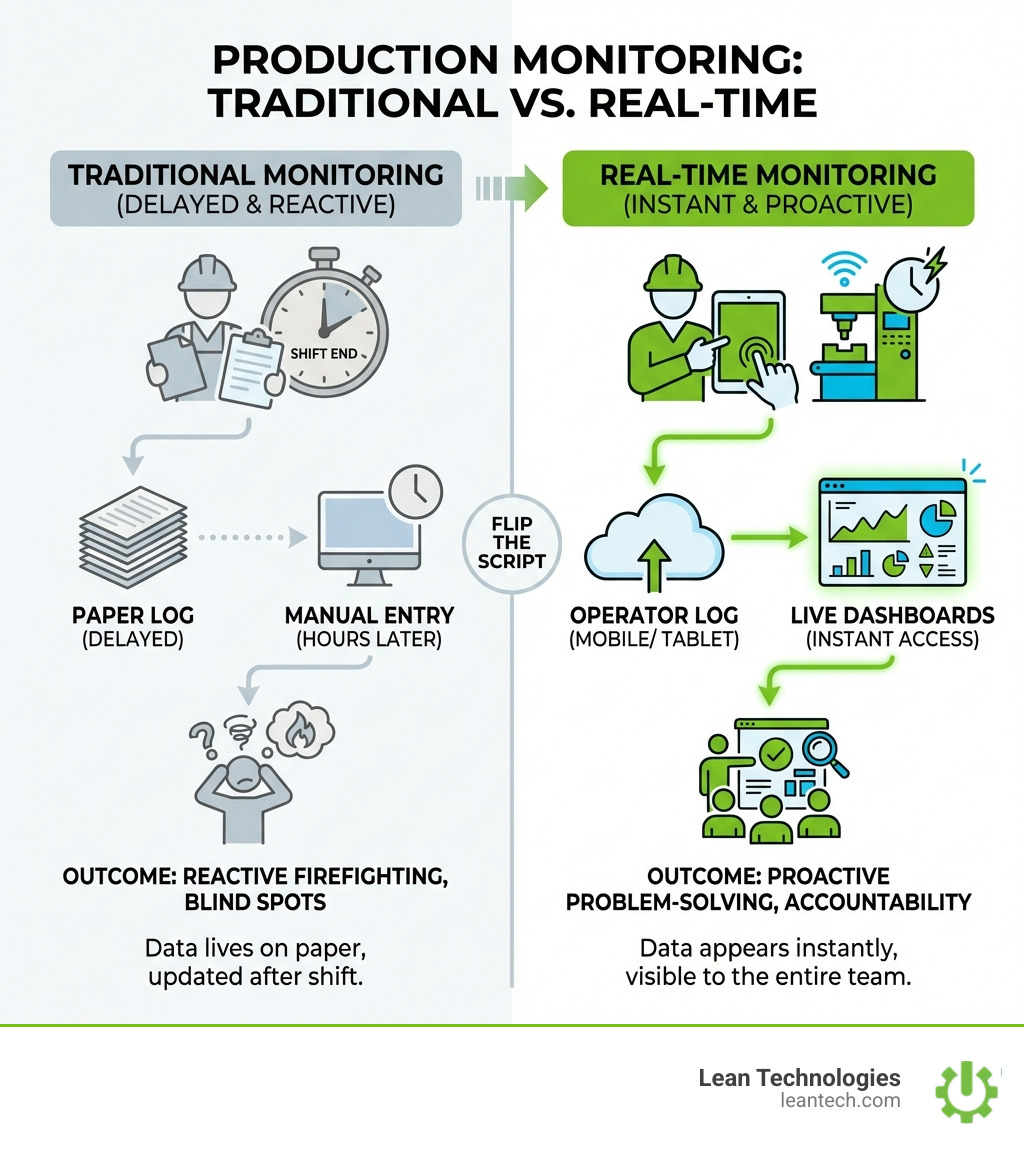
What is real-time production monitoring and why does it matter?
At its core, real-time production monitoring is the ability to collect and track data and information as it’s happening, directly from your shop floor. It's about having your finger on the pulse of your operations, continuously measuring and tracking production data for proactive decision-making.
Why does this matter so much for modern manufacturing? Because the world moves fast, and waiting for yesterday's news to make today's decisions is a recipe for disaster. This immediate visibility allows managers and employees to be up-to-date with what’s happening on the shop floor as it happens, instead of analyzing information hours, days, or even weeks after the fact.
This shift from reactive to proactive management is a game-changer. It eliminates guesswork and empowers your teams with live, actionable information. In a nutshell, real-time beats real-late, giving you the agility to adapt, optimize, and maintain peak performance.
Why "Real-Late" Data Is Killing Your Shop Floor Performance
Let's be honest, we've all been there. The clipboard, the whiteboard, the spreadsheet filled out at the end of the shift. These traditional methods of production monitoring are time-honored, but they're also time-consuming and prone to error. Most manufacturers still manually collect data from their shop floors, a process that is not only time-intensive but also leads to delayed and inaccurate data.
This creates a massive "execution gap"—a chasm between what your ERP system plans and what actually transpires on the shop floor. Your sophisticated ERP might have a perfect schedule, but if your operators are manually logging downtime reasons an hour after the fact, that plan is already off the rails. The disconnect between these systems and the reality on the floor leads to a distorted image of production.
The consequences? Delayed decisions, massive inefficiencies, unexpected downtime, and production losses. Without accurate, real-time production monitoring, hidden losses accumulate, and these aren't small change. Controllable downtime alone can cost manufacturers up to 30% of their margin. When data is late or inaccurate, it's easy for a blame culture to take root, as teams spend more time pointing fingers than solving problems.
The Key Benefits of Instant Visibility
Switching to real-time production monitoring isn't just about getting fancier reports; it's about fundamentally changing how your factory operates. The benefits ripple through every aspect of your business, turning challenges into opportunities.
Improved Efficiency: By tracking material consumption, specific events, and their timing, you can identify bottlenecks and streamline processes. This means less waste and more output from your existing resources.
Increased Productivity: Companies typically see a 10-15% improvement in productivity within the first six months of implementing rigorous OEE monitoring. When operators and supervisors have immediate feedback, they can make adjustments on the fly, keeping production humming.
Reduced Downtime: This is a big one. Real-time production monitoring allows you to address production or maintenance issues before they become major problems. Imagine knowing about a machine slowdown the moment it starts, allowing maintenance to intervene proactively. This drastically cuts down on costly, unplanned stoppages.
Improved Quality Control: Instant feedback on rejects, scrap rates, and quality checks means you can catch deviations early. This leads to more consistent products and fewer costly reworks or customer complaints.
Data-Driven Decision-Making: Instead of relying on gut feelings, you'll have solid, accurate data to back up every decision. This empowers employees at all levels to make fast, effective business and operational choices, leading to better strategic management insights.
Higher Employee Engagement: When operators can see their performance against targets in real-time, it fosters a sense of ownership and accountability. They become active participants in problem-solving, rather than just cogs in the machine. Empowering operators to meet production goals by visualizing performance helps them identify and resolve production issues instantly.
For continuous improvement managers and lean coordinators, this isn't just a tool; it's the engine for progress. Learn more about how to drive your continuous improvement initiatives with structured data here: More info about Thrive CI.
The Core Components of an Effective Real-Time Production Monitoring System
An effective real-time production monitoring system doesn't need to be overly complex, but it does need to be smart about how it captures and presents data. The goal is to provide visibility and enable action, without overwhelming your team.
The cornerstone is data collection at the source. For systems like Thrive, this means operators logging events directly via mobile devices, tablets, or desktop terminals. This eliminates manual logs and ensures data accuracy. While some systems integrate with machine sensors or HMIs for automated data, the power of operator input cannot be overstated, especially for manual processes or older, non-digital machines. Combining PLC data (machine state) with operator inputs (context) can provide the crucial "Why" behind production stops.
Once collected, the data needs to be presented clearly and immediately. Essential features include:
Live Dashboards: Customizable dashboards that visualize key performance indicators (KPIs) like OEE, machine status, and production efficiency in real-time.
Shop Floor TV Displays: Displaying real-time Availability, Performance, and Quality (OEE) on large screens directly on the shop floor keeps everyone informed and motivated, acting like a live scoreboard.
Mobile Access: Managers and supervisors can view overall enterprise or specific work center performance from any network-connected device, allowing for remote monitoring and quick response.
Automated Alerts and Notifications: The system should alert the right person at the right time when action needs to be taken. This can be for critical stops, quality deviations, or when production falls behind target.
What Data Should You Actually Track?
To make informed decisions, you need to track the right metrics. The gold standard for evaluating equipment efficiency is Overall Equipment Effectiveness (OEE), which breaks down into three critical components:
Availability: The percentage of time a machine is available to run compared to its planned operating time. This accounts for all stoppages and downtime events.
Performance: How fast the machine is running compared to its theoretical maximum speed. Are you getting the most out of your equipment?
Quality: The percentage of good parts produced versus the total parts started. This highlights scrap, rework, and defective products.
Beyond OEE, a robust system should track:
Cycle Times: Actual versus theoretical cycle times for each part or process, helping to identify inefficiencies.
Downtime Reasons: Detailed logging of why a machine stopped (e.g., material shortage, maintenance, setup, operator break). This is crucial for root cause analysis.
Scrap Counts and Reasons: Quantifying waste and understanding its origins.
Good Parts Produced: The actual output of conforming products.
Batch Numbers and Traceability: Ensuring you know exactly what’s happening on the shop floor, down to each individual part and work order, providing full genealogy from raw material to finished good. This is vital for quality assurance and compliance.
For quality assurance managers and quality engineers, tracking this data in real-time ensures that product standards are maintained and issues are addressed promptly. Find how Thrive can improve your quality control processes: More info about Thrive Quality.
How Real-Time Production Monitoring Drives Action and Accountability
The true power of real-time production monitoring isn't just in collecting data; it's in changing that data into actionable insights that empower everyone on your team. It shifts the focus from "who messed up?" to "how can we fix this, fast?"
Empowering Operators: When operators see their performance visualized in real-time against production goals, they become more engaged. They can identify production issues instantly, make immediate adjustments, and take ownership of their output. This visual feedback helps them meet targets and fosters a problem-solving mindset.
Aiding Supervisors: Supervisors gain immediate visibility into all shifts and plants. They can instantly identify production bottlenecks, prioritize support for struggling lines, and address issues before they escalate. This allows them to manage by exception, focusing their attention where it's needed most.
Informing Managers: Production managers and plant managers get a comprehensive overview of factory performance. They can analyze shift performance, identify long-term trends, and compare actual performance against historical data. This information is critical for improving operational efficiency and cost-effectiveness.
Supporting Maintenance Teams: Imagine a system that automatically creates a work order for the maintenance team when a critical stop is detected. That's the power of integrating real-time production monitoring. By providing real-time data on machine status and operator-logged issues, it enables a condition-based maintenance program, allowing maintenance managers to prioritize smarter and prevent unplanned downtime. This drastically reduces the time it takes to diagnose and resolve issues.
For maintenance managers and technicians, this means moving from reactive repairs to proactive interventions. Explore how Thrive can streamline your maintenance operations: More info about maintenance services.
Practical Applications of a Real-Time Production Monitoring System
Real-time production monitoring isn't just theoretical; it has concrete, practical applications that directly impact your bottom line:
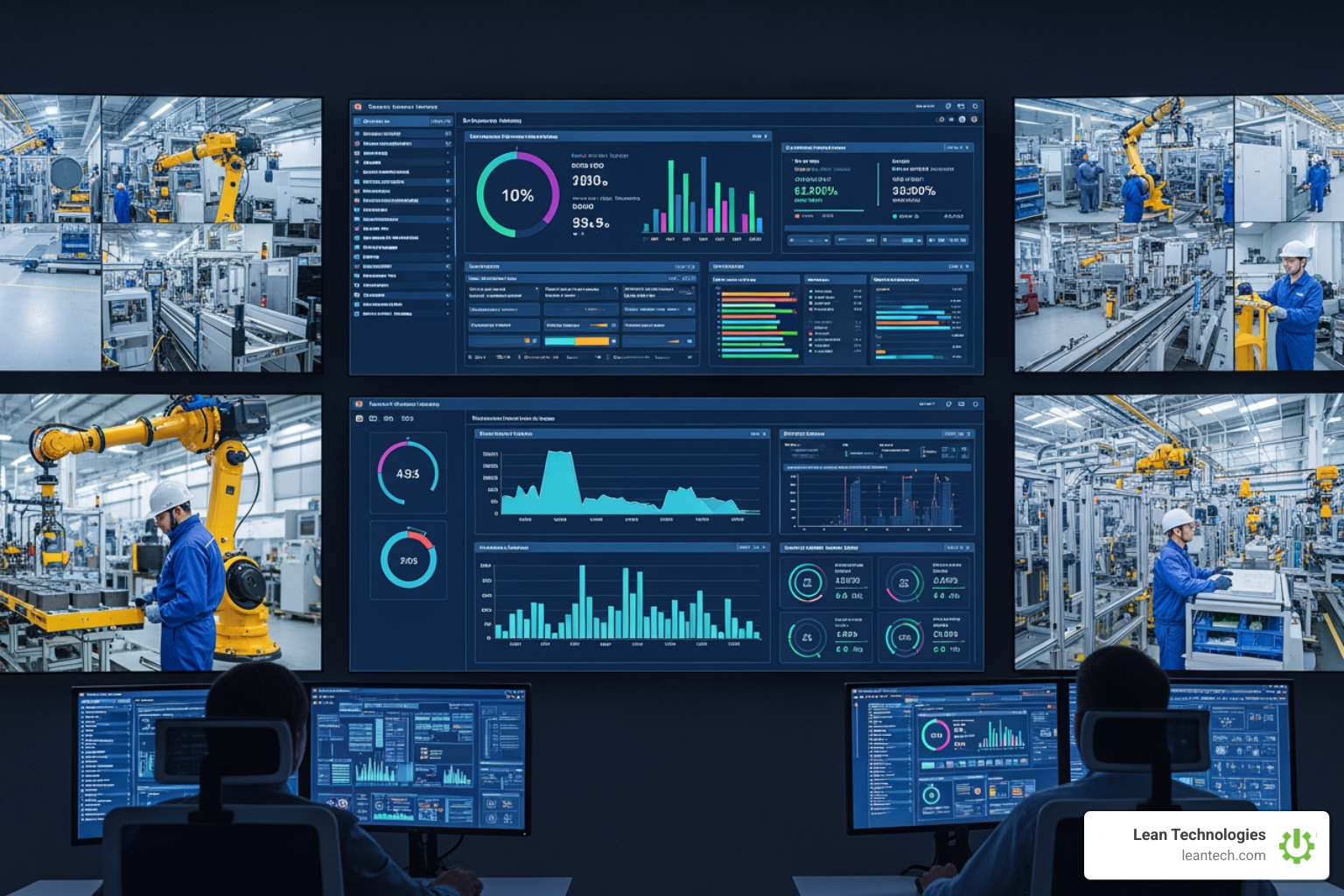
Downtime Analysis: Systems report on downtime events and quality issues with Pareto charts to highlight the most common reasons for inefficiency. This helps you identify the biggest downtime drivers, uncover root causes, and act before problems escalate.
Bottleneck Identification: By continually measuring and tracking production data, you can visualize machine utilization by hour, shift, day, week, and month. This helps analyze trends and uncover hidden capacity across the shop floor, revealing where production flow is restricted.
Changeover Tracking (SMED): Tracking changeover times against targets (Single-Minute Exchange of Die - SMED) allows you to identify areas for coaching and process improvement, leading to faster, more efficient setups.
Quality Issue Alerts: When a quality deviation occurs, the system can send instant alerts to the relevant personnel. This allows for immediate investigation and corrective action, preventing large batches of defective products.
Triggering Action-Based Work Orders: When a critical stop is detected, or a machine's condition indicates an impending failure, the system can automatically create a work order for the maintenance team. This closes the loop between monitoring and action.
Improving Product Consistency: Continuous monitoring of quality metrics and process parameters helps ensure that each product meets specifications, leading to more consistent output and higher customer satisfaction.
Getting Started: Implementation Challenges and Best Practices
Implementing a real-time production monitoring system can seem daunting, but with the right approach, it can be smooth and highly rewarding.
First, consider choosing the right system. You'll encounter "point solutions" that excel at one specific thing (like visual scoreboards) versus more integrated platforms. A flexible digital toolbox, like Thrive, allows you to digitize lean work processes without replacing your entire ERP or MES, making it a less burdensome and faster path to value.
Implementation steps often involve:
Consultation: Discussing your production process and identifying the most impactful areas for monitoring.
Setup: Configuring the system to match your specific production process, including defining machine types, signals to track, goals, products, shift times, and loss reasons.
Training: Ensuring your team understands how to use the system effectively.
Overcoming challenges is key to success:
Gaining Operator Buy-in: Make it simple and show them "what's in it for them." Involve operators in the setup process, as they are the source of much valuable data. Ensure the system helps them do their job better, rather than just adding to their workload.
Avoiding Data Overload: Start with key metrics and expand as your team becomes comfortable. Dashboards should be clear and actionable, not just a sea of numbers.
Standardizing Reason Codes: Establish a clear, standardized list of reasons for downtime, scrap, and other events. This ensures consistent data entry and accurate analysis.
Defining Clear Goals: What do you want to achieve? Reduced downtime? Improved OEE? Better quality? Clear goals guide your implementation and help measure success.
Training the Team: Provide adequate training and ongoing support. Empowering your team with real-time data means giving them the knowledge to use it effectively.
Integrating with Your Existing Systems
A common question is how real-time production monitoring fits into your existing technology landscape. The good news is that modern systems are designed for integration, not replacement.
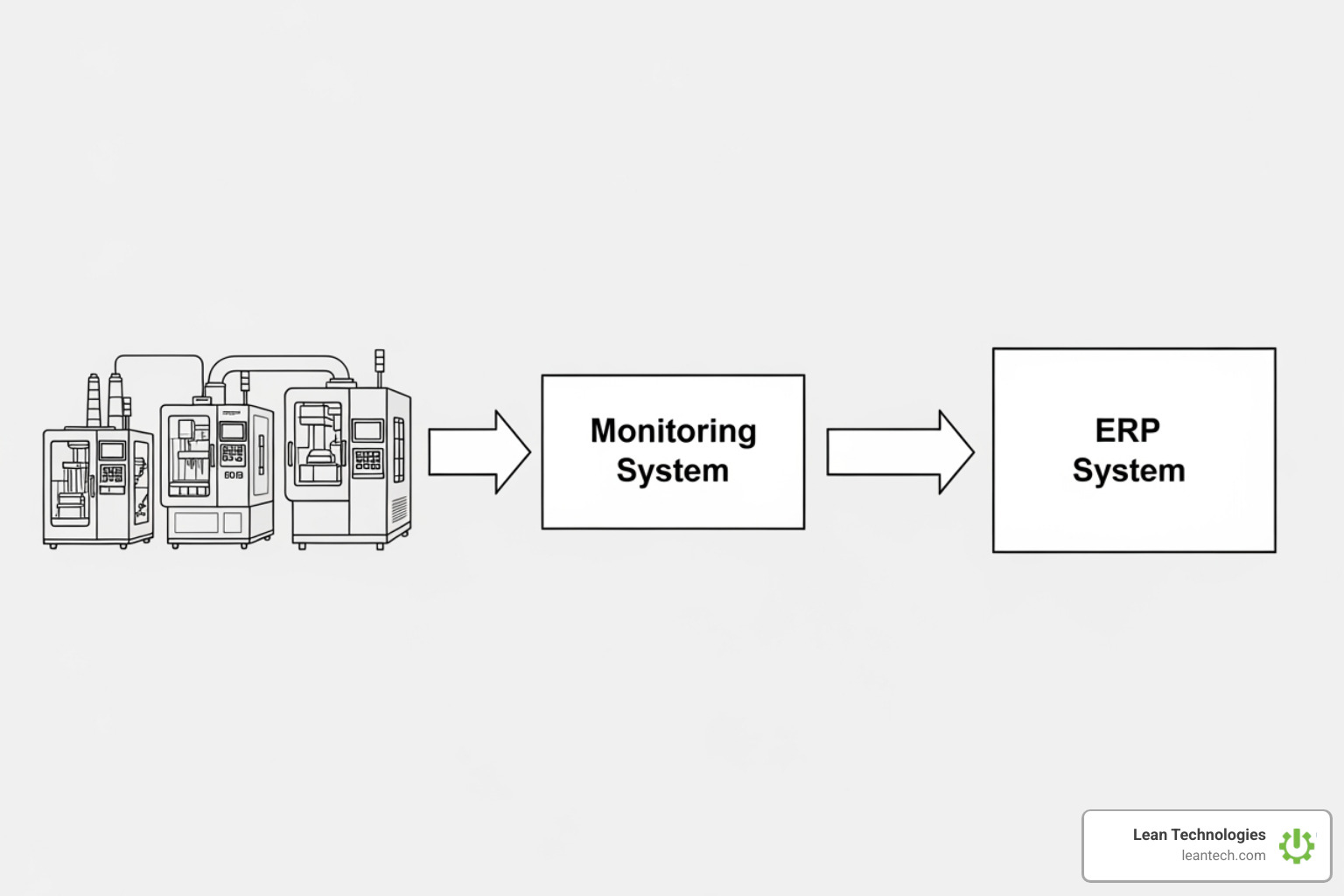
The goal is to close the loop with your ERP/MES by automating data sharing between departments. This provides crucial real-time data that is necessary for a complete overview for effective management of time and resources. For example, a real-time production monitoring system can automatically update ERP systems and manufacturing software modules with schedule details, finished product counts, and more. This eliminates manual data entry, which is time-intensive and leads to delayed, inaccurate production data.
Thrive is not an ERP or MES; it's a flexible digital toolbox. It organizes and drives action from machine data, if it’s entered by the team or imported from other systems. This approach allows you to:
Automate Data Sharing: Integrate with existing systems to streamline workflows and improve equipment status visibility.
Not Replace Core Systems: Leverage your existing investments while gaining new levels of visibility and control.
Create a Single Source of Truth: By consolidating data, you improve communication and accountability across all levels of the organization, from operators to executives.
For project managers, this integration ensures seamless data flow and better coordination across departments. Learn how Thrive can support your project management efforts: More info about project management.
The Future of Manufacturing: What's Next After Real-Time Visibility?
Once you've mastered real-time production monitoring and achieved instant visibility, what's next for your manufacturing operations? The future is exciting, building on the foundation of structured, human-validated data that you've established.
The role of structured data becomes paramount. While Thrive focuses on data entered at the source by your team, this precisely organized information is what truly prepares you for advanced technologies. This includes:
Automated Data Collection: Many modern machines can stream data directly. As your operations evolve, this can complement human input, providing even richer datasets.
The Power of AI and Machine Learning: With clean, real-time data, AI and machine learning can move beyond just reporting to predictive analytics. This means anticipating machine failures before they happen, identifying subtle anomalies in production, and recommending optimal process adjustments. Advanced systems can apply predictive analytics to the health of factories, products, and machines to get recommendations and take action.
Augmented Reality (AR) for Operator Assistance: Imagine operators wearing AR glasses that overlay real-time machine performance data, work instructions, or diagnostic information directly onto their field of view. This improves efficiency and reduces errors.
The Connected Factory: This vision involves integrating all aspects of your operation—machines, systems, and people—into a cohesive network where data flows seamlessly, driving intelligent decisions at every level.
The Future of Real-Time Production Monitoring: AI and IoT
The integration of AI and the Internet of Things (IoT) is changing the manufacturing sector, moving it towards a truly intelligent and autonomous future. However, this future isn't built overnight.
Building a Foundation: The critical first step is establishing a robust system for structured, human-validated data. Without accurate, reliable input, even the most advanced AI models will struggle. Thrive plays a crucial role here, helping you digitize lean work processes and ensure data integrity at the source.
Preparing for Advanced Technologies: By consistently capturing and structuring production data, you're building the historical context that AI and machine learning models need to learn from. This allows you to move from simply seeing what's happening to understanding why it's happening and what will happen next.
Moving from Visibility to Prediction: The ultimate goal is to shift from reactive maintenance to predictive maintenance, where potential issues are identified and addressed before they cause downtime. This is where the concept of a "self-healing" production system comes into play, where AI can detect slowdowns and even trigger maintenance actions automatically.
Frequently Asked Questions about Real-Time Production Monitoring
How is real-time production monitoring different from an MES?
While both aim to improve manufacturing operations, real-time production monitoring and a Manufacturing Execution System (MES) serve different primary purposes. An MES is typically a comprehensive system of record, managing and tracking work orders, production scheduling, quality management, and inventory across the entire factory. It's often complex, rigid, and can require significant implementation efforts.
Real-time production monitoring, especially systems like Thrive, offers live visibility and focuses on continuous improvement by capturing data at the source. It's more flexible, often more operator-focused, and designed to provide immediate feedback and actionable insights without replacing your core MES or ERP systems. Think of MES as the brain managing all the factory's functions, and real-time monitoring as the nervous system providing instant sensory feedback.
Can I monitor older, non-digital machines?
Absolutely! This is where the strength of operator input via tablets, mobile devices, or terminals truly shines. You don't need a brand-new, IoT-enabled machine to gain real-time production monitoring benefits. Operators can manually log:
Machine status: Is it running, stopped, in setup, or waiting for materials?
Downtime reasons: Why is it stopped? (e.g., maintenance, material shortage, operator break).
Production counts: How many good parts were produced in the last hour?
Scrap events: How many parts were rejected and why?
The key is to capture this data at the source as it happens. This allows you to get valuable, real-time insights even from your oldest, most reliable equipment.
How do I get my operators to actually use the system?
Operator adoption is crucial. Here’s how to make it a success:
Make it simple: The interface must be intuitive and easy to use, requiring minimal training. If it's cumbersome, they won't use it.
Show them "what's in it for them": Operators need to understand how the system benefits them, not just management. Show them how it helps them hit their targets, reduces frustration from repeated issues, or gives them a voice in process improvements.
Use data to help, not to punish: Frame the data as a tool for improvement and problem-solving, not a way to micromanage or assign blame. Celebrate successes achieved through data insights.
Involve them in the setup process: Ask for their input on reason codes, dashboard layouts, and workflow. When they feel ownership, they're more likely to adopt it.
Provide training and support: Offer clear, concise training and readily available support for questions or issues.
When operators are empowered to visualize their performance and identify production issues in real-time, they become active participants in driving efficiency.
Stop Guessing, Start Winning: What to Do Next
The days of managing your shop floor with clipboards, spreadsheets, and delayed information are over. Real-time production monitoring isn't just a nice-to-have; it's a necessity for any manufacturer serious about boosting productivity, improving quality, and reducing costs. It’s about empowering your team to solve problems faster, make data-driven decisions, and truly own their performance.
You don't need to rip out your entire infrastructure or spend millions on complex systems. Platforms like Thrive are built by manufacturing experts to help you digitize your lean processes, providing that crucial real-time visibility without a massive IT project. It's time to stop guessing and start winning.
Want faster problem-solving? It starts with better visibility. Get the guide to digital lean manufacturing and take control of your shop floor today: Get the guide to digital lean manufacturing.