
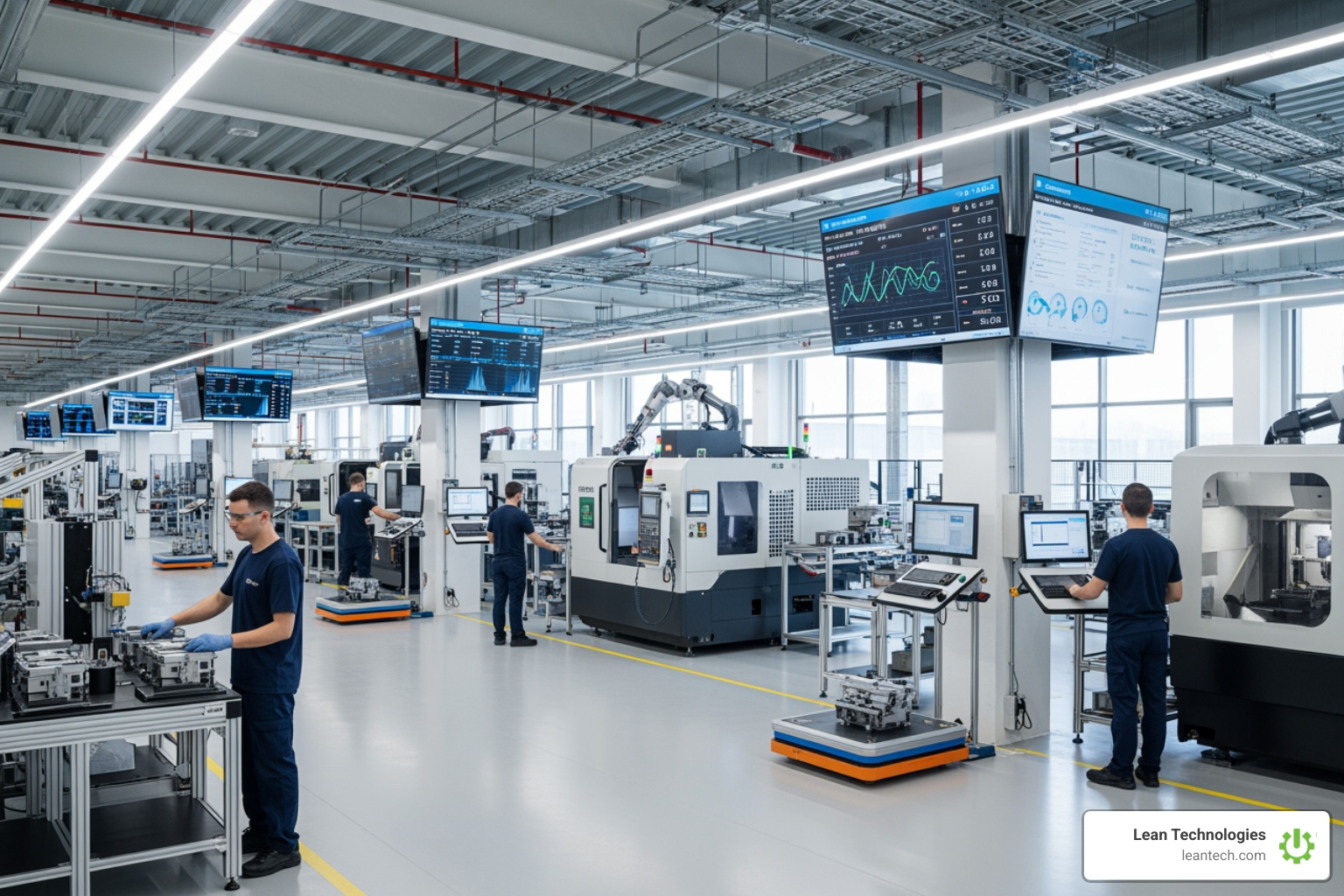
A Practical Guide to Shop Floor Management
Why Shop Floor Management Matters—And What Happens Without It
If your production floor feels chaotic, you’re not alone. Unplanned downtime, production bottlenecks, and quality issues are symptoms of a bigger problem: a lack of effective shop floor management. This isn't just about overseeing daily operations; it's a structured approach to solving problems at the source—on the floor where value is created. It’s the difference between a reactive, fire-fighting operation and one that runs like clockwork.
What effective shop floor management delivers:
Real-time visibility into production, quality, and equipment status
Faster problem-solving through structured communication and escalation
Waste reduction by eliminating overproduction, excess inventory, and unnecessary movement
Higher OEE (Overall Equipment Effectiveness) through better planning and control
Engaged teams who own improvements and drive continuous change
On-time delivery and consistent quality that builds customer trust
Without a solid strategy, you’re left with unplanned downtime, slow production, quality issues, and frustrated operators who see problems but have no clear way to fix them.
The Real Cost of a Disorganized Shop Floor
A messy, disorganized shop floor isn't just an eyesore; it's a money pit. When shop floor management is lacking, you're looking at a cascade of problems that hit your bottom line hard.
Let's talk numbers. The average manufacturing facility loses around $25,000 for every hour of unplanned downtime. For larger organizations, this figure can soar past $500,000. In automotive manufacturing, unplanned downtime can cost up to $2.3 million per hour. That's not just lost production; it’s missed deadlines, unhappy customers, and a damaged reputation. This isn't hypothetical; it's a real-world impact that can cripple your business. Read more on the true cost of downtime.
Beyond the immediate financial hit, a disorganized shop floor leads to:
Production bottlenecks: Inefficient workflows and lack of coordination choke your output.
Excess inventory: Without proper control, you're tying up capital in materials you don't need, leading to storage costs and potential waste.
Safety risks: Cluttered workspaces, unaddressed equipment issues, and unclear procedures increase the likelihood of accidents.
Low morale: When teams constantly face chaos, frustration sets in, leading to disengagement and high turnover.
Quality issues: Inconsistent processes and a lack of real-time monitoring mean defects slip through, leading to costly rework or recalls.
These issues are more than just annoyances; they're direct threats to your productivity, profitability, and people.
Key Benefits of a Strong SFM Strategy
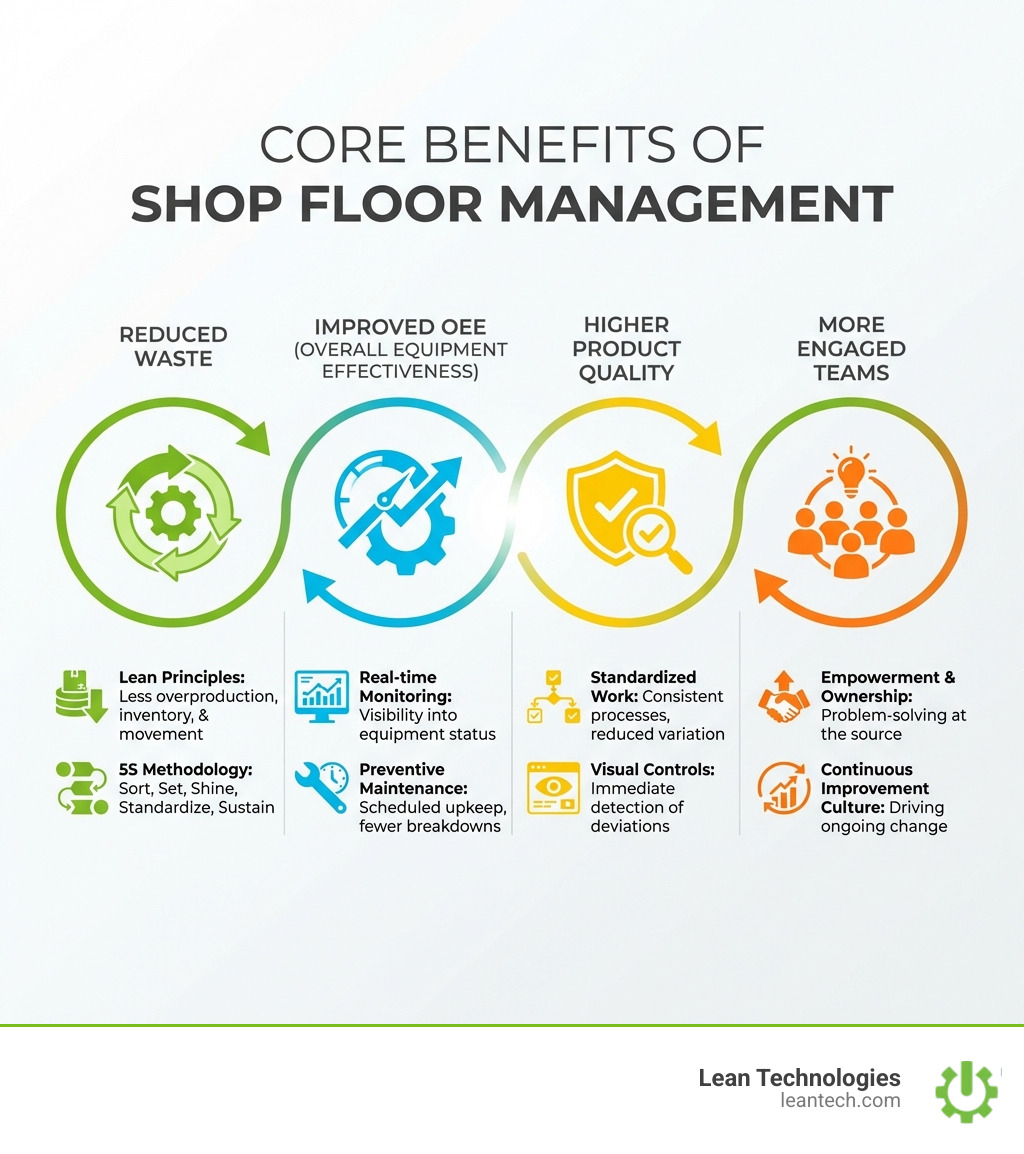
Implementing a robust shop floor management strategy isn't just about avoiding disaster; it's about unlocking massive potential. When you get SFM right, you'll see benefits across your entire operation:
Higher productivity and efficiency: By streamlining processes and minimizing waste, you increase your output with the same or fewer resources. This includes optimizing production routing and balancing assembly lines for smoother flow.
Improved Overall Equipment Effectiveness (OEE): Better planning, proactive maintenance, and real-time monitoring mean your machines run more, run faster, and produce quality parts.
Better product quality: Standardized workflows, clear instructions, and immediate problem-solving reduce defects and ensure consistent product standards. For more on how we help with quality control, explore Thrive Quality.
Cost savings: Eliminating waste (like overproduction, excess inventory, unnecessary movement, waiting time, defects, and overprocessing) directly reduces operational costs.
Faster information flow: Real-time data collection and visual management mean everyone knows what's happening, enabling quicker decisions and adjustments.
Smarter resource utilization: You make the most of your labor, machinery, and materials, ensuring optimal allocation and reducing idle time.
More engaged employees: When teams are empowered to identify and solve problems, given clear roles, and provided with the tools to succeed, morale and ownership skyrocket. This is how you build a culture of continuous improvement.
Building a strong shop floor management system is the foundation of operational excellence. It helps you cut waste, improve quality, and deliver on time by giving everyone a clear view of what's happening, what matters, and what they can do about it.
The Core Components and Phases of Effective Shop Floor Management

Effective shop floor management is not a single tool; it's a holistic system built on several interconnected core components and phases. These elements work in harmony to create a responsive, efficient, and continuously improving manufacturing environment. At its heart, it’s about strong leadership, clear communication, consistent standardization, proactive problem-solving, and data-driven decisions that cut through the noise.
The 5 Pillars of Shop Floor Management
Think of these as the foundational principles that hold up any successful shop floor management system:
Leadership on Site (Gemba): This isn't about managing from an office. It’s about Gemba, the actual place where value is created—your shop floor. Leaders must practice "Genchi Genbutsu" ("go and see"), meaning they spend time on the floor, observing processes, talking to operators, and understanding challenges firsthand. This direct engagement builds trust, provides context, and spots waste or improvement opportunities that reports might miss.
Visual Management: Make performance, problems, and progress immediately visible to everyone. This can involve physical boards, digital dashboards, or Andon signals. The goal is to turn complex data into clear, actionable information that prompts immediate responses. When a problem is visible, it's harder to ignore.
Standardized Communication: Effective shop floor management thrives on clear, consistent communication. This means structured daily meetings (like huddles or stand-ups), defined escalation paths for issues, and a cascade of information from the shop floor up to leadership and back down. Everyone knows how and when to share critical updates.
Continuous Improvement (CIP) & Problem Solving: This is the heartbeat of shop floor management. It’s about fostering a culture where everyone is encouraged to identify problems, analyze root causes, and implement small, incremental changes (Kaizen). Tools like the PDCA cycle, 5 Whys, and Fishbone diagrams become standard practice.
Employee Involvement & Empowerment: Your frontline workers are closest to the action; they often know best where the inefficiencies lie. Empower them with the training, tools, and authority to identify issues and contribute to solutions. Recognizing their contributions boosts morale and fuels innovation.
The 3 Key Phases of Shop Floor Control
Shop floor management isn't a one-time event; it's a continuous cycle that moves through distinct phases to ensure production is always on track. These phases are planning, scheduling, and control.
Planning: This is where you lay the groundwork. It involves developing a master production schedule that outlines what needs to be produced and by when. An order release document then specifies the resources and processes required. Capacity planning determines how much production capacity is needed to meet demand, helping you avoid stockouts and identify inefficiencies before they happen. This strategic planning ensures you have a clear roadmap for production. For more on how to manage your production projects, check out Thrive Project Management.
Scheduling: Once the plan is in place, it's time to assign tasks. This phase involves creating detailed workflows that outline the manufacturing route for each order, including bills of material specifying components and quantities. It ensures everyone on the shop floor knows their roles, tasks, and deadlines. Tools like Johnson’s Rule can help find optimal sequences for jobs, reducing makespan (the total time to complete all jobs) and idle time, especially in complex job shop environments.
Control: This is where the rubber meets the road. It's about real-time monitoring and adjusting production activities. You're tracking progress against the schedule, identifying deviations, and taking corrective actions immediately. This involves dispatching work orders, collecting real-time data on production, quality, and equipment status, and responding quickly to issues to keep things moving.
Best Practices for Implementing and Improving Your SFM
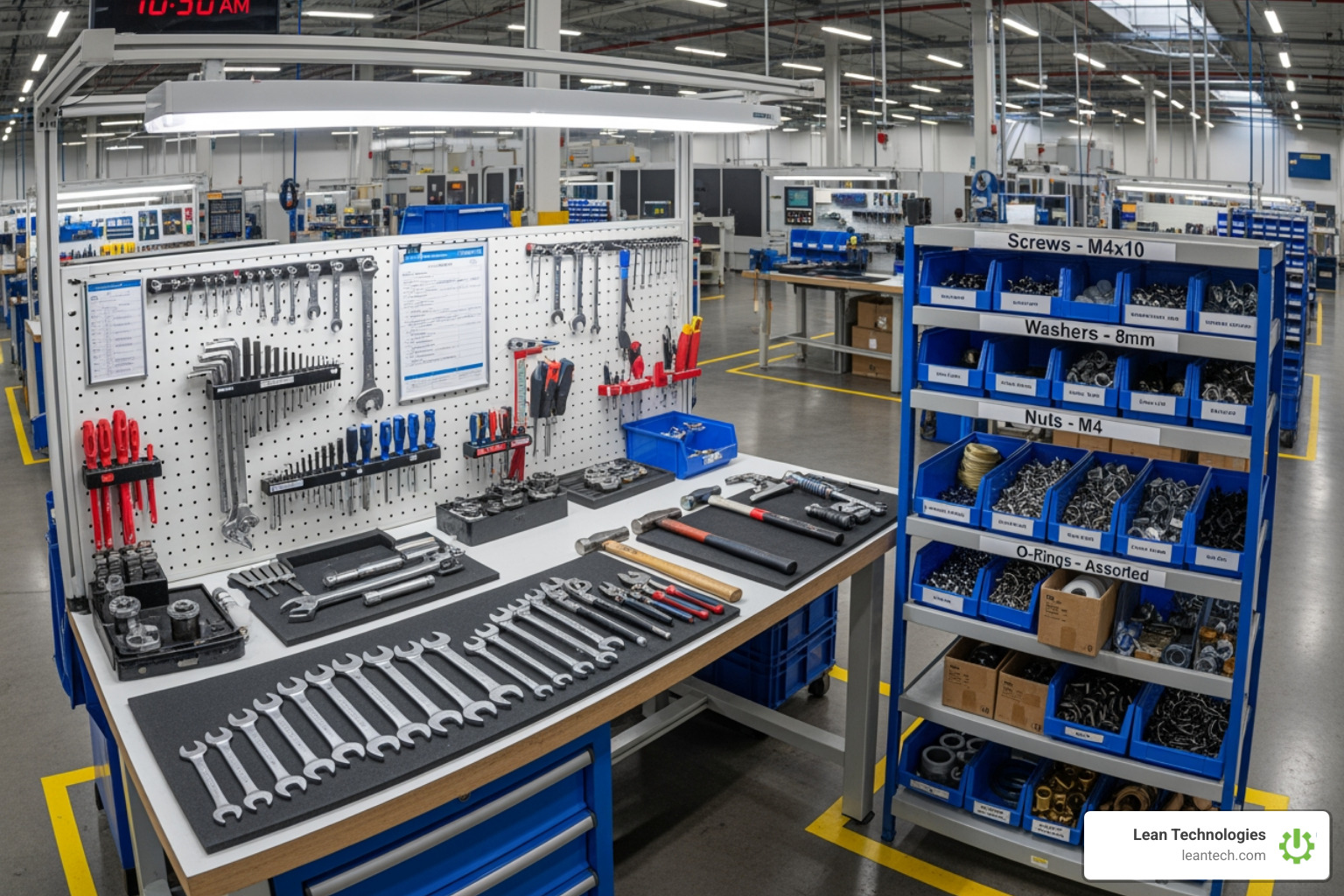
You want a shop floor that hums with efficiency, not one that groans under the weight of inefficiency. Implementing and improving shop floor management means adopting proven best practices that create structure, make problems visible, and drive continuous improvement.
Create Structure with a Daily Management System (DMS)
A Daily Management System (DMS) is your rhythm for operational excellence. It creates a structured routine for information sharing, problem identification, and decision-making, from the frontline up to leadership.
A DMS typically involves:
Tiered meetings: Short, focused huddles at different levels (team, department, plant) that cascade information and issues. This ensures fast issue escalation and resolution.
Performance tracking: Daily review of key metrics like safety, quality, delivery, and productivity.
Accountability: Clear assignments for problem-solving and follow-up actions.
Escalation process: A defined path for problems that can't be resolved at the immediate level.
This system makes goals, performance, and problems visible, ensuring everyone is aligned and empowered to act. It's about bringing structure to your daily operations, which ultimately helps with human resources management. Learn more about Thrive HR.
Make Problems Visible with Visual Management
You can't fix what you can't see. Visual management tools are essential for effective shop floor management because they turn complex data into clear, actionable insights.
Think about:
Performance boards: Often called SQCDP boards (Safety, Quality, Cost, Delivery, People), these display real-time KPIs and targets, making performance gaps immediately visible.
Andon signals: A simple visual (and often auditory) system that allows operators to stop the line or signal for help when a problem occurs. This ensures immediate attention to issues.
Kanban boards: Visual tools to manage workflow, limit work-in-progress, and highlight bottlenecks.
Digital dashboards: Real-time displays of production data, machine status, and quality metrics accessible on screens across the shop floor.
Floor markings: Clearly defined pathways, storage areas, and work zones that improve organization and safety.
These tools don't just show data; they prompt action. They help improve shop floor efficiency by making it easy to spot issues and respond quickly.
Drive Continuous Improvement with Lean Tools
Continuous improvement isn't a buzzword; it's a fundamental approach in shop floor management that ensures your operations are always getting better. Lean tools provide the framework for this ongoing evolution.
5S Methodology: A systematic approach to workplace organization:
Sort: Remove unnecessary items.
Set in Order: Organize remaining items for easy access.
Shine: Clean and inspect the workspace.
Standardize: Create consistent procedures for the first three S's.
Sustain: Maintain the new standards through discipline and audits. A tidy shop floor isn't just about cleanliness; it's about efficiency, safety, and making problems more visible.
Gemba Walks: Leaders regularly walk the shop floor to observe processes, engage with workers, and identify issues firsthand. It’s about "going to the source" to understand reality.
PDCA Cycle (Plan-Do-Check-Act): A four-step iterative problem-solving process that drives improvement:
Plan: Identify a problem and plan a solution.
Do: Implement the solution on a small scale.
Check: Analyze the results and compare them to expectations.
Act: Standardize the solution if successful, or iterate if not.
Root Cause Analysis (RCA): Techniques like the 5 Whys (asking "why" five times to drill down to the root cause) and Fishbone Diagrams (visualizing potential causes of a problem) help teams move beyond symptoms to solve underlying issues. The 5M approach (Manpower, Machine, Materials, Methods, Measurement) from the Toyota Production System is another powerful framework for identifying root causes.
Implementing these tools fosters a culture where problem-solving is proactive, not reactive, and where safety is paramount. Find more about how we help with safety via Thrive Safety.
The Role of Technology and KPIs in Modern Shop Floor Management
In today's manufacturing landscape, you can't talk about effective shop floor management without talking about technology. It’s not just a nice-to-have; it's essential for achieving real-time visibility, streamlining processes, and making data-driven decisions. The right digital tools transform your shop floor from a reactive environment to a proactive powerhouse.
How Technology Improves Shop Floor Management
Digital tools are revolutionizing how manufacturers manage their shop floors. They replace manual, paper-based processes with efficient, real-time solutions that empower teams and provide actionable insights.
Here's how technology improves shop floor management:
Digitizing Lean Processes: Platforms like Thrive help you digitize lean work processes in real-time. This means moving away from paper forms and spreadsheets for audits, inspections, issue logging, and action tracking.
Real-Time Data Entry: Operators and supervisors can use mobile devices (tablets, smartphones) or kiosks to log issues, track actions, and enter production data directly at the source. This ensures data is accurate and available instantly, not hours or days later.
Structured Accountability: Digital tools provide a clear framework for tracking who is responsible for what, by when. This drives accountability and ensures problems are addressed, not forgotten.
Improved Visibility: With data entered at the source, you get real-time dashboards and reports. This allows managers to instantly see production status, quality issues, equipment performance, and open actions.
Digital Work Instructions: Replace outdated paper manuals with dynamic, easily updateable digital work instructions that ensure consistency and reduce errors.
Faster Problem Solving: When issues are logged digitally, they can be escalated, assigned, and tracked instantly, accelerating resolution times.
Thrive is not an ERP or MES. We're a flexible digital toolbox built to help operators and supervisors log issues, track actions, and drive continuous improvement. We don't collect sensor data or run predictive machine alerts directly, but we organize and drive action from machine data, if it's entered by the team or imported from other systems. Our platform delivers real-time visibility—only when the process is structured and data is entered at the source. Because real-time beats real-late, every single time. For a deeper dive into digital lean, check out our Guide to Digital Lean Manufacturing.
Key Performance Indicators (KPIs) to Track
You can't manage what you don't measure. KPIs are the pulse of your shop floor management strategy, providing objective data on performance and identifying areas for improvement.
Here are some essential KPIs you should be tracking:
Overall Equipment Effectiveness (OEE): This is the gold standard for measuring manufacturing productivity. It combines Availability (uptime), Performance (speed), and Quality (defects) into a single metric. A high OEE means your equipment is running effectively.
Cycle Time: The average time it takes to produce a single unit or complete a process. Reducing cycle time often indicates improved efficiency.
First Pass Yield (FPY): The percentage of products that pass through a process correctly the first time without rework or scrap. It's a direct measure of quality.
On-Time Delivery (OTD): The percentage of orders delivered by the promised date. Crucial for customer satisfaction.
Mean Time To Repair (MTTR): The average time it takes to repair a failed piece of equipment. A lower MTTR indicates efficient maintenance processes.
Mean Time Between Failures (MTBF): The predicted elapsed time between inherent failures of a mechanical or electronic system during normal system operation. A higher MTBF indicates greater reliability.
The challenge? Many organizations struggle to track these metrics effectively. Only 55% of companies effectively track key maintenance metrics like MTBF and MTTR. Without accurate, timely data, you're flying blind.
Common Shop Floor Management Challenges (and How to Fix Them)
Implementing and sustaining effective shop floor management comes with its share of hurdles. But recognizing these challenges is the first step to overcoming them and turning obstacles into opportunities.
Challenge: Lack of Real-Time Visibility
The Problem: Decisions are based on outdated information from spreadsheets or paper forms filled out at the end of a shift. Problems aren't spotted until it's too late, leading to costly delays and rework.
The Fix: Implement digital tools that allow operators to capture data directly from the shop floor in real time. Use mobile devices or kiosks to log production counts, quality checks, and downtime events as they happen. This gives supervisors and managers an up-to-the-minute view of operations, so they can act on issues immediately, not hours later.
Challenge: Poor Communication & Accountability
The Problem: Issues are reported verbally but get lost in the shuffle. There's no clear system for assigning tasks or tracking them to completion. "I told someone" becomes a common excuse for inaction.
The Fix: Establish a digital action tracking system. When an issue is logged, it should be assigned to a specific person with a clear deadline. This creates a transparent record of who is responsible for what, ensuring that nothing falls through the cracks. This is a core part of a Daily Management System (DMS).
Challenge: Resistance to Change
The Problem: Operators and supervisors are used to "the way we've always done it." They may see new processes or technologies as a threat or an extra burden.
The Fix: Involve the team in the process. Start with a simple, high-impact problem they already want to solve. Use their feedback to choose and implement tools that make their jobs easier, not harder. When they see the direct benefits—like less paperwork or faster problem-solving—they'll become champions for the new system.
Challenge: Inconsistent Processes
The Problem: Different shifts or teams handle the same tasks in different ways. This leads to variations in quality, output, and safety.
The Fix: Use standardized work instructions and digital checklists. This ensures everyone follows the same best practices for every task. Make these instructions easily accessible on tablets or screens at the workstation. This not only improves consistency but also simplifies training for new employees.
What to Do Next: Build Your SFM Foundation
Effective shop floor management isn't about buying a massive, complex system. It's about building a foundation of visibility, accountability, and continuous improvement. Start by identifying your biggest source of pain—whether it's downtime, quality defects, or missed deadlines. Then, empower your team with simple, digital tools to track issues and actions in real time. Stop managing your shop floor with spreadsheets and wishful thinking. Give your team the structure they need to solve problems and drive results.
Frequently Asked Questions (FAQs) about Shop Floor Management
What is the first step to improving shop floor management? Start with visibility. Go to the Gemba (the shop floor) and observe. Talk to your operators. What are their biggest frustrations? Often, the best first step is to implement a simple visual management tool, like a performance board or a digital issue tracker, to make problems visible to everyone.
How is shop floor management different from an MES or ERP? ERP and MES systems are great for high-level planning, inventory, and financial tracking. Shop floor management focuses on the execution and improvement of daily work. SFM tools, like Thrive, are designed for the fast-paced environment of the production floor, helping teams log issues, track actions, and drive continuous improvement in real-time, complementing your existing ERP or MES.
What are the most important KPIs for shop floor management? While it depends on your goals, a great starting point is OEE (Overall Equipment Effectiveness), First Pass Yield (FPY), and On-Time Delivery (OTD). These three metrics give you a balanced view of your productivity, quality, and customer satisfaction.
How do you get buy-in from operators for a new SFM system? Focus on making their jobs easier. Introduce tools that eliminate tedious paperwork, provide clear instructions, and empower them to flag problems without having to hunt down a supervisor. When operators see that the new system helps them solve problems they face every day, they are more likely to embrace it.