Promoting Well-Being: A Comprehensive Look at Workplace Safety
Why Workplace Health and Safety Demands Your Attention Right Now
Workplace health and safety isn't just about avoiding OSHA fines or checking compliance boxes. It's about whether your people make it home in one piece at the end of their shift.
Here's what you need to know:
A worker dies every 99 minutes from a work-related injury in the United States
5,283 fatal work injuries were recorded nationwide in 2023
U.S. employers lost $171 billion in 2019 due to workplace accidents
74% of consumers prefer buying from companies that provide safe working conditions
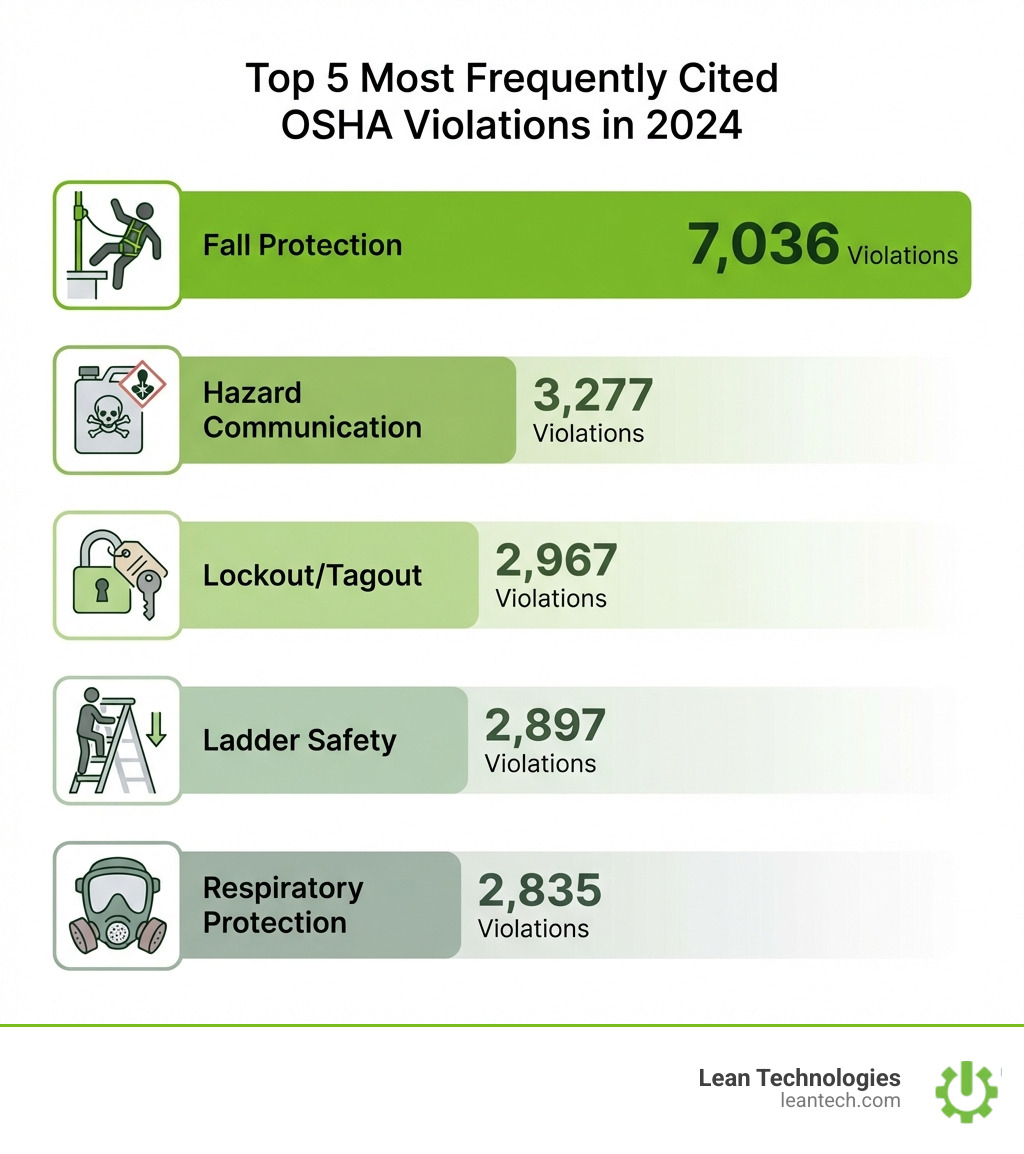
The top 5 OSHA violations in 2024 were fall protection (7,036 citations), hazard communication (3,277), lockout/tagout (2,967), ladder safety (2,897), and respiratory protection (2,835)
Behind every injury is a process that failed, a hazard that went unchecked, or a safety procedure that existed only on paper.
The real cost isn't just in fines. It's in lost productivity when skilled operators are injured, a damaged reputation with safety-conscious consumers, and high turnover when your best people don't feel protected.
But here's the gap most managers miss: having safety procedures isn't the same as executing them. You have binders of SOPs, but can your team access them when needed? Are they following them? Can you prove it?
This guide cuts through the noise. We'll cover the legal framework you need to understand (OSHA isn't optional), the most common hazards killing productivity and people, and how to build a safety program that actually works on the shop floor—not just in the safety manager's office.
The Foundation: Understanding OSHA and Your Legal Duties
For any U.S. organization, understanding the legal framework for workplace health and safety is non-negotiable. This framework is built on the Occupational Safety and Health Act.
What is the OSH Act?
Passed in 1970, the Occupational Safety and Health Act (OSH Act) has one primary goal: to ensure every worker has a safe workplace. It mandates that employers provide a place of employment free from recognized hazards like toxic chemicals, mechanical dangers, or extreme temperatures. To enforce this, the act created two key agencies:
The Occupational Safety and Health Administration (OSHA): A division of the U.S. Department of Labor, OSHA sets and enforces safety and health standards. Its regulations cover most private industries and some public sector workplaces. You can find the official text in the United States Code and more details at the Occupational Safety and Health (OSH) Act page.
The National Institute for Occupational Safety and Health (NIOSH): As the research arm for OSHA, NIOSH conducts studies to prevent work-related illnesses and injuries, providing the scientific basis for OSHA standards. Explore their work at the National Institute for Occupational Safety and Health.
Other laws, like the Fair Labor Standards Act (FLSA), also contribute by setting safety rules for workers under 18.
Employer Responsibilities: More Than Just Common Sense
The OSH Act's General Duty Clause legally obligates employers to provide a workplace free from serious recognized hazards. This is not a suggestion—it's the law.
Key employer responsibilities include:
Provide a Safe Workplace: Identify and control hazards.
Comply with Standards: Adhere to all applicable OSHA standards.
Furnish Safe Tools: Ensure employees have and use safe, properly maintained equipment.
Communicate Hazards: Use signs, labels, and clear procedures to warn employees of dangers. A written hazard communication program and Safety Data Sheets (SDS) are mandatory for hazardous chemicals.
Provide Safety Training: Offer training in a language and vocabulary workers understand. This is vital for new hires, who are three times more likely to be injured.
Keep Records: Maintain accurate records of work-related injuries and illnesses.
Report Injuries: Report fatalities to OSHA within 8 hours, and inpatient hospitalizations, amputations, or eye loss within 24 hours.
Offer Medical Exams: Provide medical exams and training as required by OSHA standards.
Prohibit Retaliation: Do not discriminate against employees for exercising their safety rights. OSHA's Whistleblower Protection program enforces this.
These duties are detailed on OSHA's Employer Responsibilities page.
The High Cost of Cutting Corners
Neglecting workplace health and safety is expensive. The consequences go far beyond fines and are critical for operations managers to understand.
OSHA Penalties: Fines escalate based on the severity and frequency of violations.
Legal Repercussions: Violations can lead to civil lawsuits and even jail sentences for leaders who knowingly disregard safety.
Reputational Damage: Unsafe conditions tarnish a brand's image. 74% of consumers prefer buying from companies with safe working conditions.
Lost Productivity: Accidents cause downtime, investigations, and the loss of skilled workers.
Extraordinary Expenses: Costs include higher workers' comp premiums, medical bills, and training replacements. In 2019, U.S. employers lost $171 billion due to workplace accidents.
A proactive approach to safety protects your people and your bottom line.
Identifying and Controlling Common Workplace Hazards
Once you understand the legal duties, the next step is to recognize and manage hazards in your workplace. For more general information on safety, check out Lean Technologies' safety resources.
The "Fatal Five": Top Industrial Hazards and How to Prevent Them
In industrial settings, a few hazards consistently cause the most serious injuries. OSHA's top citations highlight these "Fatal Five":
Fall Protection: Falls are the leading cause of serious injuries and deaths, with 7,036 OSHA violations in 2024.
Prevention: Use guardrails, safety nets, or personal fall arrest systems. Keep floors clear of trip hazards. Train employees and inspect equipment regularly.

Hazard Communication (HazCom): This standard ensures workers are informed about hazardous chemicals. It accounted for 3,277 violations in 2024.
Prevention: Label all chemical containers, maintain Safety Data Sheets (SDS), and train employees on safe handling. OSHA's Occupational Chemical Database is a useful resource.
Lockout/Tagout (LOTO): LOTO procedures prevent the unexpected startup of machinery during maintenance, which caused 2,967 violations in 2024.
Prevention: Develop and enforce strict LOTO procedures. Train authorized employees, use standardized locks, and conduct periodic inspections.
Ladder Safety: Improper use of ladders led to 2,897 violations in 2024.
Prevention: Select the right ladder for the job, inspect it before each use, and set it up on a stable surface. Train employees to maintain three points of contact.
Respiratory Protection: This protects workers from airborne contaminants and was cited for 2,835 violations in 2024.
Prevention: Assess respiratory hazards, develop a written protection program, select appropriate respirators, and provide fit testing and training.
Find the full list on OSHA's Top 10 Most Frequently Cited Standards page.
Don't Overlook Office Dangers
While the shop floor has obvious dangers, don't ignore hazards in the office, which can cause chronic issues and lost productivity.
Ergonomics: Poor workstation setup leads to musculoskeletal disorders.
Mitigation: Provide adjustable furniture and train employees on proper posture, using resources like the Mayo Clinic posture guide.
Slips, Trips, and Falls: Cluttered walkways, spills, and loose cables are common culprits.
Mitigation: Maintain clear paths, clean spills promptly, and secure cables.
Fire Safety: Overloaded outlets and faulty wiring pose fire risks.
Mitigation: Inspect electrical systems, avoid daisy-chaining power strips, and ensure clear emergency exits.
Mental Health: High workloads and lack of support contribute to stress and burnout.
Mitigation: Manage workloads, provide employee assistance programs, and foster a supportive culture.
A Framework for Hazard Assessment
Identifying hazards is the first step; controlling them is next. A systematic assessment framework helps you move from reactive to proactive.
Job Hazard Analysis (JHA): This technique breaks down a task into steps to identify risks and define the safest way to perform the job.
Risk Assessment: This evaluates the severity and likelihood of harm from a hazard, helping you prioritize which risks to address first.
Hierarchy of Controls: This framework prioritizes hazard controls from most to least effective:
Elimination: Physically remove the hazard.
Substitution: Replace the hazard with a safer alternative.
Engineering Controls: Isolate people from the hazard (e.g., machine guards).
Administrative Controls: Change how people work (e.g., training, procedures).
Personal Protective Equipment (PPE): Protect the worker with equipment. PPE is always the last line of defense.
Take 5 Procedure: A simple, 5-step risk assessment for workers before starting a task: Stop, Look, Assess, Control, Monitor.
Building a Bulletproof Workplace Health and Safety Program
A truly effective workplace health and safety program is part of the culture, not just a checklist. It requires active participation from everyone. For more on optimizing processes, explore digital lean manufacturing strategies.
Core Elements of a Modern Workplace Health and Safety Program
A strong safety program is built on several interconnected elements, as outlined in OSHA's Recommended Practices for Safety and Health Programs:
Management Leadership: Leaders must visibly commit to safety by allocating resources, setting goals, and holding managers accountable.
Worker Participation: Involve employees in safety committees, hazard reporting, and investigations. They have the best insights into front-line risks.
Hazard Identification and Assessment: Systematically find and prioritize hazards through inspections, investigations, and Job Hazard Analyses (JHAs).
Hazard Prevention and Control: Use the hierarchy of controls to eliminate or reduce risks, from engineering controls to PPE.
Education and Training: Ensure all workers understand the hazards they face and how to control them through ongoing, job-specific training.
Program Evaluation and Improvement: Regularly evaluate the program's performance to identify weaknesses and drive continuous improvement.
The Power of Training and Clear Communication
Safety procedures are useless if workers don't understand or can't access them. Effective training and communication are critical for workplace health and safety.
Onboarding New Hires: New employees are more vulnerable. Onboarding must cover general rules, emergency procedures, and job-specific hazards.
Refresher Training: Regular refreshers keep experienced workers current on best practices and new hazards.
Language and Vocabulary: Provide training and materials in a language and vocabulary that all workers can easily understand.
Documenting Training: Keep detailed records of all safety training. This is essential for compliance and demonstrating due diligence.
Clear communication also includes daily briefings, safety signage, and making safety data easily accessible at the point of need.
Creating a "See Something, Say Something" Culture
A safe workplace requires a culture where everyone feels responsible for workplace health and safety and is empowered to speak up without fear of reprisal.
Internal Reporting Systems: Establish easy-to-use systems for reporting unsafe conditions or near-misses. The key is to take every report seriously and act on it.
Non-Retaliation Policy: A strict non-retaliation policy is a must. Workers need to know that reporting a safety concern is protected. OSHA's whistleblower program explicitly defends this right.
Empowering Employees: Encourage a "see something, say something" mindset by making safety a shared value. Discuss safety in meetings, recognize contributions, and involve employees in problem-solving. This builds trust and turns your team into active participants in their own safety.
Leveraging Technology for Safer Operations
In modern manufacturing, outdated methods for workplace health and safety are a liability. Digital tools offer a powerful way to improve safety beyond paper-based systems. For continuous improvement, platforms like Thrive CI can make a significant difference.
Moving Beyond Paper and Spreadsheets
Relying on paper logs, checklists, and spreadsheets creates critical pain points for managers:
Delayed Data: Information recorded on paper is often entered hours or days later, making real-time intervention impossible.
Incomplete Logs: Manual processes are prone to errors, illegible entries, and missing details, compromising data integrity.
Audit Challenges: Compiling information from scattered paper files for an audit is stressful and often reveals gaps in compliance.
Lost Paperwork: Forms get misplaced or damaged, creating compliance gaps and preventing trend analysis.
Pencil-Whipping: It's too easy to check boxes on paper without a real inspection, creating a false sense of security.
These inefficiencies create blind spots that put workers at risk.
How Digital Tools Improve Workplace Health and Safety
Digital tools like Lean Technologies' Thrive transform workplace health and safety from an administrative burden into a streamlined, proactive process.
Centralized Platforms: Modern CMMS or shop floor platforms centralize safety data, procedures, and training records for easy access.
Real-Time Data: Mobile devices allow for immediate data entry from the shop floor, giving managers real-time visibility into compliance and incidents.
Standardized Procedures: Digital workflows guide workers step-by-step through safety protocols like LOTO or hazard assessments, ensuring consistency.
Mobile Access: Workers can access checklists, SDS sheets, and training modules on their mobile devices right at the point of need.
Instant Reporting: Incidents and near-misses can be reported instantly with photos, accelerating investigation and resolution.
Accountability: Digital systems create a clear audit trail of who did what and when, fostering greater accountability.
Knowledge Retention: Critical safety knowledge is captured in the system, preventing its loss when experienced workers leave.
Streamlining Industrial Maintenance Safety
For maintenance teams facing complex hazards, digital tools are transformative. For more on maintenance, see Lean Technologies' maintenance solutions.
Digital LOTO Procedures: Integrate LOTO procedures into digital work orders. Technicians follow step-by-step instructions on their mobile devices, creating a verifiable audit trail.
Attaching JHA to Work Orders: Attach Job Hazard Analyses directly to digital work orders so technicians can review specific risks before starting a job.
Mobile Work Orders: Technicians can access work orders, safety procedures, and equipment manuals on their mobile devices anywhere on the shop floor.
Documenting Compliance: Technicians can digitally sign off on safety steps and upload photos of completed work, providing irrefutable proof of compliance for audits.
By leveraging platforms like Thrive, operations managers empower their teams to work safely and efficiently. For more specific solutions, visit Lean Technologies' safety page.
Frequently Asked Questions about Workplace Safety
What is the primary goal of the Occupational Safety and Health Act?
The primary goal of the Occupational Safety and Health Act (OSH Act) is to ensure worker and workplace safety. It aims to make sure employers provide their workers a place of employment free from recognized hazards to safety and health.
What are the main types of workplace hazards?
The main types of workplace hazards include physical hazards (e.g., falls, mechanical dangers, excessive noise), chemical hazards (e.g., toxic chemicals, hazardous materials), ergonomic hazards (e.g., poor posture, repetitive motions), biological hazards (e.g., viruses, bacteria), and psychosocial hazards (e.g., stress, workplace violence).
How can employees report unsafe conditions or hazards in the workplace?
Employees can report unsafe conditions or hazards through internal company mechanisms, such as safety suggestion boxes, dedicated email addresses, or by speaking directly with their supervisor or safety manager. Additionally, employees are protected by OSHA’s whistleblower program and can report concerns directly to OSHA without fear of retaliation.
Stop Reacting, Start Preventing
The journey toward optimal workplace health and safety is a continuous process, not a destination. It requires a shift from reactive problem-solving to proactive prevention. The statistics are a stark reminder of the human and financial costs of neglecting safety, but they also highlight the immense opportunity for improvement.
By understanding your legal duties under the OSH Act, rigorously identifying and controlling hazards, building a comprehensive safety program, and leveraging modern technology, you can create a workplace where safety is truly a core value.
Lean Technologies, with its Thrive platform, is designed to help manufacturing teams digitize these critical processes, offering real-time visibility and accountability that transforms safety from a compliance burden into a competitive advantage.
Stop managing your shop floor through spreadsheets and wishful thinking. Let your team run lean—with real-time visibility and fewer workarounds, ensuring a safer and more productive environment for everyone. For more information on how to improve your safety protocols, visit Lean Technologies' safety page.