

Transform Shopfloor Problem Solving with Real-Time Lean Data
Capture Shopfloor Data While There Is Still Time to Act
A machine stops, but the downtime reason does not reach your team until the shift ends. By then, it is harder to clear the bottleneck or find the cause. To capture lean shopfloor real time data that your team can actually act on, have operators log downtime, defects, and blocked work at the source as they happen. Give supervisors a shared view of those entries so they can assign an action, check its status, and adjust the day's work.
Thrive is Lean Technologies' flexible digital toolbox for small and midsize manufacturers. It helps teams log issues, track actions, and improve lean work processes. Thrive is not an ERP or MES and does not replace either. It does not collect sensor data or predict machine failures; it helps teams act on machine data they enter or import from other systems.
Why Lean Shopfloor Real Time Data Drives Rapid Problem Solving
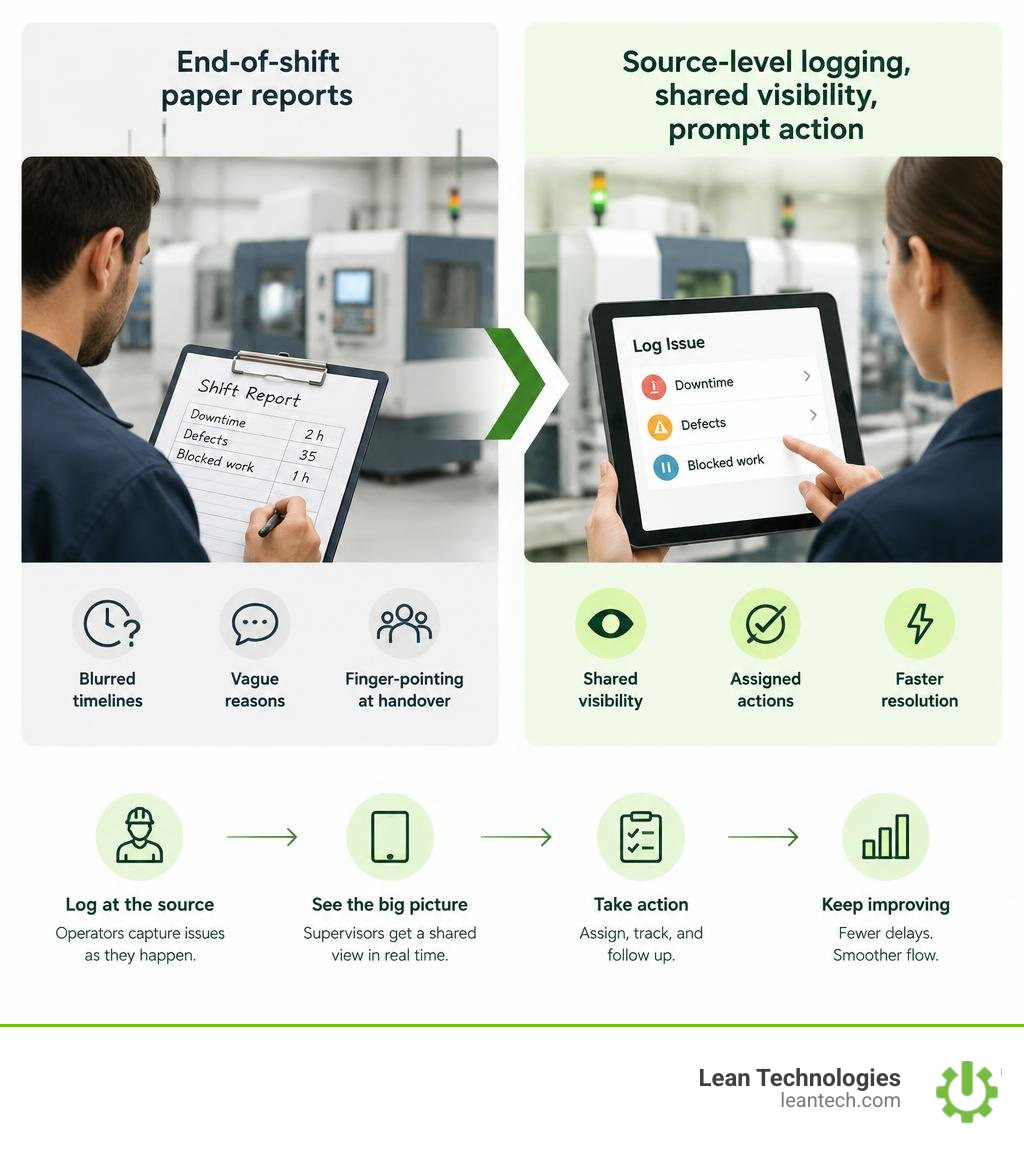
When problem solving relies on memory, facts get blurry. Operators filling out paper traveler sheets at the end of an eight-hour shift often guess downtime durations or lump multiple stoppages under vague categories like "machine jam." Implementing structured manufacturing shop floor data collection changes that dynamic entirely.
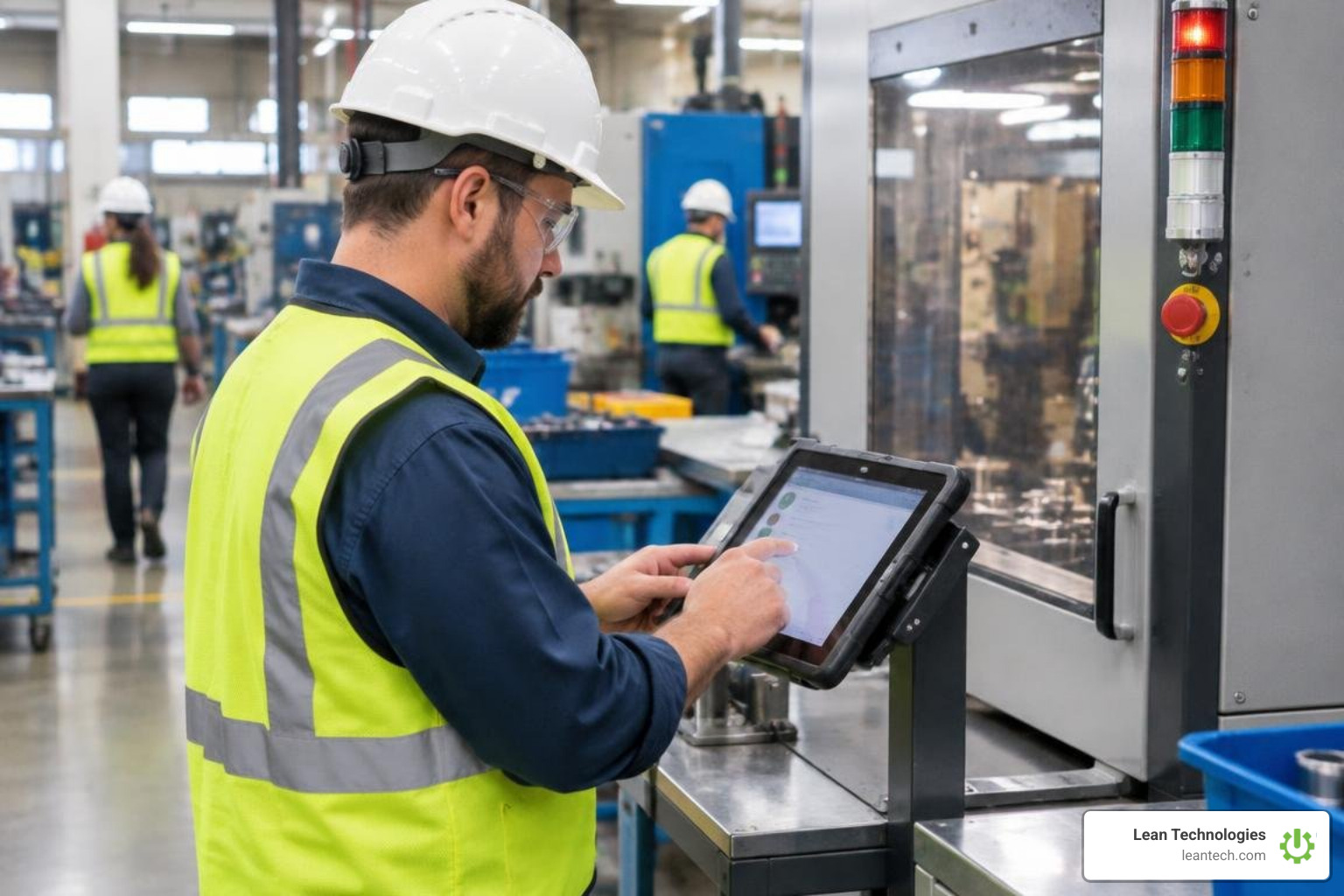
When you capture lean shopfloor real time data directly at the source, you strip away guesswork. Operators log scrap, micro-stoppages, and process deviations on mobile devices or tablets right at their workstations. Shift handovers transform from finger-pointing sessions into structured, fact-based reviews where incoming teams see open actions and recurring hiccups from the previous shift.
Capturing Waste (Muda) and Bottlenecks as They Happen
Lean manufacturing focuses on identifying and eliminating the eight classic wastes (Muda): defects, overproduction, waiting, non-utilized talent, transportation, inventory, motion, and extra processing. Traditional paper-based tracking hides these wastes until financial reports arrive weeks later.
Live data entry exposes waste immediately across your value stream:
Waiting time: When an assembly cell runs out of subcomponents, operators log the parts shortage immediately, alerting material handlers before downstream cells starve.
Overproduction: Real-time visibility ensures upstream processes stop feeding downstream queues when work-in-progress (WIP) reaches its limit.
Defects: Immediate scrap logging highlights tooling wear or bad raw material batches before hundreds of non-conforming units pile up.
During daily Gemba walks, operations managers and continuous improvement coordinators no longer need to guess where flow has stopped. Bottlenecks become visible the moment queues back up, allowing leaders to reallocate idle operators to high-demand workstations instantly.
Shortening Feedback Loops with Lean Shopfloor Real Time Data
Classic lean relies heavily on the Plan-Do-Check-Act (PDCA) cycle. The faster you spin that wheel, the faster your plant improves. Yet paper logs stretch PDCA cycles across days or weeks.
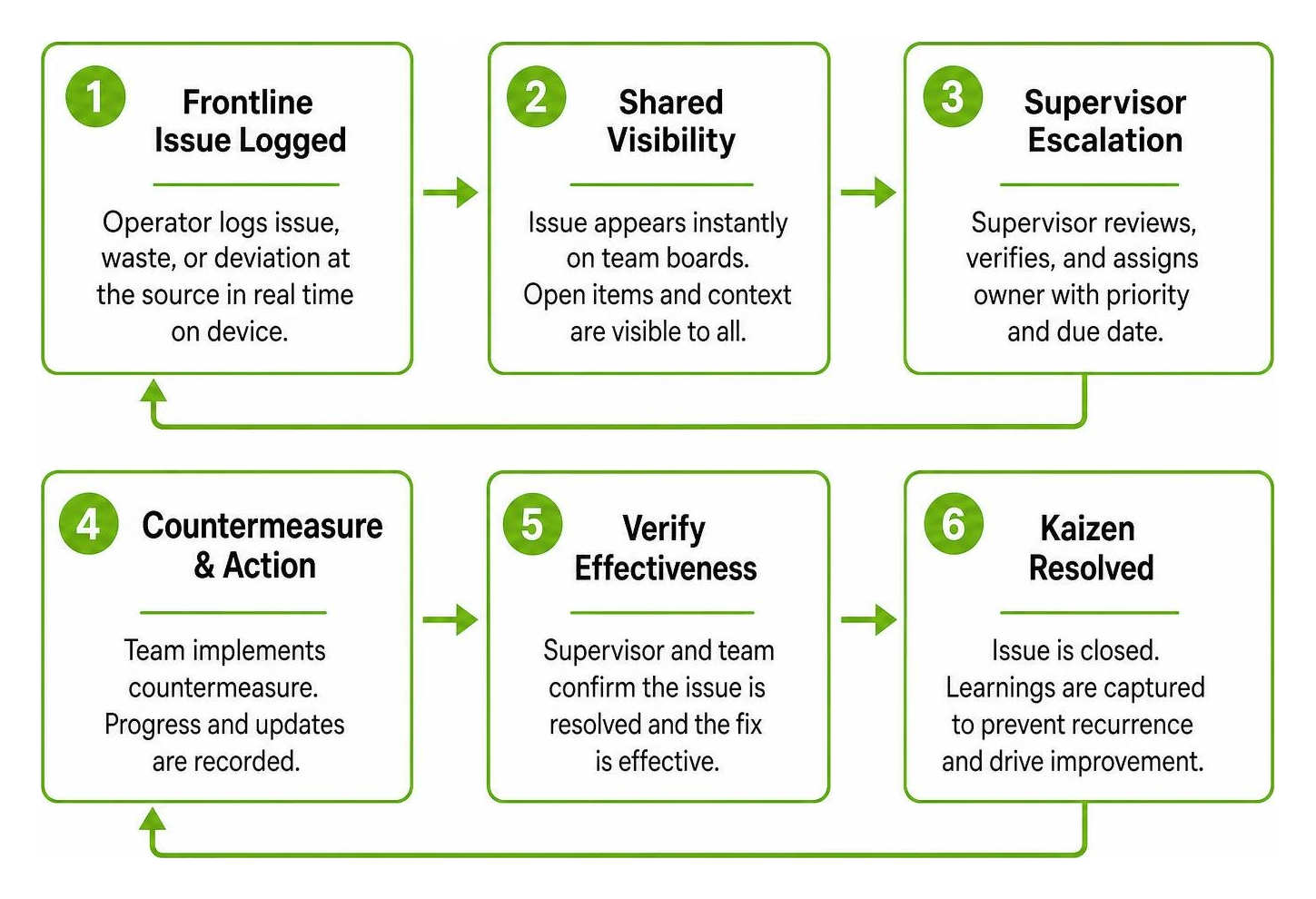
Access to real-time data for operations shortens feedback loops from shifts to minutes. When a quality deviation occurs on a packaging line, the operator logs the defect reason code into their station tablet. Quality assurance engineers see the entry instantly, walk to the cell, verify the issue, and assign a standardized countermeasure. Kaizen action items do not get lost in paper notebooks—they are tracked, owned, and closed out collaboratively.
Supporting Kanban and Pull Workflows with Live Shopfloor Inputs
A core tenet of lean production is moving from push manufacturing to pull workflows. Kanban helps downstream demand signal upstream production, preventing runaway inventory and bloated holding costs. Digitizing shop floor management elevates pull workflows by replacing easily misplaced physical cards with clear visual cues across work cells.
By linking operator inputs directly to digital visual boards, production schedules respond dynamically to actual part consumption. Upstream work cells receive unambiguous signals to replenish parts only when downstream cells consume inventory, keeping raw material and finished goods inventories lean.
Supporting the Six Core Kanban Practices
Real-time shopfloor data directly reinforces the six foundational practices of Kanban:
Visualize the Workflow: Live status entries show where jobs sit across every workstation, making stagnant orders stand out immediately.
Limit Work in Progress (WIP): Point-of-source updates enforce strict WIP caps. If an assembly station is at capacity, the system visually flags the line to prevent feeding more parts into the bottleneck.
Manage Flow: Tracking cycle time variance in real time allows supervisors to smooth out production spikes and balance line speeds.
Make Process Policies Explicit: Standardized digital task lists and checklists ensure operators follow standard operating procedures before moving cards to the next stage.
Implement Feedback Loops: Tiered daily meetings leverage real-time shift data to review open actions and operational roadblocks.
Improve Collaboratively: Frontline teams and CI leaders use accurate operational logs to pinpoint recurring root causes and execute targeted Kaizen events.
Physical vs. Digital Kanban Boards for Flow Optimization
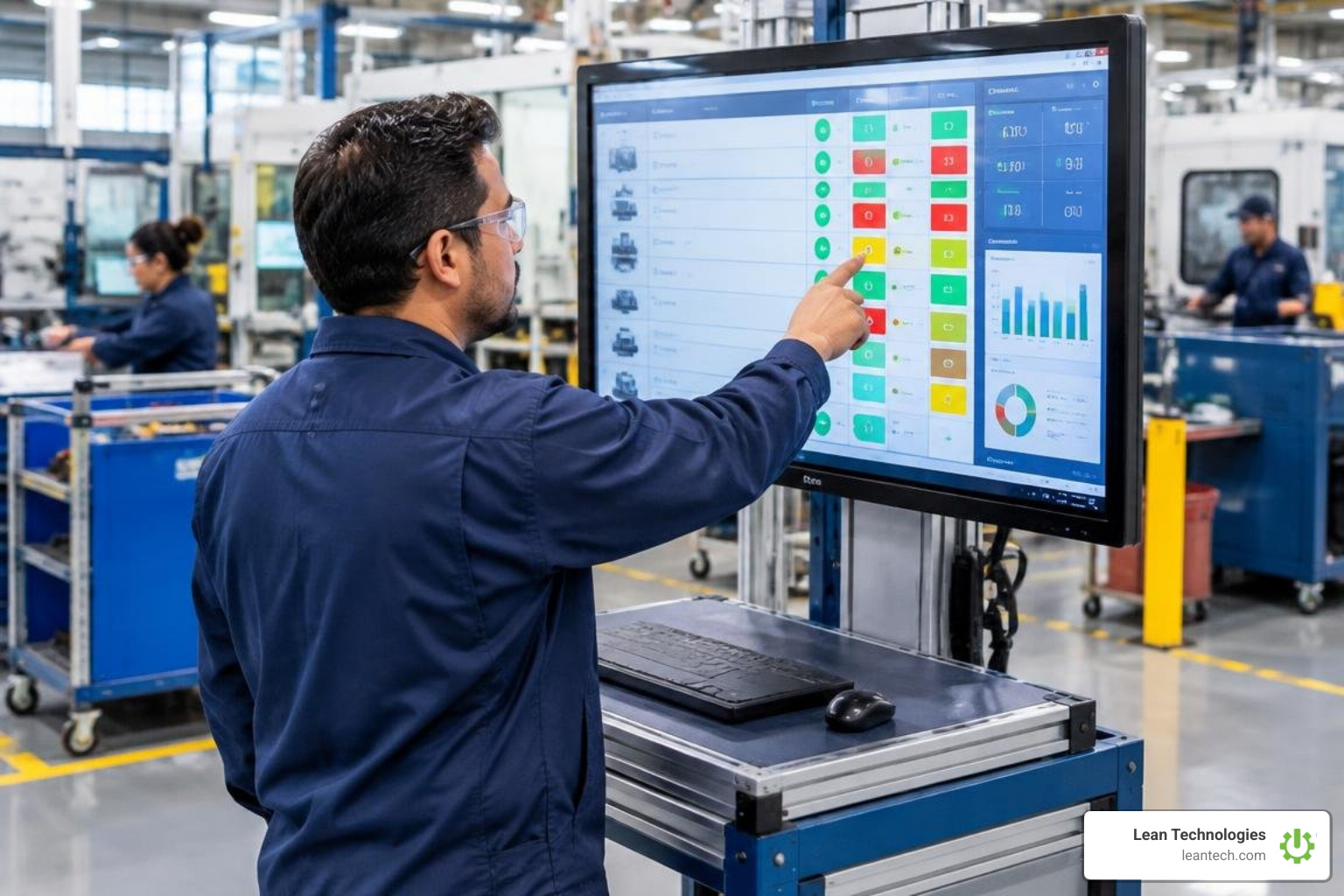
Physical whiteboards with magnetic tags or paper cards played a pivotal role in early lean implementations. However, as modern plants scale, physical boards introduce distinct friction points. Adopting digital lean tools for shop floor management overcomes these physical constraints while preserving visual clarity.
Feature | Physical Whiteboards & Paper Cards | Digital Visual Management Boards |
|---|---|---|
Update Speed | Manual walk-up required; delays between events and updates | Instant update at the workstation via tablet or mobile |
Data Accuracy | High risk of lost cards, forgotten tallies, and human error | High fidelity; timestamped entries linked to operator logs |
Scalability | Limited to local cell visibility; impossible to track across multiple plants | Scales across cells, shifts, departments, and multiple facilities |
Visibility | Visible only to those physically standing at the board | Accessible remotely by supervisors, maintenance, and managers |
Historical Analysis | Manual transcription into spreadsheets required | Searchable history for root cause tracking and Kaizen events |
Essential Metrics and KPIs to Monitor at the Source
To maintain continuous flow, frontline teams need clear, simple metrics that tell them whether they are winning or losing the shift. Capturing data directly at the source powers accurate real-time production monitoring without burying operators under complex paperwork.
Key metrics to monitor at the cell level include:
Takt Time vs. Cycle Time: Compare the customer demand pace against actual cycle times to catch pacing deficits before shipping deadlines slip.
First-Pass Yield (FPY): Track parts produced right the first time versus reworked units to isolate tooling or material defects early.
Mean Time to Repair (MTTR): Measure how quickly maintenance responds and resolves machine stoppages once an operator logs an issue.
Overall Equipment Effectiveness (OEE) Factors: Monitor availability, performance, and quality losses categorized by operator-assigned reason codes.
Tracking WIP, Cycle Times, and Takt Time Alignment
Excess work-in-progress hides production problems like high water hiding rocks. When WIP piles up between cells, lead times expand and cash sits trapped on the shopfloor.
By utilizing clean manufacturing data visualization, teams can spot cycle time drift immediately. If Station 3 averages 4 minutes per unit while Station 4 takes 7 minutes, parts inevitably bottleneck between them. Live data highlights this variance immediately, enabling supervisors to balance operator allocations or adjust batch sizes before the cell chokes.
Optimizing Throughput Using Lean Shopfloor Real Time Data
Throughput optimization requires consistent leveling (Heijunka). Real-time frontline data allows operations managers to respond dynamically to daily shifts in product mix and customer orders. When an urgent order enters production, supervisors evaluate current station capacities across their digital boards, reassign cross-trained operators to high-load cells, and keep overall line flow steady.
Best Practices for Integrating Live Shopfloor Data with Existing Systems
Introducing live data capture does not mean you have to overhaul your entire technology infrastructure. The key is connecting frontline team activities with broader plant goals across a connected shop floor.
Bridging ERP Records and Daily Frontline Execution
Small to midsize manufacturers often struggle with a common gap: their ERP manages enterprise orders and purchasing, but offers little visibility into daily line-level execution. This leaves supervisors relying on whiteboards and paper logs to run their shifts.
When evaluating shop floor tools, focus on the must-have features in shop floor management software that provide simple mobile workflows without disrupting central systems.
Thrive serves as a flexible digital toolbox for small and midsize manufacturers that digitizes lean work processes. Thrive is not an ERP or MES, and it is not designed to replace existing ERP or MES systems. Instead, it complements them. Thrive does not gather automated sensor feeds or run predictive equipment algorithms; rather, it organizes and drives clear action from machine and production data entered directly by your team or imported from other systems. This approach gives supervisors and CI managers instant operational context right when data is entered at the source.
Overcoming Cultural and Data Entry Friction on the Line
A digital lean rollout succeeds or fails based on frontline buy-in. If software feels like a micromanagement tool or requires 15 clicks to log a single jammed conveyor, operators will bypass it.
To drive high adoption:
Keep interfaces dead simple: Minimize typing. Use big buttons, standardized drop-down menus, and clear visual categories on tablets.
Close the loop quickly: Show operators that their inputs matter. When an operator logs a recurring safety hazard or minor stoppage, ensure supervisors assign an action and resolve it promptly.
Anchor data in tiered meetings: Use team-logged data directly in daily stand-ups (Tier 1, Tier 2, Tier 3). When teams see their logs shaping daily shift decisions, accountability becomes second nature.
Frequently Asked Questions About Live Lean Data and Problem Solving
How does real-time shopfloor data improve traditional Kanban boards?
Live digital data updates work cell status instantly, flags WIP limit breaches, and tracks lead times accurately across shifts. It eliminates common physical Kanban issues like lost paper cards, outdated whiteboard tallies, and limited visibility for supervisors working outside the immediate cell.
What is the difference between capturing data at the source versus end-of-shift reporting?
Source data capture records machine downtime, defects, and part shortages the moment they happen via tablets or mobile devices. End-of-shift reporting relies on operator memory hours after an event, resulting in vague downtime categories, lost detail, and missed opportunities to contain issues during the shift.
Can small and midsize manufacturers implement real-time lean data without replacing their ERP?
Yes. Modern digital toolboxes like Thrive sit alongside your existing ERP and MES systems rather than replacing them. They digitize frontline standard work, visual boards, defect logging, and action tracking, providing operational agility without expensive IT overhauls or system replacements.
What to Do Next
Transforming shopfloor problem solving starts by replacing end-of-shift guesswork with frontline visibility. When operators have intuitive tools to log issues at the workstation, supervisors and CI leaders can clear bottlenecks, balance flow, and sustain continuous improvement.
Explore Lean Technologies' comprehensive guide to digital lean manufacturing to learn how practical digital workflows help plants eliminate waste and build frontline accountability. Capturing lean shopfloor real time data directly at the source gives your team the daily visibility needed to solve problems while there is still time to hit shift targets.