
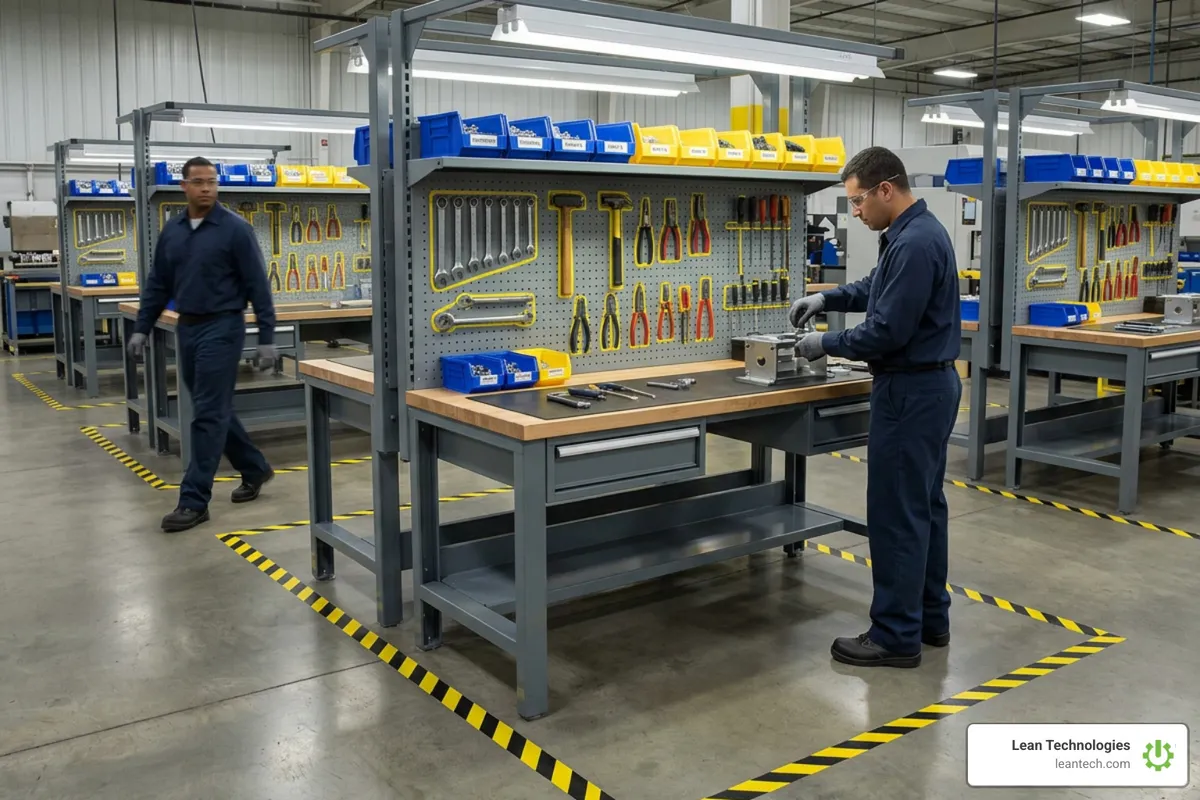
6S in Lean: A Practical Field Guide to Standardized Visual Management
The Evolution from 5S to 6S in Lean Manufacturing
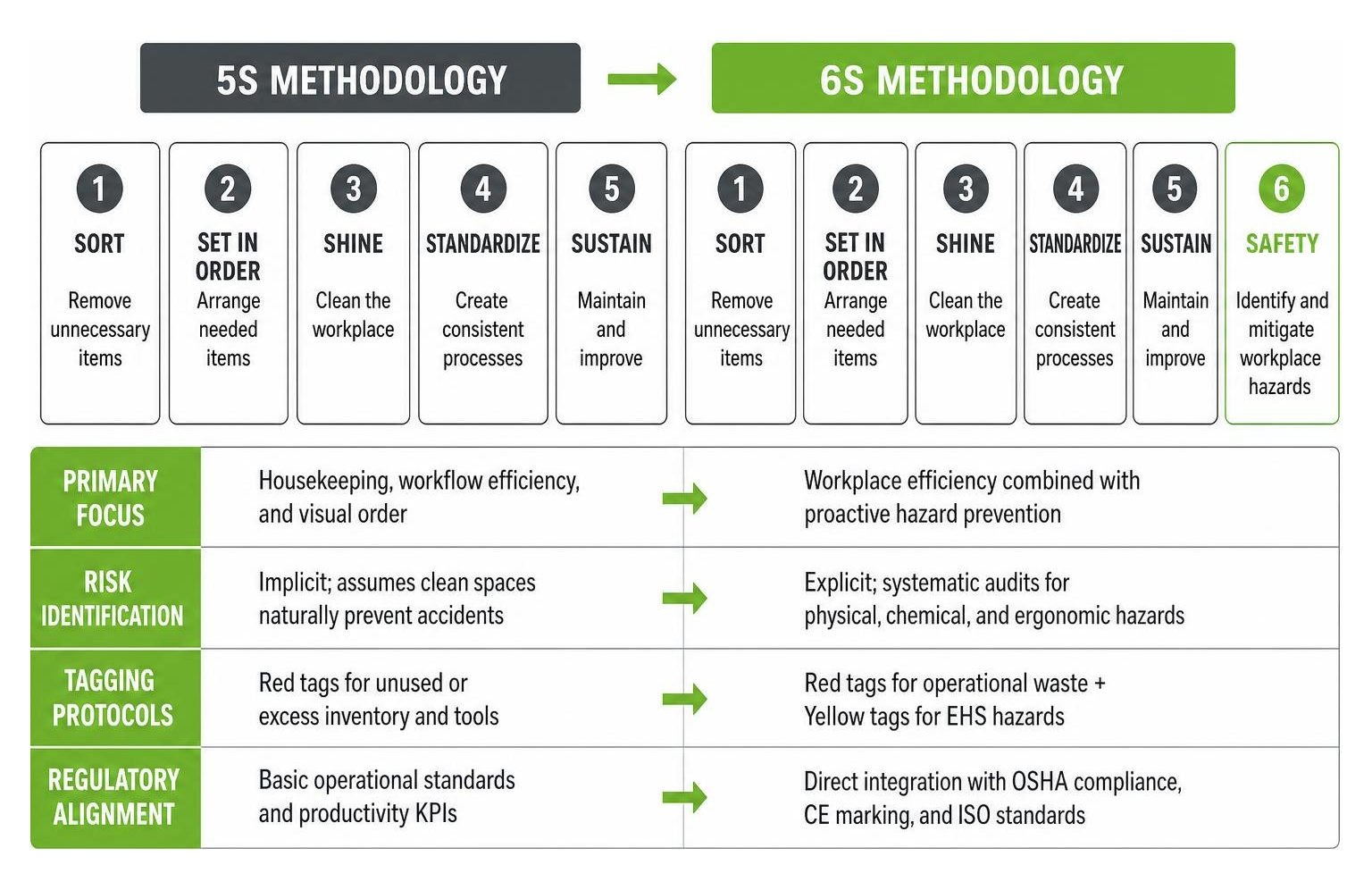
6S in lean is a standardized workplace organization methodology that builds on the traditional 5S framework—Sort, Set in Order, Shine, Standardize, and Sustain—by embedding Safety as an explicit, audited sixth pillar. While organized workspaces eliminate operational waste (muda), a tidy line can still conceal severe pinch points, ungrounded wiring, or chemical exposure hazards. 6S elevates risk mitigation alongside visual order, ensuring proactive hazard prevention is integrated directly into daily frontline routines.
The classic 5S framework originated in post-war Japanese manufacturing as a foundational method for operational excellence. It focused on eliminating waiting, excess motion, overprocessing, and defects caused by disorganized work cells. As manufacturing environments grew more complex, plants recognized that operational efficiency cannot thrive without physical safety, making systematic hazard evaluation essential.
Dimension | Traditional 5S Methodology | 6S Lean Methodology |
|---|---|---|
Primary Focus | Housekeeping, workflow efficiency, and visual order | Workplace efficiency combined with proactive hazard prevention |
Core Pillars | Sort, Set in Order, Shine, Standardize, Sustain | Sort, Set in Order, Shine, Standardize, Sustain, + Safety |
Risk Identification | Implicit; assumes clean spaces naturally prevent accidents | Explicit; systematic audits for physical, chemical, and ergonomic hazards |
Tagging Protocols | Red tags for unused or excess inventory and tools | Red tags for operational waste + Yellow tags for EHS hazards |
Regulatory Alignment | Basic operational standards and productivity KPIs | Direct integration with OSHA compliance, CE marking, and ISO standards |
Why Safety Deserves a Dedicated Pillar
Treating safety as an assumed byproduct of order creates dangerous blind spots. Proactive hazard prevention requires deliberate evaluation of machinery, operator motion, and environmental conditions.
Adding an explicit safety pillar transforms the culture from reactive incident reporting to daily hazard mitigation. According to OSHA, implementing structured safety programs can reduce workplace injury and illness rates by up to 40%. When safety is integrated directly into shopfloor routines, operators address repetitive strain issues, inspect machine guarding, verify Personal Protective Equipment (PPE) compliance, and flag trip hazards during their daily shifts.
Organizations looking to safeguard their teams can review practical frameworks for workplace health and safety to establish proactive safety habits across every operational line.
Evaluating 5S vs 6S for Your Facility Risk Profile
Deciding between 5S and 6S comes down to your operational risk profile and regulatory landscape:
High-Hazard Environments (Choose 6S): Facilities utilizing heavy machinery, punch presses, high-speed automation, hazardous chemicals, or extreme thermal processing require 6S. In these environments, operational discipline must immediately flag missing interlocks, worn hoses, or compromised ventilation.
Strictly Regulated Industries (Choose 6S): Food processing, medical device manufacturing, and aerospace operations benefit heavily from 6S. For example, research into lean 6S in food production shows that aligning safety and hygiene protocols with HACCP benchmarks creates a reliable standard for both product and operator safety.
Low-Risk Workflows (5S May Suffice): Low-hazard environments, such as administrative spaces, light bench assembly, or purely digital workflows, may find classic 5S adequate. However, many plants still adopt 6S globally to maintain a uniform continuous improvement culture across both production and support departments.
Breaking Down the Six Pillars of Workplace Organization
A successful 6S implementation relies on executing all six steps methodically rather than treating the framework as a spring-cleaning checklist.
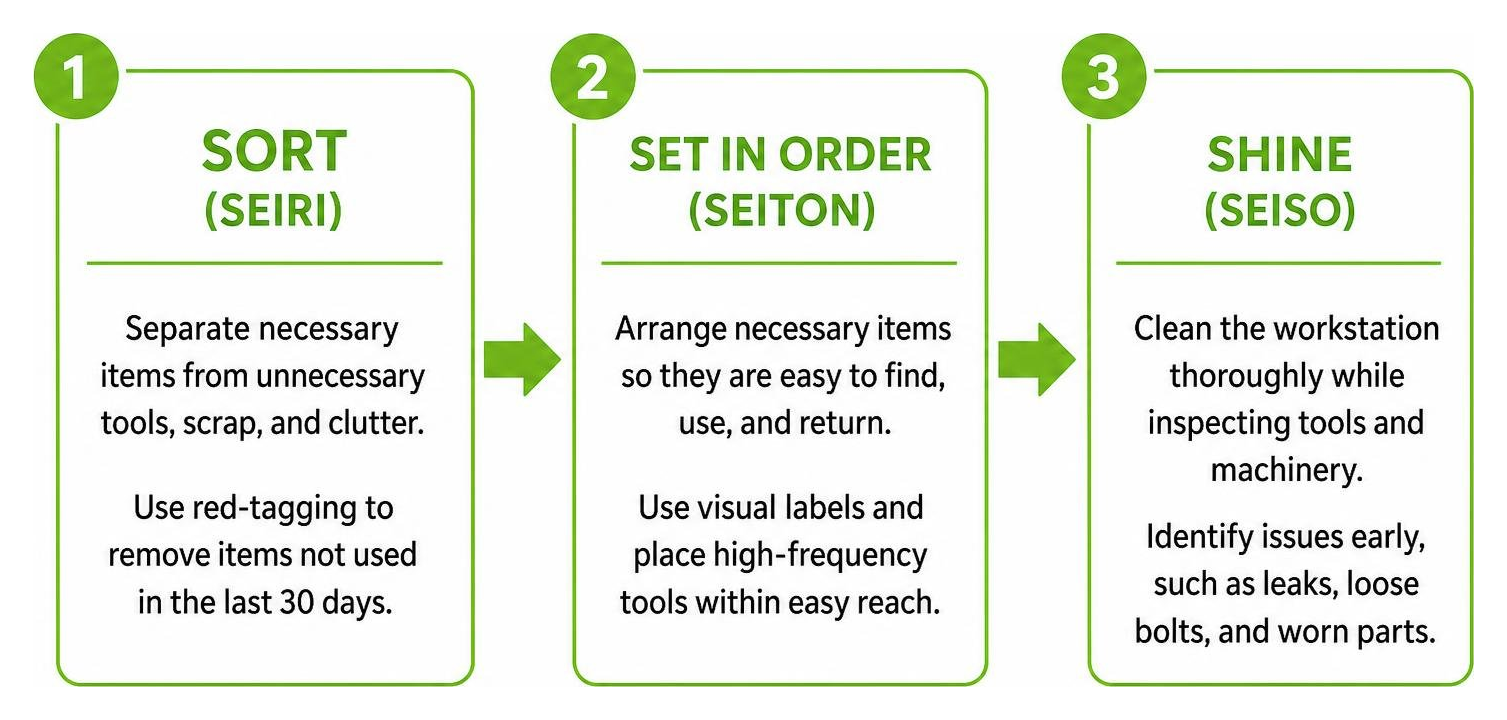
Step 1 to 3: Sort (Seiri), Set in Order (Seiton), and Shine (Seiso)
The first three pillars establish the physical baseline of the workstation:
Sort (Seiri): Separate necessary items from unnecessary tools, scrap, and clutter. Implement a strict red-tagging protocol: if an item has not been used within the last 30 days, tag it, remove it to a holding area, and reallocate or scrap it.
Set in Order (Seiton): Arrange necessary items so they are easy to find, use, and return. Use custom shadow boards, color-coded floor tape, and visual labels. Position high-frequency tools within the operator's primary reach zone to minimize wasted motion and ergonomic fatigue.
Shine (Seiso): Clean the workstation thoroughly while inspecting tools and machinery. Shine serves as an early-warning diagnostic routine: wiping down a machine reveals oil leaks, loose bolts, worn belts, or structural fatigue before they cause unexpected downtime.
To expand your toolkit beyond 6S, explore our complete overview of continuous improvement tools in manufacturing.
Integrating Safety as the Sixth Pillar of 6S in Lean
Safety functions both as a standalone assessment phase and as an active filter applied across all other steps. Scholarly work on the extension of the lean 5S methodology to 6S highlights that placing safety assessments directly alongside physical organization systematically enforces CE-mark machine validation, emergency stop testing, and PPE compliance.
Integrating safety involves:
Machine Guarding & Interlocks: Verifying physical barriers, light curtains, and physical lockouts are fully operational.
Ergonomic Layouts: Adjusting work surface heights and material flow to prevent awkward bending, reaching, or heavy manual lifting.
Hazard Marking: Clearly designating high-voltage panels, forklift traffic intersections, and emergency eyewash stations.
Root Cause Problem Solving: Investigating near-miss events during daily walkthroughs using 5-Why analysis to eliminate risks before an injury occurs.
Step 4 and 5: Standardize (Seiketsu) and Sustain (Shitsuke)
The final steps ensure long-term consistency and prevent workstations from slipping back into disarray:
Standardize (Seiketsu): Convert the ideal work state into clear, visual standard work instructions. Create one-point lessons, color-coded equipment manuals, and daily 5-minute cleanup checklists posted directly at the cell.
Sustain (Shitsuke): Build habits through disciplined routines, regular audit cadences, and leadership reinforcement. Frontline accountability requires supervisors and operators to walk the floor together, discuss abnormalities openly, and celebrate teams that maintain high standards.
Integrating EHS, Sustainability, and Industry 4.0
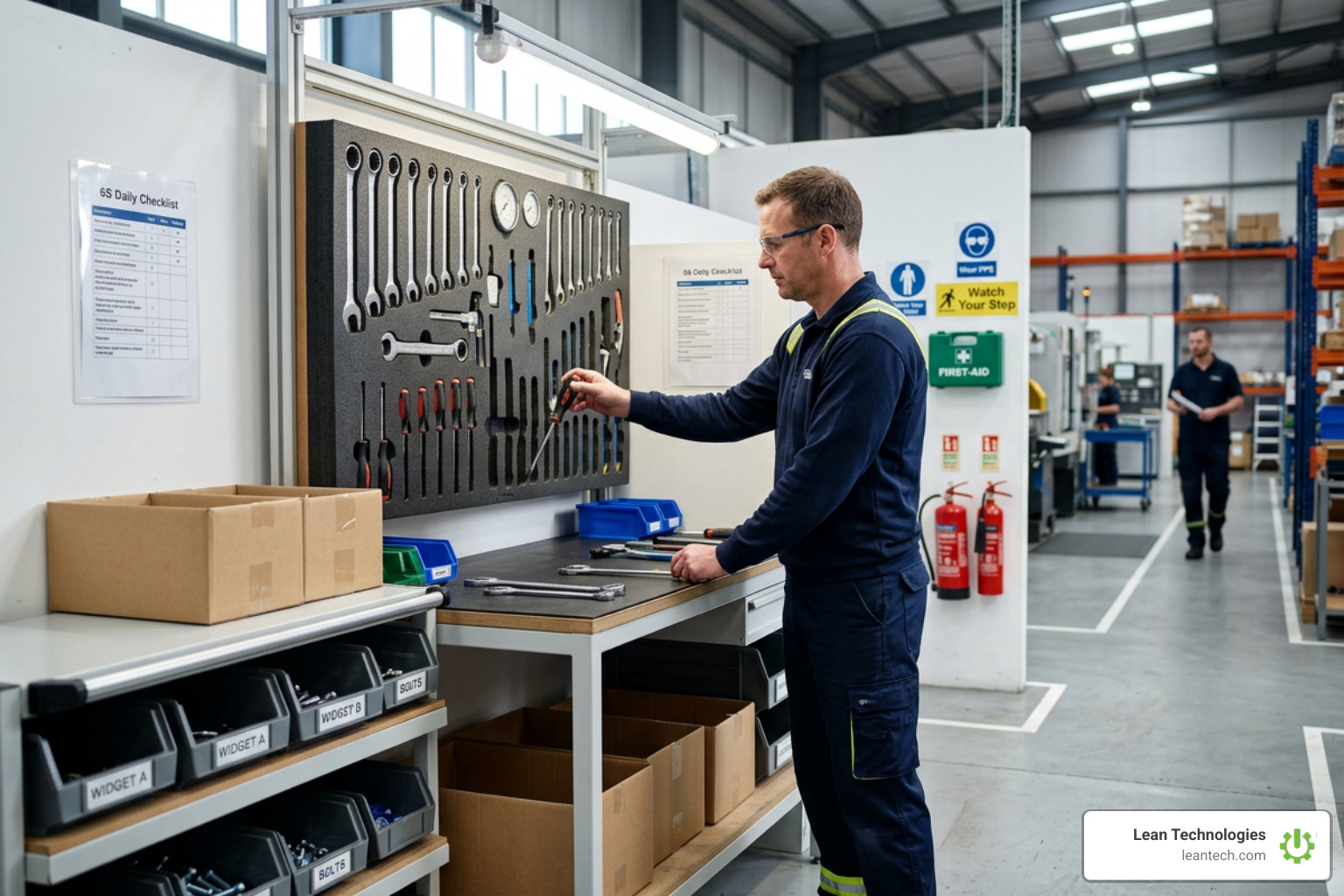
Modern manufacturing connects shopfloor visual management directly with Environmental, Health, and Safety (EHS) goals, resource efficiency, and ESG frameworks like ISO 14001.
Yellow-Tagging and Environmental Waste Elimination
While red tags identify operational waste, yellow tags flag environmental, chemical, and safety risks. According to the EPA's Lean and Environment Toolkit Chapter 5, structured visual tagging during 6S inspections identifies up to 20% of hidden environmental hazards during a single sort event.
The yellow-tagging process works through four clear stages:
Target Identification: Spot unlabelled chemical containers, leaking hydraulic lines, obsolete solvents, or improper scrap storage.
Tag Attachment: Secure a high-visibility yellow tag detailing the exact hazard, date, and initial severity level.
Evaluation and Mitigation: Work with EHS specialists to safely neutralize, dispose of, or substitute the hazardous material.
Documentation: Log corrective actions in a shared central system to ensure traceability and prevent recurrence.
Research on the adaptation of lean 6S under sustainability and Industry 4.0 criteria shows that combining environmental waste reduction with visual management cuts material waste by 10% to 15% while improving regulatory compliance.
Digital Auditing and Industry 4.0 Tools for 6S in Lean
Paper audit sheets, static clipboards, and disconnected spreadsheets slow down continuous improvement. Paper forms get lost, action items sit unassigned, and managers struggle with late downtime logs and scattered compliance data.
Modern operations eliminate these paper workarounds by moving to digital platforms. Frontline operators use tablets or mobile devices to complete audits in minutes, capture photos of tagged hazards, and assign corrective tasks instantly. Plant managers gain unified visibility across lines and shifts, making it simple to track recurring defects and spot systemic bottlenecks.
To learn how to transition from clipboards to modern workflows, review our guide on digitizing 5S audits, or explore the broader operational benefits of digital lean management.
Implementation Roadmaps, Audit Scoring, and Overcoming Challenges

Rolling out 6S successfully requires a structured implementation plan, clear maturity scoring, and dedicated change management across all shifts.
For a comprehensive implementation framework, consult our complete guide to lean manufacturing solutions.
Conducting Audits and Tracking the 6S Maturity Model
Audits must evaluate operational discipline objectively rather than relying on subjective opinions. Evaluate each of the six pillars on a 1-to-5 maturity scale:
Level 1 (Initial / Ad-Hoc): Clutter is widespread; tools are frequently missing; safety hazards are unaddressed; no written standards exist.
Level 2 (Basic Awareness): Initial sort events completed; some labels and floor tape applied; reactive safety fixes underway.
Level 3 (Standardized): Visual controls clearly visible across the entire cell; daily shine and inspection checklists completed consistently; no active red or yellow tags past due.
Level 4 (Managed & Audited): Regular digital audits conducted across shifts; root-cause analysis applied to all audit findings; proactive safety hazard identification is standard practice.
Level 5 (World-Class / Continuous Improvement): Workstations are fully optimized for waste-free flow; visual standards are self-sustaining; operators proactively log Kaizen ideas to improve safety and cycle times.
To see how connected operations support this maturity model, read our guide on what is digital lean and why it represents manufacturing future.

Overcoming Common Roadblocks in Frontline Adoption
Frontline programs often face friction during rollout. Common challenges include:
"We don't have time to clean": When schedules are tight, housekeeping is the first task dropped. Solve this by building a mandatory 5-minute 6S routine into standard shift-change procedures.
Unclosed Action Loops: If operators tag a broken tool or oil leak and nothing happens for weeks, engagement drops. Use a shared action tracking board with clear ownership and due dates to resolve issues quickly.
Shift-to-Shift Friction: First shift blames second shift for leaving a messy cell. Clear visual standards, shadow boards, and end-of-shift photo sign-offs eliminate ambiguity about how the cell should look.
Lack of Recognition: Celebrate wins. Publicly acknowledge the teams that achieve high audit scores or suggest impactful safety improvements during daily stand-up meetings.
Frequently Asked Questions about 6S Lean
What is the primary difference between 5S and 6S Lean?
While 5S focuses on workplace organization, waste reduction, and visual efficiency, 6S adds Safety as an explicit sixth pillar. This guarantees that risk assessments, machine guarding, ergonomics, and PPE compliance are audited with the same discipline as tool placement and housekeeping.
How does yellow-tagging differ from red-tagging in 6S?
Red tags identify operational clutter, obsolete tools, or excess materials that need to be removed to optimize workflow. Yellow tags specifically identify Environmental, Health, and Safety (EHS) risks—such as chemical spills, missing safety data sheets, broken interlocks, or ungrounded wiring—that require corrective mitigation.
How frequently should a plant conduct 6S audits?
Plants typically run daily 5-minute visual sweeps by line operators at shift change, weekly audits conducted by area supervisors, and monthly cross-functional audits led by continuous improvement and safety managers.
What to Do Next
A successful 6S program stabilizes production cells, keeps operators safe, and uncovers hidden inefficiencies before they turn into costly downtime or injuries. But managing visual standards with paper forms, clipboards, and static whiteboards often leads to lost action items, incomplete audit trails, and disconnected teams.
Thrive is a digital platform built for small to midsize manufacturers to digitize lean work processes in real time without replacing ERPs or MES systems. It acts as a flexible digital toolbox for logging issues, tracking actions, and driving continuous improvement across the shop floor.
Thrive provides real-time visibility only when processes are structured and data is entered at the source via mobile, tablet, or desktop. It does not collect sensor data or run predictive alerts; instead, it organizes action from machine data entered by teams or imported from other systems.
Whether your goal is resolving daily equipment tags, streamlining shift handovers, or improving visual management, explore our lean shopfloor safety and visual management solutions to bring structured frontline accountability to your 6s in lean journey.