Quality Software Options for Small Manufacturers
The Real Cost of Poor Quality on Your Shop Floor
Quality software for small manufacturers isn't a luxury anymore — it's the difference between catching a defect before it ships and issuing a recall after it does.
Here's a fast answer to what quality software actually is and what it should do:
What It Is What It Does A digital system for managing product and process quality Replaces paper logs, spreadsheets, and end-of-shift guesswork A compliance and audit tool Centralizes documentation so audits don't feel like fire drills A nonconformance and CAPA platform Captures issues in real time and routes them to the right person A supplier and risk management hub Tracks supplier performance and flags problems before they escalate An ROI driver Reduces the Cost of Poor Quality (COPQ) through faster, smarter action
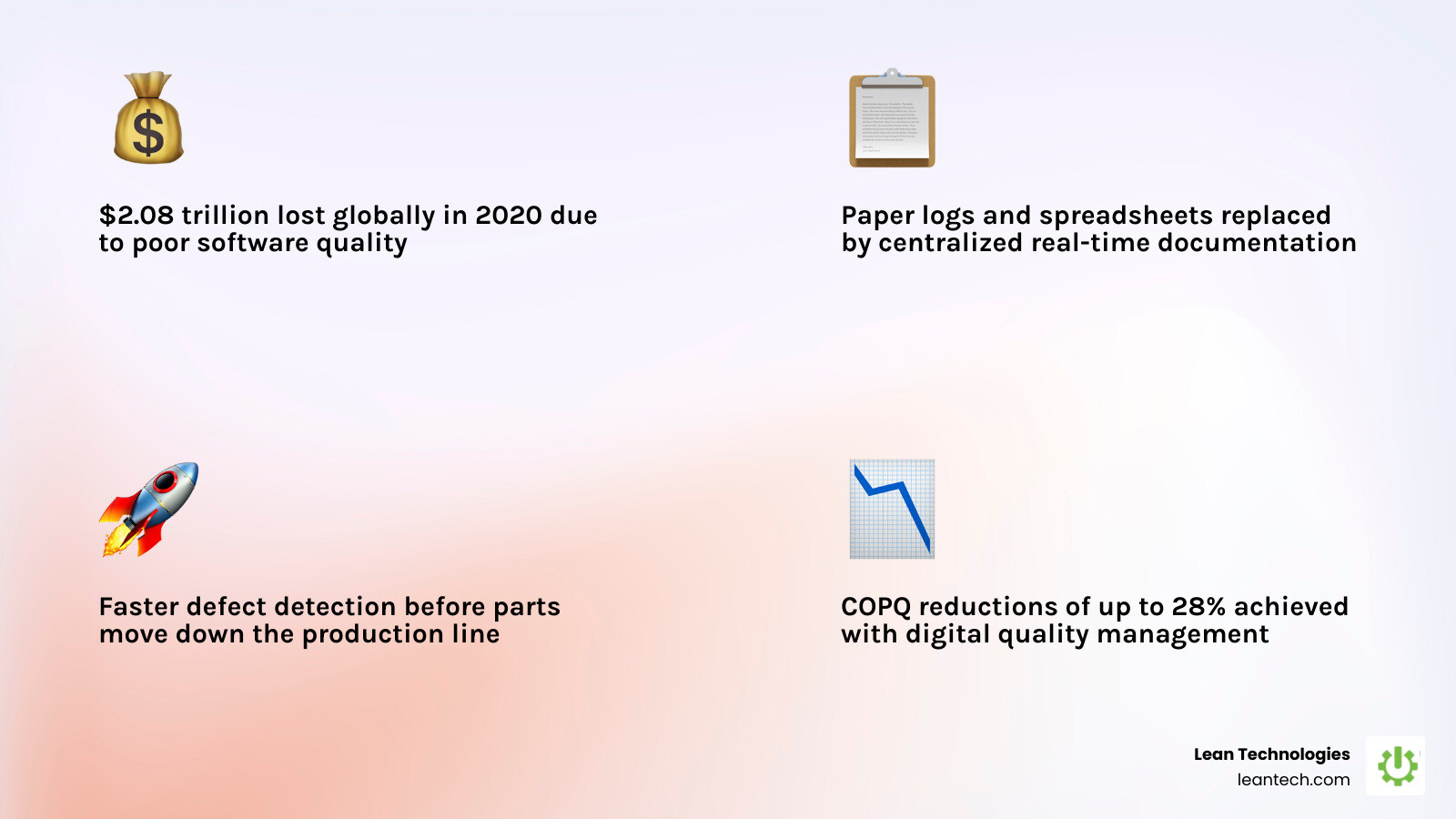
Here's the hard truth: poor software quality cost businesses an estimated $2.08 trillion globally in 2020. For small manufacturers, that number isn't abstract — it shows up as scrap, rework, customer complaints, and missed shipments.
The problem isn't that shop floor teams don't care about quality. It's that they're working with tools that make it nearly impossible to act fast. Paper travelers get lost. Spreadsheets get updated at the end of the week — if at all. By the time a manager sees the data, the defect has already moved three stations down the line.
Real-time visibility changes that. When quality data is captured at the source — by the operator, at the machine, on a tablet — you stop reacting and start preventing.
This article compares the top quality software options available for small manufacturers in 2026, so you can cut through the noise and find what actually works on your shop floor.
Why Small Manufacturers Need Quality Software in 2026
The Cost of Poor Quality (COPQ) isn't just a line item; it’s a silent killer that eats your margins from the inside out. In the current landscape of May 2026, the pressure on small manufacturers to deliver "Right First Time" has never been higher.
According to Software quality - Wikipedia, quality is often divided into two categories: functional and structural. Functional quality is about whether the software (or the product it helps create) does what it’s supposed to do. Structural quality is about how well it’s built—its reliability and maintainability.
For a manufacturer, poor structural quality in your internal systems leads to the $2.08 trillion global impact mentioned earlier. Interestingly, research shows that basic code errors account for 92% of total errors but only 10% of production defects. The real danger lies in system-level errors—bad architectural practices that account for only 8% of defects but cause 90% of serious reliability and security issues.
When you implement quality software, you aren't just buying a digital checklist; you are building a system that prevents these high-impact failures. Using tools for Defect Scrap Tracking allows you to see exactly where the bleed is happening so you can plug it before it drains your profit.
Moving Beyond Paper-Based Systems
Paper is where data goes to die. If your quality process relies on "paper travelers" or clipboards, you’re operating in the dark. Paper creates data silos—information that is trapped in a physical folder, inaccessible to the rest of the team until someone manually types it into a spreadsheet days later.
By then, it's historical fiction. You can't fix a part that was scrapped on Tuesday if you only find out about it on Friday. Transitioning to digital Nonconformance logging ensures that when an operator finds an issue, the Quality Manager knows about it in seconds, not days.
Digital systems also solve the "accountability gap." With paper, it's easy for a signature to be forged or a step to be skipped. With quality software, every action leaves a digital breadcrumb. This creates a culture of traceability and ensures audit readiness. When an auditor asks for the maintenance history of a specific machine, you don't want to be the person sweating over a filing cabinet. You want to be the person who clicks a button and hands over a report.
Leveraging AI and Modern Quality Software Trends
In 2026, the trend has shifted from "detecting" errors to "predicting" them. Modern quality software now incorporates AI-driven predictive analytics and automated workflows. These tools don't just tell you that a part is bad; they flag when a machine's performance is trending toward a defect.
One of the most effective strategies today is the "shift-left" methodology. This means moving quality checks as far "left" (early) in the production process as possible. Instead of checking quality at final assembly, you’re checking it at every step of the journey.
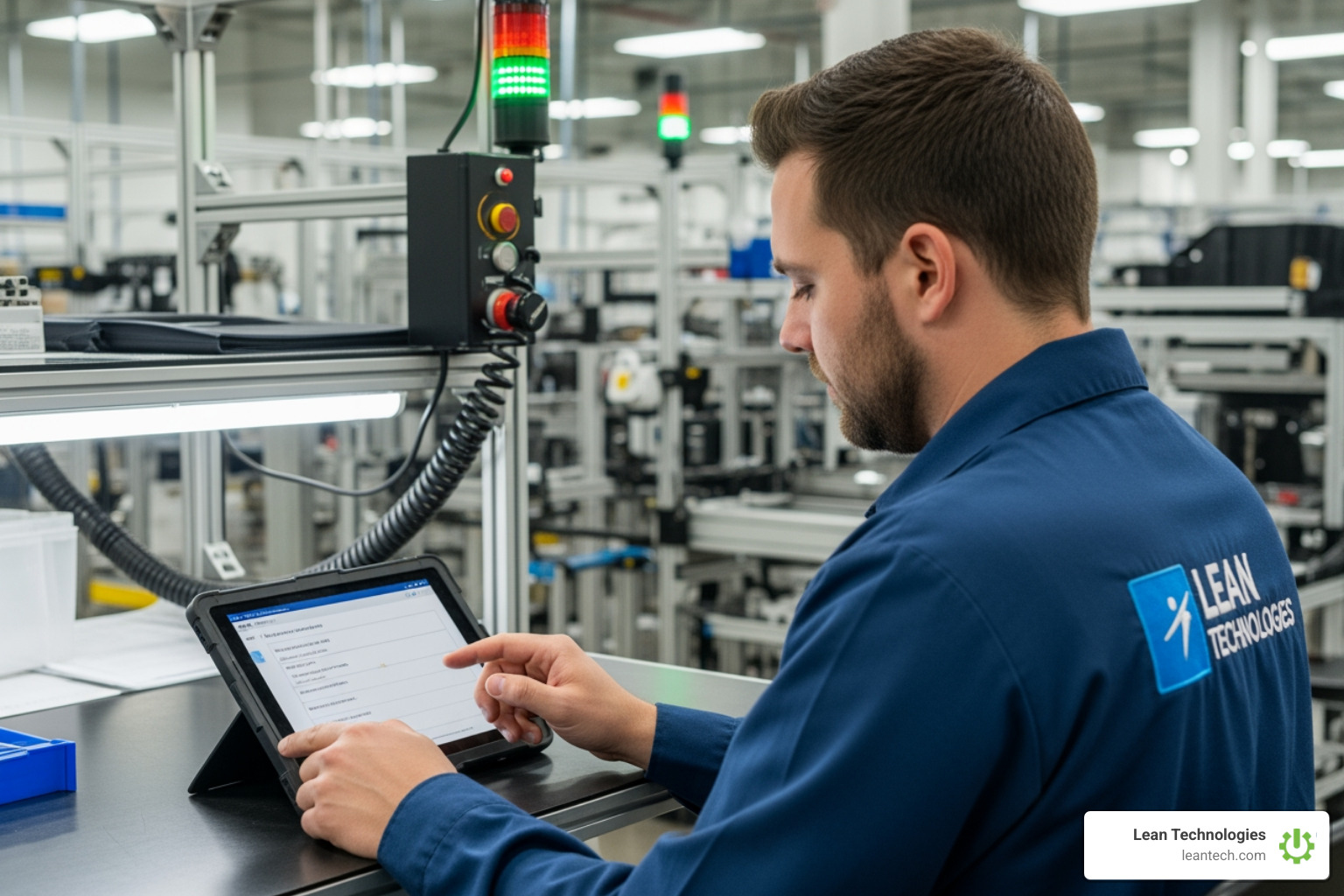
Mobile-first tools are the backbone of this movement. By putting quality software in the hands of the operators on the shop floor, you empower the people closest to the work to stop the line when something isn't right. This is the essence of Software Quality Assurance, where the goal is defect prevention rather than just detection.
Core Features of Enterprise-Grade Quality Management
You don't need a bloated, expensive system that takes two years to implement. You need a functional digital toolbox that solves real problems. For a small manufacturer, enterprise-grade quality software should include:
CAPA (Corrective and Preventive Actions): A structured way to not just fix a problem, but ensure it never happens again.
Document Control: Ensuring everyone is working from the latest version of a drawing or SOP.
Audit Management: Scheduling and executing Audits and Safety Audits without the paperwork headache.
Risk Management: Identifying potential failure points (FMEA) before they result in scrap.
Supplier Quality: Monitoring the performance of your vendors to ensure their bad parts don't become your bad products.
Feature Manual Process Automated Quality Software Data Entry Scribbled on paper, typed later Logged instantly via tablet/mobile Visibility "I'll check the folder" Real-time dashboard Audit Prep 2 weeks of stress 2 hours of clicking CAPA Tracking Email chains and verbal "fixes" Automated workflows and reminders SOP Updates Printing and replacing binders Instant digital version control
Achieving Compliance with International Standards
Compliance is often the biggest driver for adopting quality software. Whether it's ISO 9001, AS9100, or industry-specific regulations from the FAA or EASA, the requirements for documentation are brutal.
Traditional quality management is reactive—you scramble to get ready for the audit. Modern Thrive Quality Management is proactive. Because the system enforces the process in real time, you are always audit-ready.
Digital systems provide a "single source of truth." When an auditor sees that your version control is automated and your training records are linked directly to your SOPs, the audit stops being a "fire drill" and becomes a routine check-in. In fact, some manufacturers have reported an 85% reduction in ISO audit preparation time—moving from two weeks of preparation down to just two hours.
Integrating Quality Tools with ERP and MES
There is a common misconception that you have to choose between an ERP and a quality system. In reality, Thrive is not an ERP or an MES—it’s the digital toolbox that makes those systems actually work for the people on the floor.
ERP systems are great for accounting and high-level scheduling, but they are often too clunky for an operator to use for logging a quick defect. By integrating quality tools with your existing systems, you create a "digital thread" that connects your virtual plans to your physical execution.
This integration breaks down the silos between the office and the shop floor. When quality data is centralized, the production manager, the quality engineer, and the maintenance tech are all looking at the same real-time data. This is the core of Software Quality Management—creating a cohesive environment where technology supports the process rather than complicating it.
Measuring ROI and Effectiveness on the Shop Floor
If you can't measure the return on investment (ROI), it’s just another expense. The most successful manufacturers track specific metrics to prove the value of their quality software.
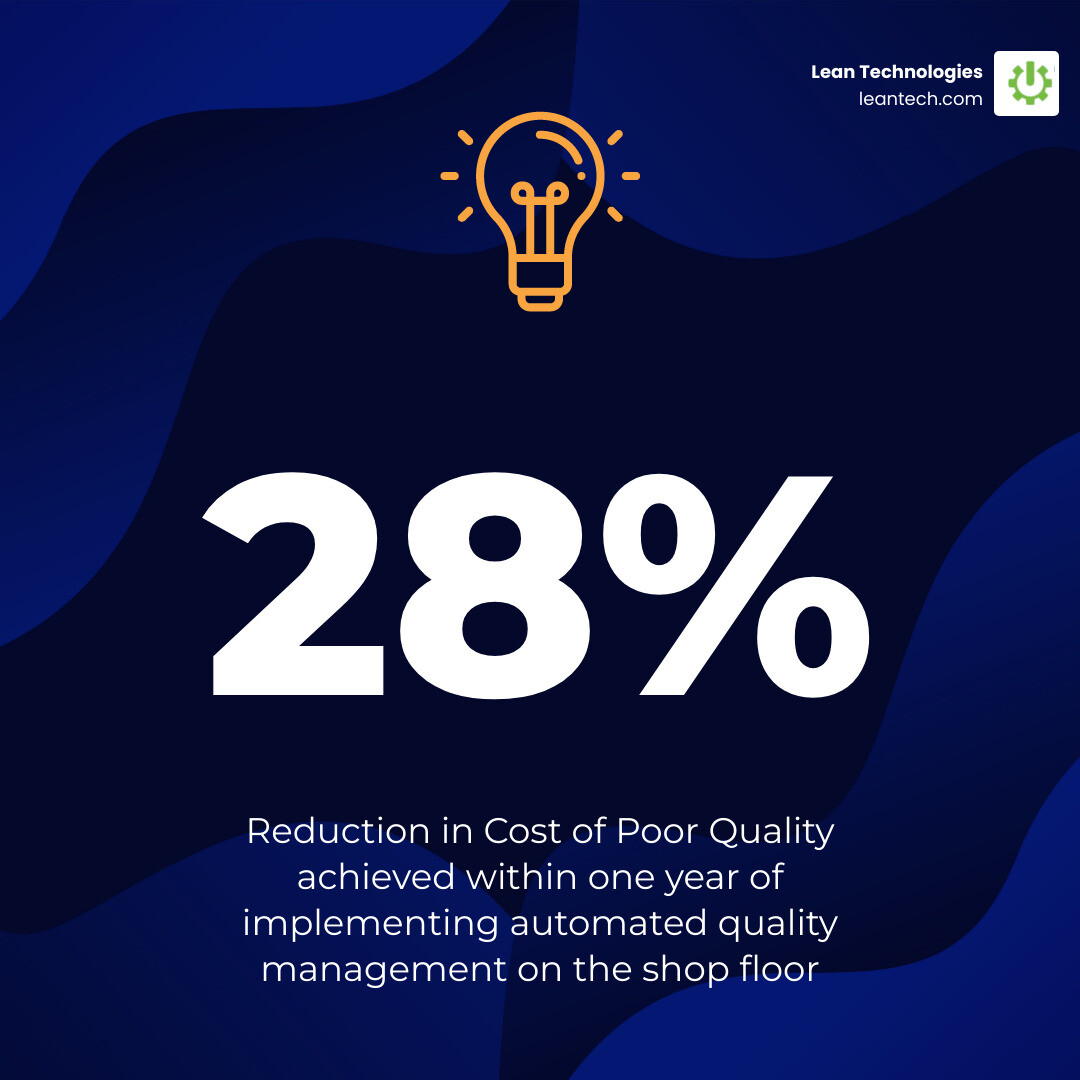
One of the most critical metrics is Right First Time (RFT). Every time a part has to be reworked, your profit on that part vanishes. Research has shown that a precision machining leader using modern quality tools achieved 40% faster supplier response times, while an outdoor power equipment manufacturer saw a 28% reduction in the Cost of Poor Quality in just one year.
Beyond just scrap and rework, consider these indirect benefits:
Productivity Increase: When operators aren't hunting for paper forms, they spend more time making parts.
Downtime Reduction: Integrating quality with maintenance allows you to catch machine issues before they cause a breakdown.
Inventory Costs: Better quality means less "just in case" inventory held to cover for scrap rates.
Equipment Life: Proper tracking and Reliability assessments can increase equipment life by 10-15%.
Better visibility equals faster problem-solving. When you see a trend in real time, you can fix it before it costs you a customer.
Frequently Asked Questions about Quality Management
How does quality software reduce ISO audit time?
Automated documentation and centralized evidence can lead to an 85% reduction in prep time. Instead of hunting through filing cabinets and mismatched spreadsheets, you use instant searchability to prove compliance. The software maintains a timestamped history of every change, signature, and nonconformance, which is exactly what auditors want to see.
Can quality systems integrate with existing legacy ERPs?
Yes. Modern quality software is designed to be flexible. Through API connections, these tools bridge the gap between "real-late" ERP data (which is often entered after the fact) and real-time shop floor execution. This breaks down data silos without requiring you to replace your entire IT infrastructure.
What is the difference between functional and structural quality?
Functional quality focuses on "fitness for purpose"—does the product or software do what the user needs it to do? Structural quality focuses on the "non-functional" requirements like maintainability, security, and reliability. In manufacturing, you need both: a product that works (functional) and a system that is reliable and easy to update (structural).
What are the "mandatory" features for a QMS?
According to Gartner, a robust system must include CAPA, nonconformance management, audit management, document control, and employee training tracking. Without these core modules, you aren't managing quality; you're just taking notes.
Choosing the Right Path for Your Shop Floor
At Lean Technologies, we built Thrive because we were tired of seeing small manufacturers struggle with systems designed for giant corporations. Thrive is an all-in-one, customizable shop floor software developed by manufacturing experts who have actually spent time on the floor.
We don't believe in "real-late" data. We believe in giving your team the tools to log issues, track actions, and drive continuous improvement in real time. Whether you are looking to improve your Thrive Quality metrics or just want to stop the "fire drill" of your next audit, the path to operational excellence starts with better visibility.
Want faster problem-solving? It starts with better visibility. Stop managing your shop floor through spreadsheets and wishful thinking. Let your team run lean with quality software designed for the people actually doing the work.