Beginner's Guide to Continuous Improvement
The Hidden Cost of "We'll Fix It Later" on the Shop Floor
Continuous Improvement is the ongoing practice of making small, consistent changes to processes, products, and systems — so your operation gets a little better every single day.
Here's the quick version:
Question Answer What is it? A structured approach to identifying and eliminating waste, inefficiency, and defects — continuously Who uses it? Manufacturers, healthcare systems, software teams, logistics operations, and more Core methods PDCA cycle, Kaizen, Lean, Six Sigma, TQM, Agile, Kanban Main benefits Lower costs, less waste, better quality, higher employee engagement Where to start Identify one problem, run a small test, measure results, standardize what works
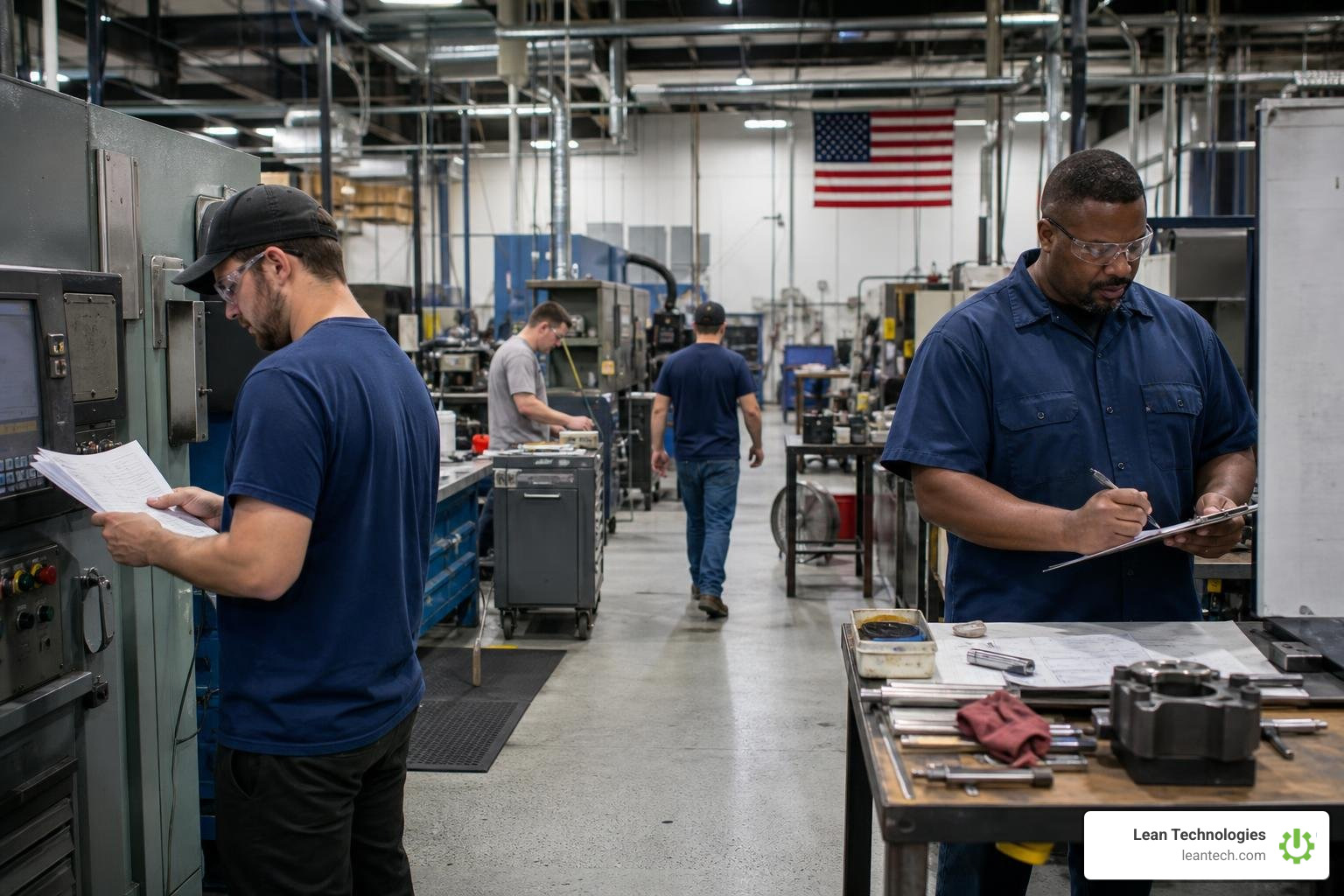
Here's what's actually happening on most shop floors right now.
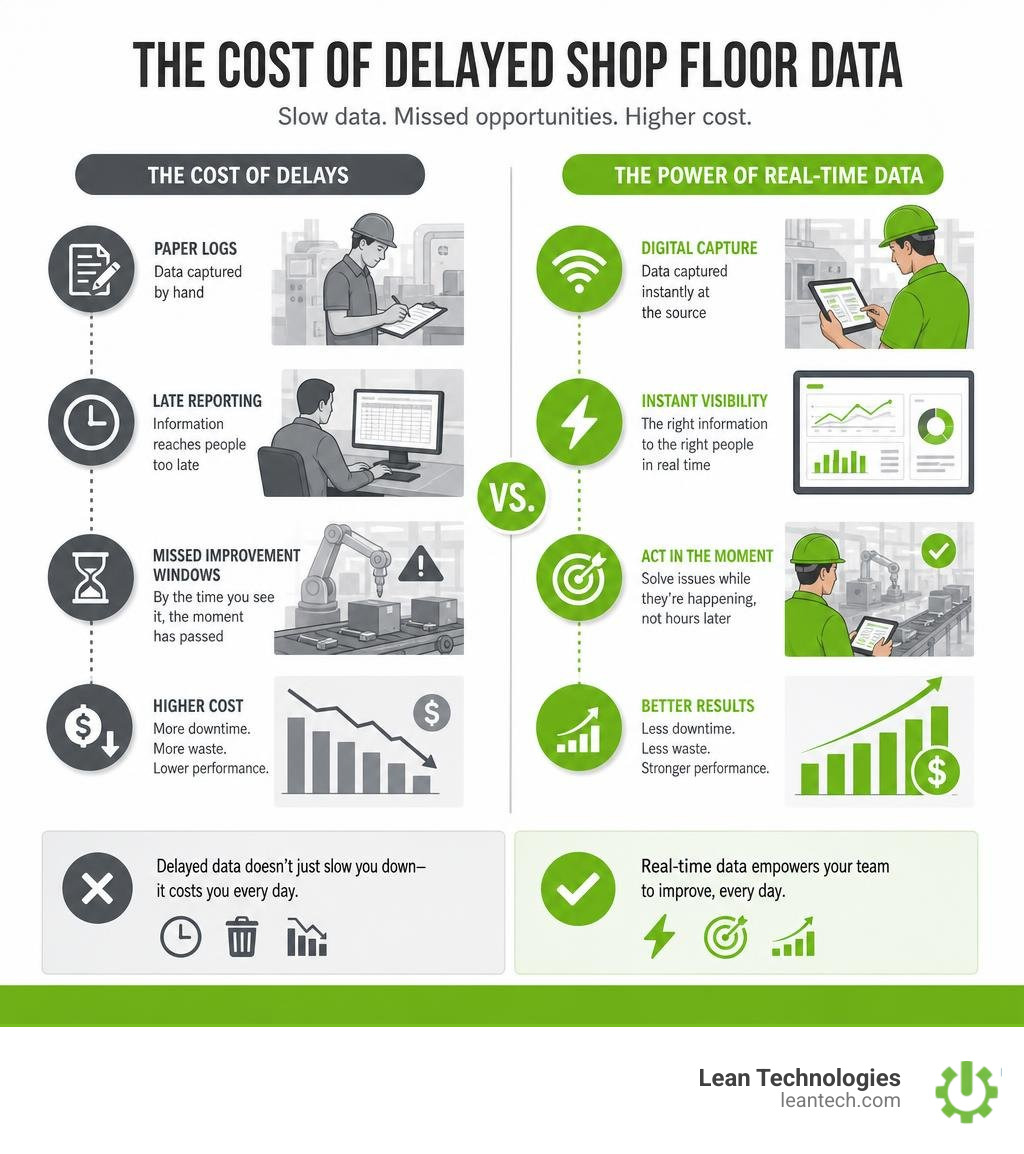
A machine goes down. Someone grabs a paper log. A supervisor finds out two hours later — maybe. The data gets entered into a spreadsheet at the end of the shift. By the time anyone reviews it, the moment to act has already passed.
This is what delayed data costs you. Not just time. Productivity. Profit. Morale.
The frustrating part? Most operations managers already know what needs to improve. The problem is the system around them — paper-based workarounds, siloed information, and no real-time visibility — makes it nearly impossible to act fast enough to matter.
That's exactly where a structured Continuous Improvement process changes the game. It's not about overhauling everything overnight. It's about building a discipline of small, consistent changes that compound over time. As the research on daily incremental gains shows, getting just 1% better each day adds up to 37 times the improvement over a year.
But none of that compounding works if your data is late, scattered, or sitting on a clipboard in someone's back pocket.
What is Continuous Improvement?
At its core, Continuous Improvement is a systematic, ongoing effort to improve products, services, or processes. In quality management and operations contexts, it is the deliberate process of identifying inefficiencies, reducing variation, and eliminating waste to deliver more value to the customer.
Rather than waiting for a massive operational crisis to force a change, organizations that embrace this philosophy treat improvement as a daily habit. According to the ASQ Continuous Improvement Model, this approach relies heavily on employee involvement and teamwork, focusing on reducing variation, defects, and cycle times.
In operations, this is often formalized through a Continual improvement process. The goal is to build an environment where processes are constantly measured, analyzed, and refined. However, tools and methodologies are only half the battle. To make these changes stick, you must build a culture where operators feel safe pointing out flaws and proposing solutions. If your team is hiding mistakes to avoid blame, your improvement efforts are dead on arrival. Evaluating your team's current state with a Lean Culture Assessment is often the first step to understanding where your cultural gaps lie.
Incremental vs. Breakthrough Continuous Improvement
Continuous improvement generally falls into two distinct categories:
Incremental Improvement: Small, low-cost, day-to-day adjustments made directly on the shop floor. These are often driven by operators who notice a minor bottleneck or safety hazard and resolve it immediately. Over time, these small choices compound. For instance, a team that implemented a simple process of regular encouragement and feedback saw performance improve by 35% in just two months.
Breakthrough Improvement: Large-scale, discontinuous changes that typically require cross-functional teams, capital investment, and executive approval. These projects aim for massive shifts in performance, such as redesigning a production line or integrating new software.
To understand how these daily habits build massive momentum over time, you can read about How to Master the Art of Continuous Improvement. On the modern shop floor, these two approaches must work in tandem. Incremental steps keep the line running smoothly, while digital transformations provide the infrastructure for breakthrough operational leaps. For a deeper dive into this digital transition, consult the Guide to Digital Lean Manufacturing.
ISO Standards and Operational Excellence
Continuous improvement isn't just a philosophy; it’s a compliance requirement for international standards like ISO 9001 (Quality Management Systems) and ISO 14000 (Environmental Management Systems).
Interestingly, ISO standards specifically changed their terminology from "continuous" to "continual" improvement. The reason? "Continuous" implies a non-stop, minute-by-minute progression, which is practically unenforceable during an audit. "Continual" improvement, on the other hand, allows for step-wise progress — meaning an organization improves in distinct segments, pauses to standardize, and then improves again.
Whether complying with ISO standards, utilizing British Standards like BS 8624, or aiming for general operational excellence, the core objective remains: you must prove that you are actively measuring performance, identifying deviations, and taking documented corrective action. If your proof is buried in a stack of paper logs, audit readiness becomes a stressful, week-long scramble instead of a routine check.
Core Methodologies and Frameworks
Several frameworks exist to structure your improvement efforts. While they use different terminology, they all share a common goal: make processes more efficient and reliable.
Methodology Primary Focus Key Tools Used Best For Lean Manufacturing Eliminating waste (Muda) and maximizing value flow 5S, Value Stream Mapping, Kanban Reducing cycle times and operational waste Six Sigma Reducing process variation and eliminating defects DMAIC, Root Cause Analysis, SPC Complex, high-risk quality problems Total Quality Management (TQM) Organization-wide commitment to customer satisfaction Policy deployment, quality circles Broad cultural alignment on quality
The PDCA and PDSA Cycles
The foundation of most modern quality systems is the Plan-Do-Check-Act (PDCA) cycle, also known as the Deming Cycle or Shewhart Cycle. Developed in the 1920s by Walter Shewhart and popularized by W. Edwards Deming, it is an iterative four-step method for testing and implementing changes:
Plan: Identify an opportunity, define the problem, and plan the change.
Do: Implement the change on a small scale (a pilot test).
Check (or Study in PDSA): Analyze the data collected during the pilot to see if the change worked.
Act: If successful, standardize the change across the wider operation. If not, learn from the failure and restart the cycle.
For highly complex issues, organizations scale this up to Six Sigma’s DMAIC framework (Define, Measure, Analyze, Improve, Control). According to the ASQ DMAIC Process Guide, this structured problem-solving approach is ideal for existing processes that fail to meet performance standards. This methodology is incredibly effective across industries; for example, a systematic review published on the NCBI Bookshelf for Continuous Quality Improvement noted that over 88% of surgical studies applying Six Sigma and Lean methodologies reported measurable improvements in safety and efficiency.
Kaizen and the Elimination of Waste
Originating from the Toyota Production System in the 1950s, Kaizen translates simply to "change for the better." In manufacturing, it refers to a philosophy of zero-investment, worker-driven improvements. As defined by the Lean Enterprise Institute's Guide to Kaizen, it focuses on making small, incremental changes to eliminate the three main enemies of efficiency:
Muda (Waste): Activities that consume resources without adding value to the customer.
Mura (Unevenness): Fluctuations in scheduling, production speed, or workflow.
Muri (Overburden): Pushing equipment or operators beyond their practical limits.
To target Muda, teams use tools like 5S (Sort, Set in order, Shine, Standardize, Sustain) to organize physical workspaces, and the 5 Whys to dig past surface symptoms to find the true root cause of a problem.
Agile, Kanban, and Modern Continuous Improvement
While these principles started on physical assembly lines, they are highly compatible with modern digital frameworks like Agile and Kanban.
In an Agile context, teams work in short, iterative cycles to deliver value quickly and gather immediate feedback. This is visualized beautifully using a digital Kanban Board Tool, which maps out workflows in real time. By tracking metrics such as lead time (how long it takes from order to delivery), cycle time (the active work time), and throughput (the volume of work completed), managers can instantly spot where work is piling up.
By utilizing digital Workflow Tracking, teams can easily see bottlenecks and adjust resources before a delay impacts the customer. For more on how these tools connect to broader business growth, see Atlassian's Guide on Continuous Improvement Benefits.
Implementing and Sustaining Continuous Improvement on the Shop Floor
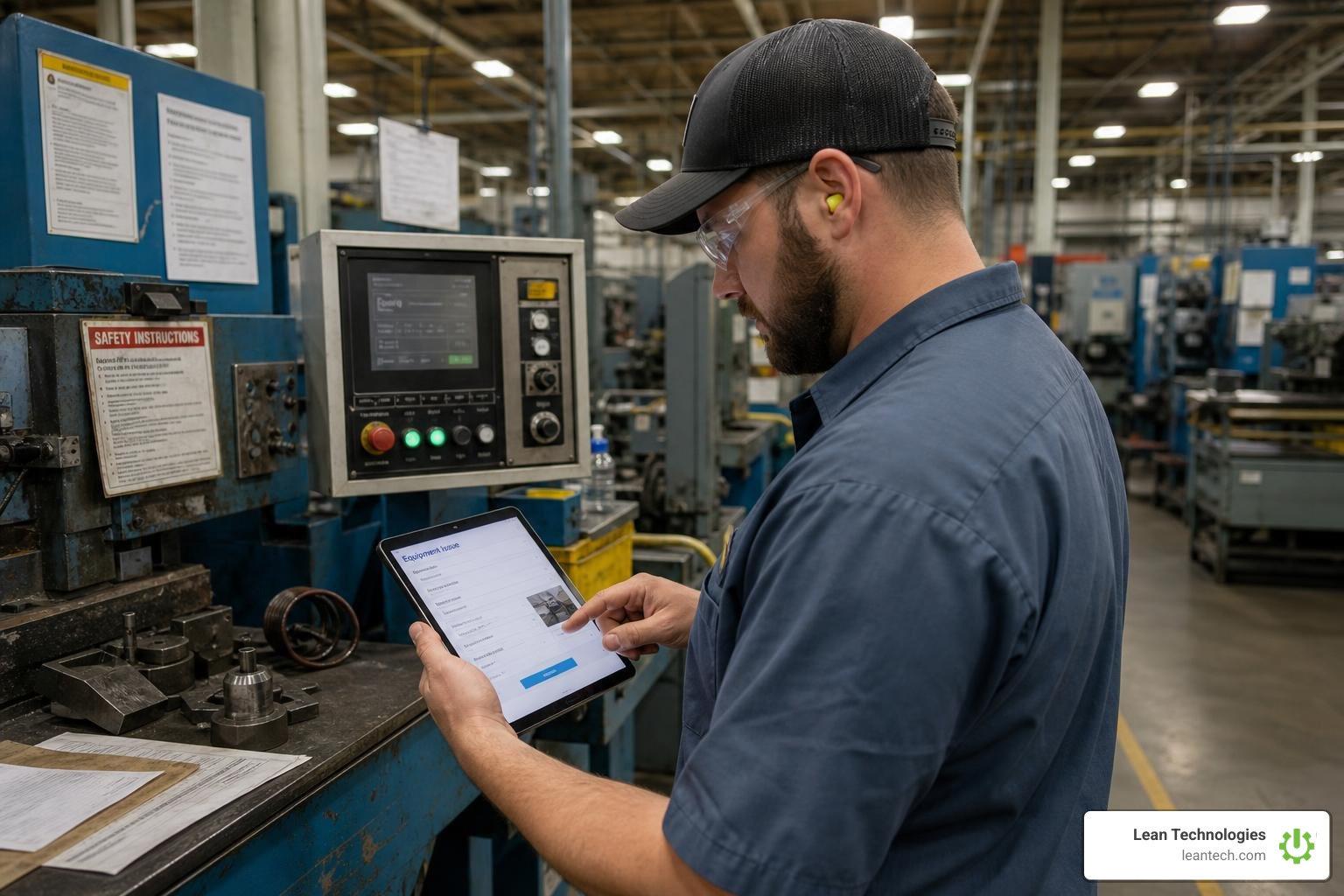
How do you take these theoretical frameworks and make them work on a loud, fast-moving shop floor? It requires a structured, step-by-step implementation process:
Identify Opportunities: Gather real-time data from the floor. Don't rely on memory or end-of-week spreadsheets. Encourage operators to log issues immediately at the source.
Set Clear Goals: Vague goals like "reduce downtime" fail to motivate. Instead, set SMART goals, such as "reduce changeover time on Line 2 by 15% within 30 days."
Design Actionable Initiatives: Bring operators, maintenance techs, and supervisors together to design the solution. Co-created solutions have much higher adoption rates than top-down mandates.
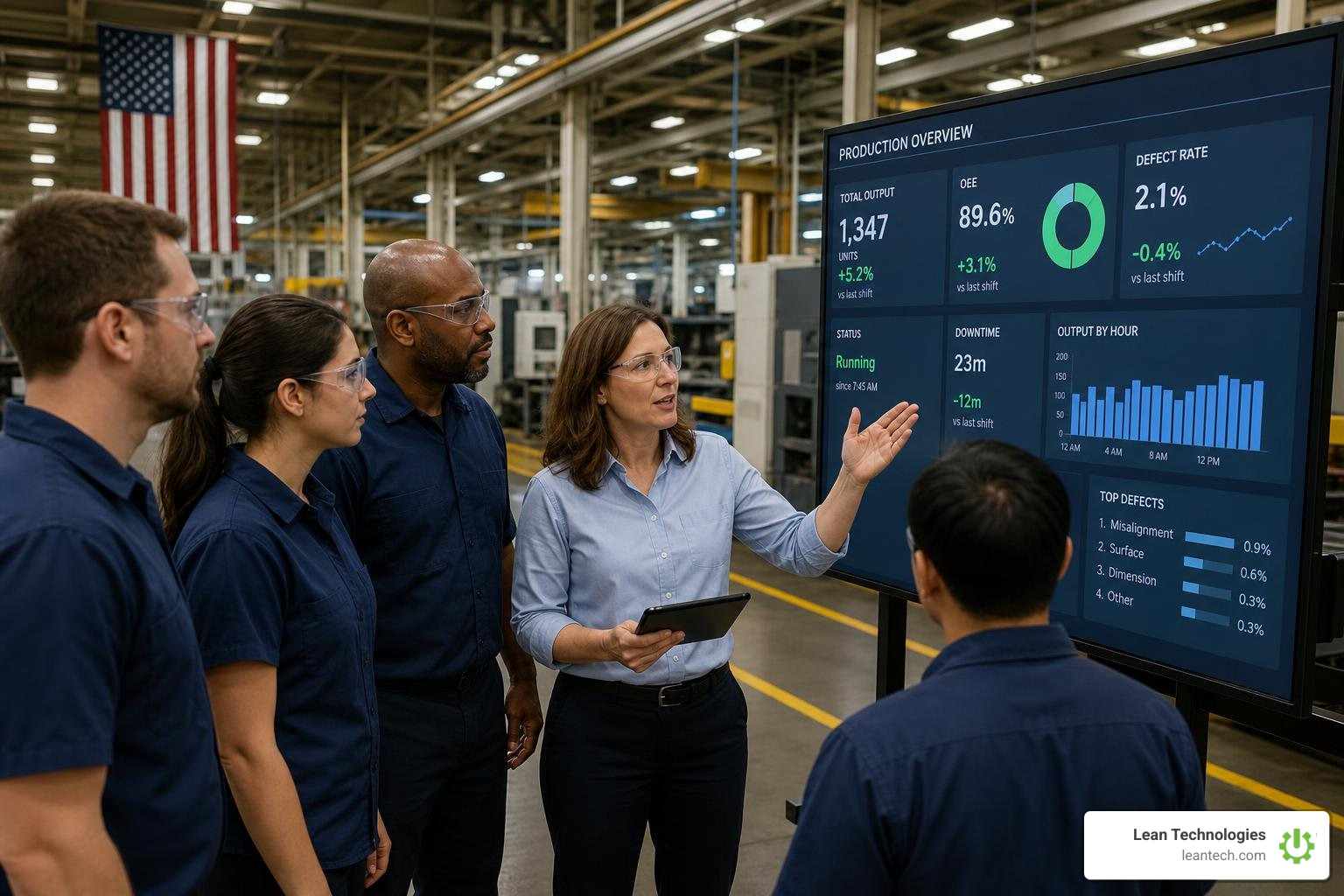
Execute and Measure: Run a small-scale pilot. Track the results closely using real-time dashboards to see if the change actually moves the needle.
Standardize the Results: If the pilot succeeds, document the new process as the standard operating procedure (SOP). Standardizing is the only way to lock in your gains and prevent backsliding.
Managing these steps across multiple lines and departments requires robust digital Project Management tools. When issues are logged, supervisors must have clear Follow-up Tools on Action Items to assign tasks, set deadlines, and ensure that improvement ideas don't get lost in the shuffle.
Overcoming Challenges and Sustaining a Lean Culture
The hard truth is that most continuous improvement programs fail not because of bad tools, but because of cultural resistance. People naturally resist change, especially if they feel it’s just "extra work" forced on them by management.
To sustain a true lean culture, you must address several critical success factors:
Go to the Gemba: Leaders must leave their desks and conduct regular "Gemba walks" — going to the actual place where work is done to observe and support the team.
Establish Leader Standard Work: Supervisors and managers need structured daily routines to ensure they are actively auditing processes and coaching operators. Implementing Leader Standard Work ensures that continuous improvement remains a daily priority, not an afterthought.
Make Progress Visual: Use digital Performance Goal Boards displayed on the shop floor. When operators can see their week-over-week progress in real time, it builds a sense of ownership and healthy competition.
Manage the Transition: Any process change requires proactive Change Management to address employee concerns, provide necessary training, and celebrate quick wins.
Consider this real-world example of structured improvement: A team used Six Sigma to improve production yield by more than 20%, saving $40,000 in 10 months, while also optimizing vendor material management to save an additional $192,000 per year. These kinds of results are only possible when leadership, technology, and culture are aligned.
Frequently Asked Questions about Continuous Improvement
What is the difference between continual and continuous improvement?
While often used interchangeably, there is a subtle distinction. Continuous improvement refers to a linear, uninterrupted process of making incremental changes within an existing system. Continual improvement is a broader term preferred by ISO standards; it describes a step-wise process that includes periods of rapid improvement, standardizing, pausing to stabilize, and then improving again.
What are the 7 types of waste in Lean manufacturing?
In Lean, waste (Muda) is categorized into seven distinct areas:
Transport: Unnecessary movement of materials or products.
Inventory: Excess raw materials, WIP, or finished goods sitting in storage.
Motion: Unnecessary physical movement by operators (e.g., reaching, walking for tools).
Waiting: Operators or machines standing idle waiting for parts, information, or approvals.
Overproduction: Making more products than the customer has ordered.
Over-processing: Doing more work on a product than is required (e.g., double-polishing a hidden part).
Defects: Errors, scrap, or rework caused by poor quality control.
How do digital tools accelerate the continuous improvement process?
Traditional paper logs and spreadsheets create a lag between when a problem occurs and when it is analyzed. Digital tools eliminate this delay by capturing data at the source in real time. This gives supervisors immediate visibility, automates action-item tracking to ensure accountability, and displays performance metrics on the shop floor to keep teams engaged and motivated.
What to Do Next
Continuous Improvement isn't a project with a start and end date. It is an operational discipline. If you are still trying to manage your shop floor through paper logs, whiteboards, and weekly Excel sheets, you are reacting to yesterday's problems instead of fixing today's.
You don't need a heavy, multi-million dollar MES or ERP overhaul to get results. You need a simple, real-time way for your operators to log issues, your maintenance team to track work orders, and your supervisors to drive accountability.
That is exactly why Thrive exists.
Designed by manufacturing experts, Thrive CI is a customizable, all-in-one digital shopfloor platform that gives you real-time visibility into your operations. It lets your operators log downtime, track safety incidents, and manage continuous improvement initiatives directly from mobile devices, tablets, or desktops.
Stop managing your shop floor through spreadsheets and wishful thinking. Let your team run lean, make data-driven decisions at the source, and build a culture of Continuous Improvement that actually sticks.