
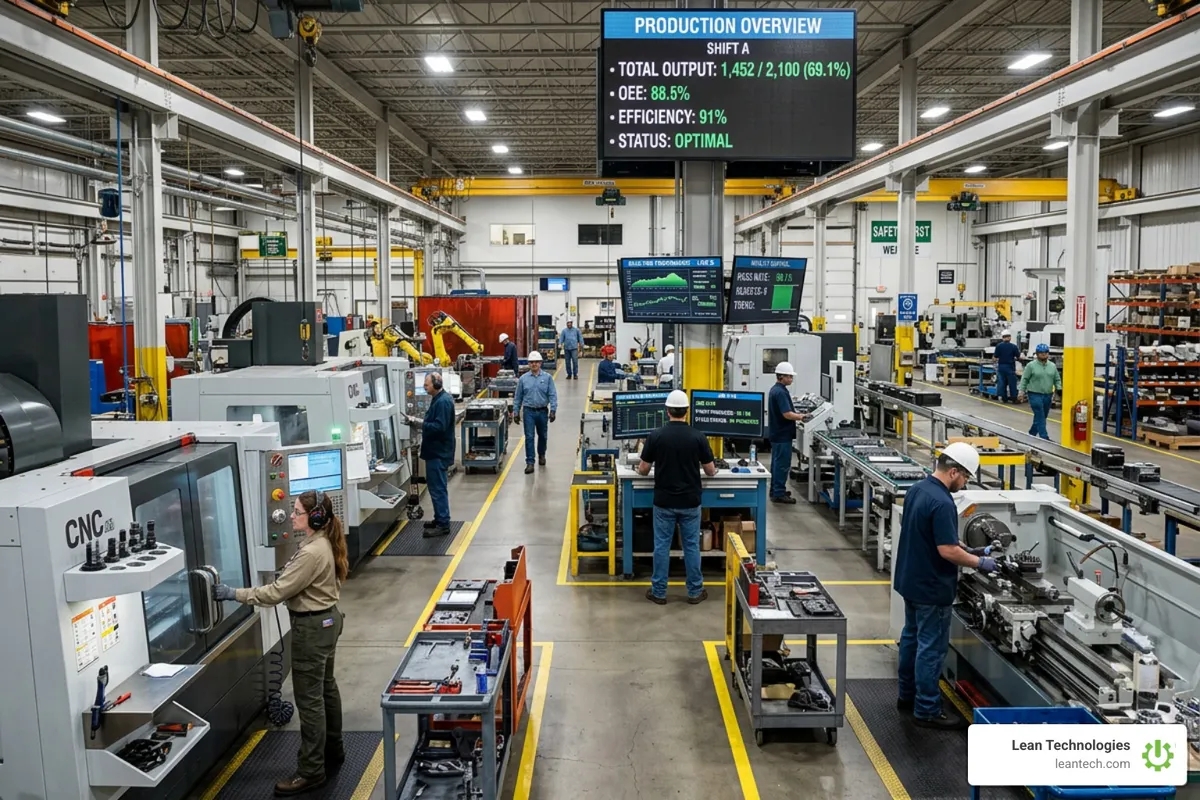
The Ultimate Guide to Manufacturing Analytics Tools in 2026
The Real Cost of Not Knowing What's Happening on Your Shop Floor Right Now
Manufacturing analytics tools are software platforms that collect, organize, and surface production data so your team can make faster, smarter decisions — on the floor, in real time.
If you're looking for a quick answer on what's available, here are the leading approaches in 2026:
Category Best For Approach Operator-First Platforms (like Thrive) Operator-driven lean workflows, SMB manufacturers No-code, mobile-first Traditional BI Deep historical trends, cross-department reporting Heavy data warehousing, SQL-reliant Machine Monitoring (IIoT) Automated machine tracking, OEE Sensors, PLC tags, edge data ERP-Integrated Analytics Financial and supply chain planning Cloud ERP modules Dedicated CMMS Preventive maintenance, work orders Mobile-first maintenance tracking
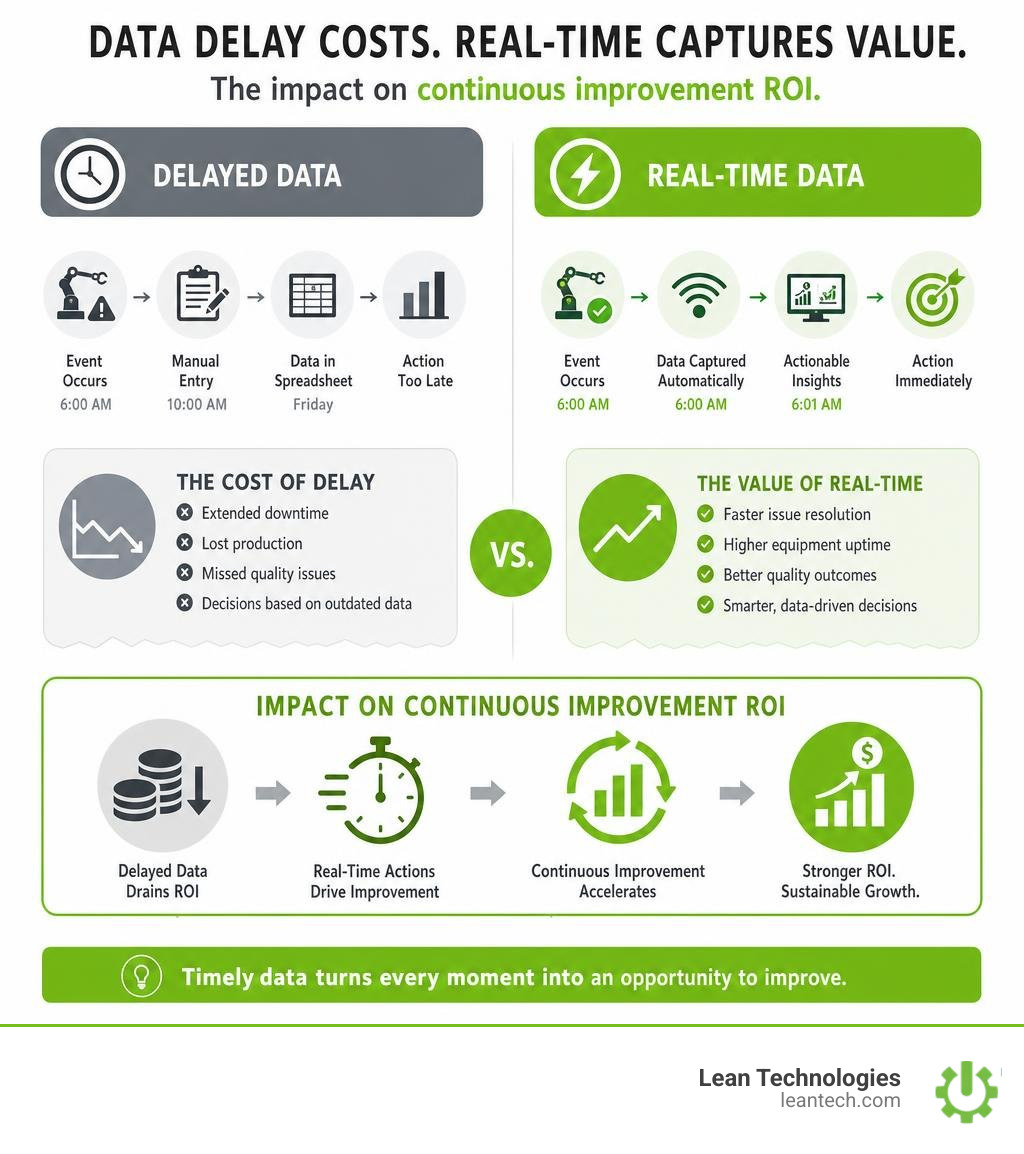
Here's a problem that plays out every single day in manufacturing plants: a machine goes down at 6 a.m., a supervisor fills out a paper form at 10 a.m., and that data gets entered into a spreadsheet by Friday afternoon.
By then? The moment to act is long gone.
Unplanned downtime alone costs the world's largest manufacturers up to 11% of their annual revenue. For complex product manufacturers — think automotive or aerospace — a single lost hour can exceed $2 million. And yet 72% of factory tasks are still carried out manually, across assembly, inspection, finishing, and material handling.
The gap between what's happening on your shop floor and what leadership can actually see is where profit disappears.
That's the problem manufacturing analytics tools are built to close. But not all of them close it the same way — or fast enough to matter. Some require months of IT implementation. Some drown operators in dashboards nobody uses. And nearly half of manufacturers — 47%, according to Gartner — struggle just to pick the right tool.
This guide cuts through the noise. It covers what to look for, how the main approaches compare, and which platforms are actually worth your time in 2026.
Why Modern Shop Floors Need Manufacturing Analytics Tools
If you are running a manufacturing plant in 2026, you do not need more data. You are already drowning in it.
Your ERP has shipping schedules, your warehouse has inventory counts, and your operators have clipboards full of hand-written downtime logs. The real challenge is that this data is scattered, stale, and completely disconnected from the people who can actually fix the problems.
Modern manufacturing analytics tools bridge this gap by transforming raw, isolated data points into immediate shop floor action.
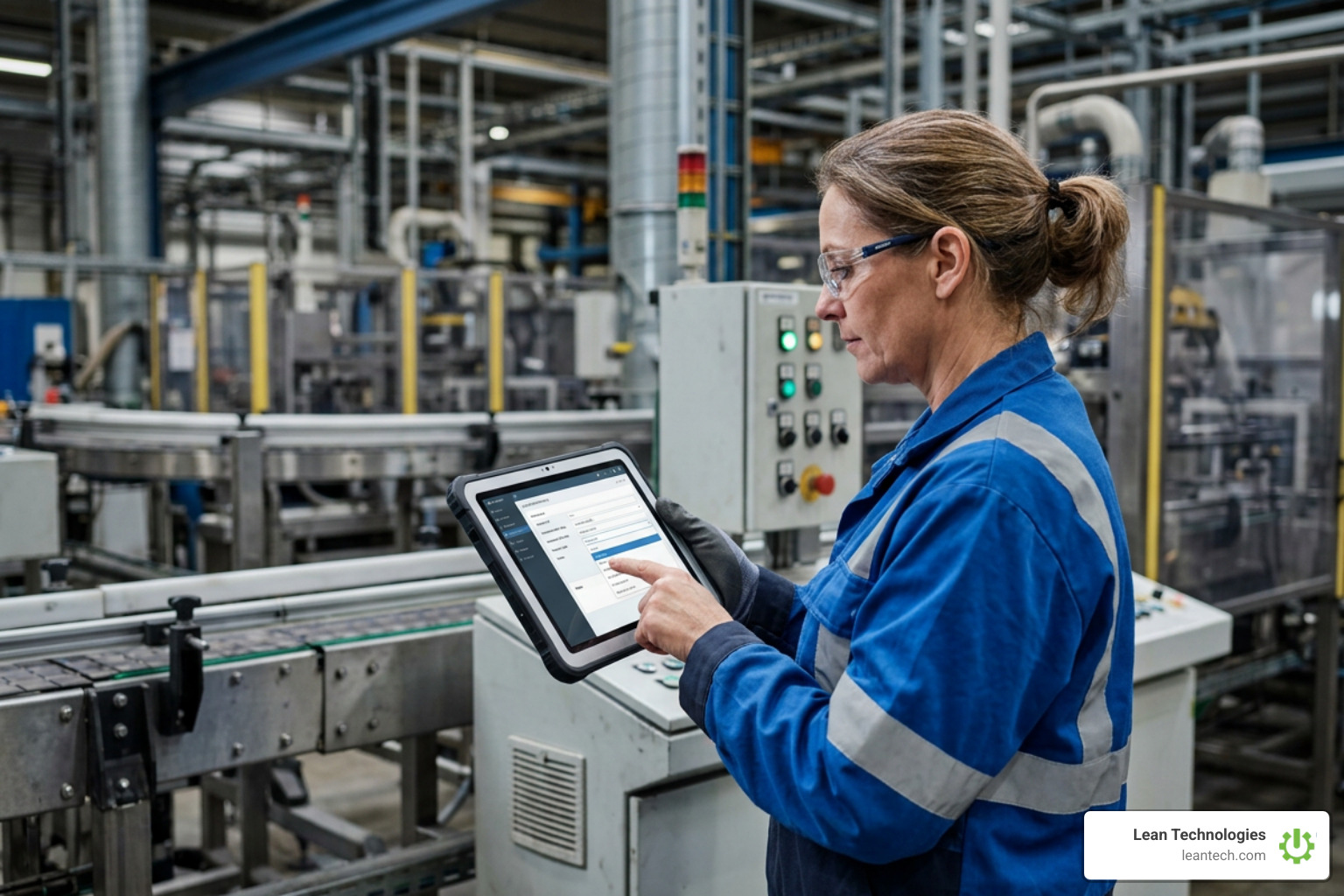
When you rely on paper logs and spreadsheet workarounds, you are managing your facility in the rearview mirror. If an operator notices a slight calibration issue on an assembly line, they might make a mental note or write it on a paper sheet. By the time that sheet is collected, typed into Excel, and reviewed at the weekly production meeting, you have already produced thousands of nonconforming parts.
This lag is the ultimate enemy of continuous improvement. True operational excellence requires capturing problems at the source, the moment they occur. For teams tracking uptime, performance, and quality, overall equipment effectiveness is often one of the first metrics to expose where production losses are hiding.
By utilizing structured, operator-driven data capture, teams can immediately spot trends like micro-downtime, tooling wear, and minor quality drifts before they spiral into catastrophic machine failures.
To understand how to transition your facility from reactive firefighting to proactive management, check out our Guide to Digital Lean Manufacturing. It breaks down how to digitize your lean work processes in real time without drowning your team in technical debt.
Key Features to Look For in Manufacturing Analytics Platforms
Not all analytics software is built for the reality of a gritty, shop floor. Many enterprise business intelligence (BI) systems are designed for analysts sitting in quiet offices, not for operators wearing safety glasses and heavy gloves.
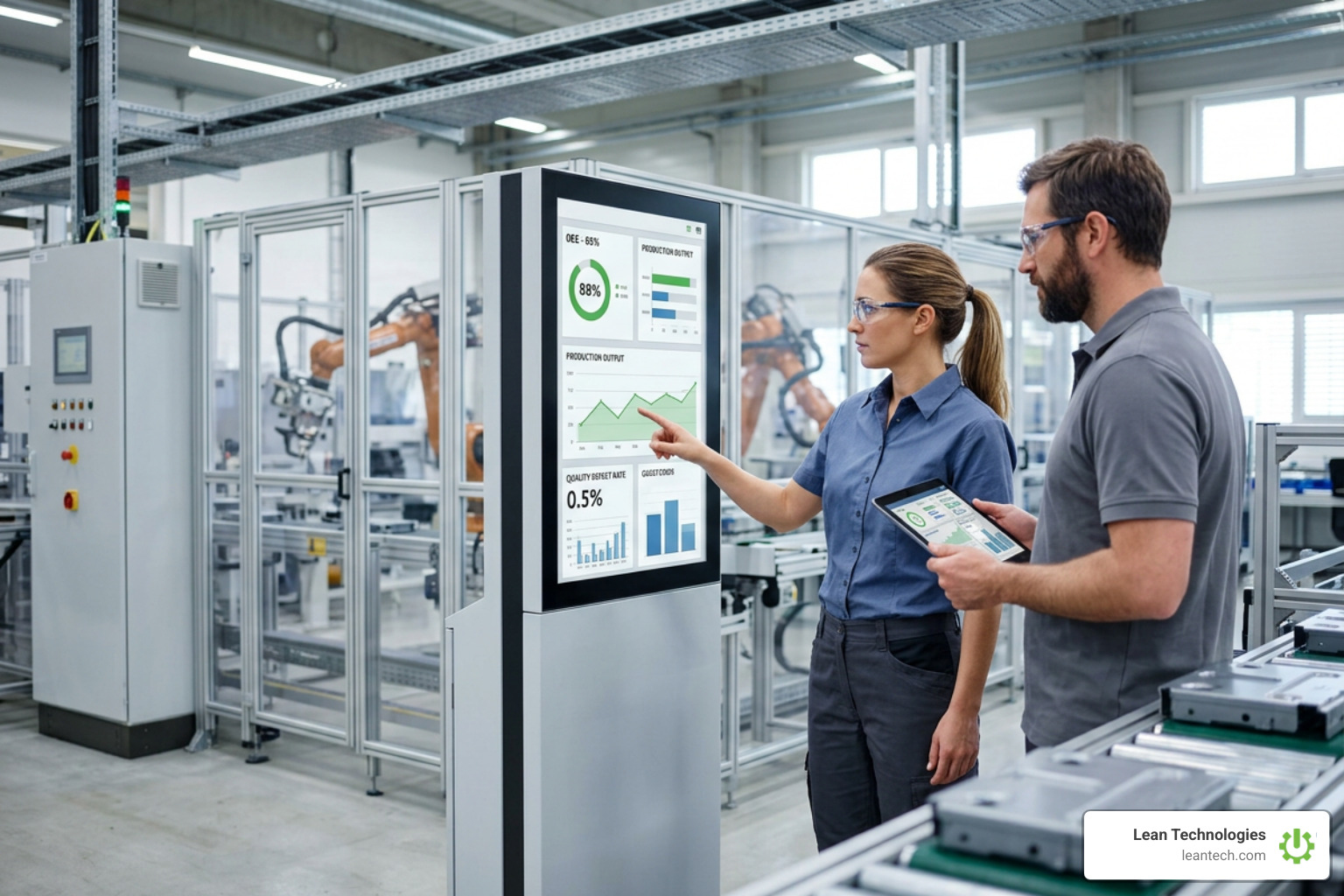
If you want an analytics platform that actually gets used, look for these non-negotiable capabilities:
Operator-Friendly, Mobile-First Interfaces: If your software is too complicated, operators will default back to paper. The tool must allow a worker to log a defect, note a downtime reason, or flag a safety hazard in three taps or less on a tablet or mobile device.
Real-Time Data Collection at the Source: Real-time visibility is only real-time if the data is captured when the event happens. Waiting until the end of a shift to log scrap or record machine faults means your metrics are already "real-late."
Standardized, Contextualized Data: Raw numbers without context are useless. Your platform should automatically link an event (like a machine stoppage) to the specific part number, shift, operator, and material batch.
Action-Oriented Workflows: A dashboard that only displays a red bar chart does not solve a problem. The system must automatically trigger actions—such as assigning a maintenance ticket, sending a quality alert, or launching a corrective action workflow.
Instead of deploying complex IT infrastructure that takes 18 months to configure, smart manufacturers focus on modular, high-impact features that drive immediate accountability. For example, implementing dedicated Defect & Scrap Tracking and Nonconformance workflows allows quality managers to isolate issues instantly.
When you pair these targeted tools with digital Performance Goal Boards, your entire team can see exactly where they stand against daily targets, eliminating shift-change misalignment and driving active problem-solving.
Comparing Approaches: No-Code, AI-Powered, and Traditional Manufacturing Analytics Tools
Selecting the right software requires understanding the fundamental differences between how these systems process data and who they are built for.
Feature / Dimension Traditional BI No-Code / Operator-First (e.g., Thrive) AI-Powered / Edge Primary User Data Analysts, IT Teams Shop Floor Operators, Supervisors, CI Managers Reliability Engineers, Data Scientists Implementation Time Months to Years Weeks Months Data Source Data Warehouses, ERP, CRM Direct Operator Input, Digital Templates PLC Tags, Sensors, High-Speed IoT Primary Benefit Deep historical trends, cross-department reporting Immediate action, high operator adoption, lean workflows Predictive maintenance, automated anomaly detection Technical Debt High (requires database admins & SQL) Extremely Low Medium to High
Traditional BI vs. Modern Manufacturing Analytics Tools
Traditional Business Intelligence (BI) platforms are incredibly powerful for deep, historical data modeling. They excel at blending massive datasets from your ERP, CRM, and supply chain networks to identify long-term macroeconomic trends or run complex financial planning scenarios.
However, these heavy BI tools frequently fail to drive immediate action on the shop floor.
Because they rely on complex data warehousing, custom SQL queries, and heavy IT dependency, their reports are almost always delayed. A plant manager does not need a beautifully designed, retrospective PDF dashboard showing that Line 3 underperformed last Tuesday. They need to know right now why Line 3 is backing up, and who is assigned to fix it.
When analytics are locked behind an IT bottleneck, shop floor teams stop looking at the data altogether.
The Rise of No-Code and Operator-First Manufacturing Analytics Tools
To bypass the IT bottleneck, the industry has shifted toward no-code, operator-first platforms. These systems prioritize the human element of manufacturing. Since 72% of factory tasks are still manual, the most accurate source of operational truth is the operator standing at the machine.
No-code tools utilize simple, drag-and-drop interfaces that allow continuous improvement (CI) managers to build custom digital tracking boards, downtime logs, and safety audits in minutes—without writing a single line of code.
At the same time, newer AI-powered tools are making data consumption even easier. Modern platforms leverage natural language queries and edge computing to let users "talk" to their machines or controllers.
Instead of building a new chart, a supervisor can simply type, "What was the primary root cause of downtime on the packaging line yesterday?" and receive an instant, data-backed answer.
By combining the accessibility of no-code with intuitive AI assistance, modern tools empower the people closest to the product to log issues, analyze trends, and take immediate corrective action.
Overcoming the Biggest Implementation Challenges on the Shop Floor
If implementing new software were easy, 47% of manufacturers wouldn't be struggling to find the right tool. The shop floor is a challenging environment for digital transformation. You have legacy machines that don't speak modern protocols, data silos between different departments, and a workforce that might be highly resistant to change.
To successfully roll out a manufacturing analytics platform without causing a revolt on the floor, follow these three rules:
Start Small, Scale Fast: Do not attempt a massive, plant-wide rollout on day one. Pick a single bottleneck machine, a single production line, or a single high-impact problem (like scrap tracking on a troublesome run). Prove the value, let the operators see how it makes their jobs easier, and then scale the configuration to other lines.
Focus on the "Why" for Operators: If operators think the software is just a digital whip for management to track their every move, they will feed it garbage data or ignore it entirely. Frame the tool as a way for them to easily flag frustrations—like bad material batches or tooling issues—so management can actually support them.
Bridge the Actionability Gap: Data is only valuable if it leads to change. If your team logs 50 maintenance issues this week and nothing gets fixed, they will stop logging them.
Ensure your platform has robust Project Tracking and Workflow Tracking capabilities built directly into the system. When an operator logs an issue, they should be able to see exactly who is assigned to resolve it and what progress has been made. This transparency builds trust and keeps your continuous improvement cycle spinning.
Frequently Asked Questions About Manufacturing Analytics Tools
How does operator-driven data compare to automated machine monitoring?
Automated machine monitoring (IIoT) is great for tracking raw machine states—it can tell you exactly what millisecond a spindle stopped spinning. However, sensors lack human context. A sensor cannot tell you why the machine stopped. Was it a late material delivery? Was the operator waiting on a supervisor sign-off? Did a minor safety hazard force a temporary halt?
Operator-driven data capture provides the critical root-cause context that automated sensors miss, turning raw timestamps into actionable process improvements.
How do we integrate legacy shop floor processes with modern analytics?
You do not need to replace your legacy machinery or spend millions retrofitting old PLCs with modern sensors. Operator-first analytics platforms allow you to digitize your legacy processes using simple, tablet-friendly templates. Operators manually input key cycle events, downtime reasons, and quality checks at the source, giving you clean, structured digital data from day one without an expensive IT overhaul.
Why do most manufacturing analytics projects fail to deliver ROI?
Most projects fail because they focus on passive dashboards rather than active task management. If your analytics software only generates charts showing how bad your scrap rate is, nothing changes.
Projects succeed when they close the "actionability gap"—meaning the data captured on the floor automatically triggers a structured task, assigns an owner, and tracks the resolution to completion.
What to Do Next: Drive Action with Lean Technologies
Stop managing your shop floor through spreadsheets, paper workarounds, and wishful thinking.
If you want to eliminate unplanned downtime, slash scrap rates, and build a culture of true operational accountability, you need to give your shop floor teams a digital tool built specifically for them.
Lean Technologies offers Thrive, an all-in-one, customizable shop floor platform designed by manufacturing experts to streamline your operations, boost daily productivity, and drive real-time visibility where it matters most. Thrive does not replace your existing ERP or MES; it enhances them by putting a flexible, digital toolbox directly into the hands of your operators and supervisors.
With Thrive, you can:
Digitize your lean processes using our comprehensive Guide to Digital Lean Manufacturing.
Instantly track and resolve quality issues with Thrive Quality.
Keep your assets running smoothly with dedicated Thrive Maintenance workflows.
Ensure a safe, compliant workplace with Thrive Safety.
Supercharge your continuous improvement initiatives with Thrive CI and Thrive HR.
Manage floor-level execution seamlessly using our Project Management tools.
Want faster problem-solving? It starts with better visibility. Let your team run lean—with real-time visibility and zero paper workarounds.
Visit LeanTech.com today to book a custom demo and see Thrive in action.