
Digital Lean Systems for Small and Midsize Plant Floor Teams
How to Start a Lean Digitization System on the Plant Floor
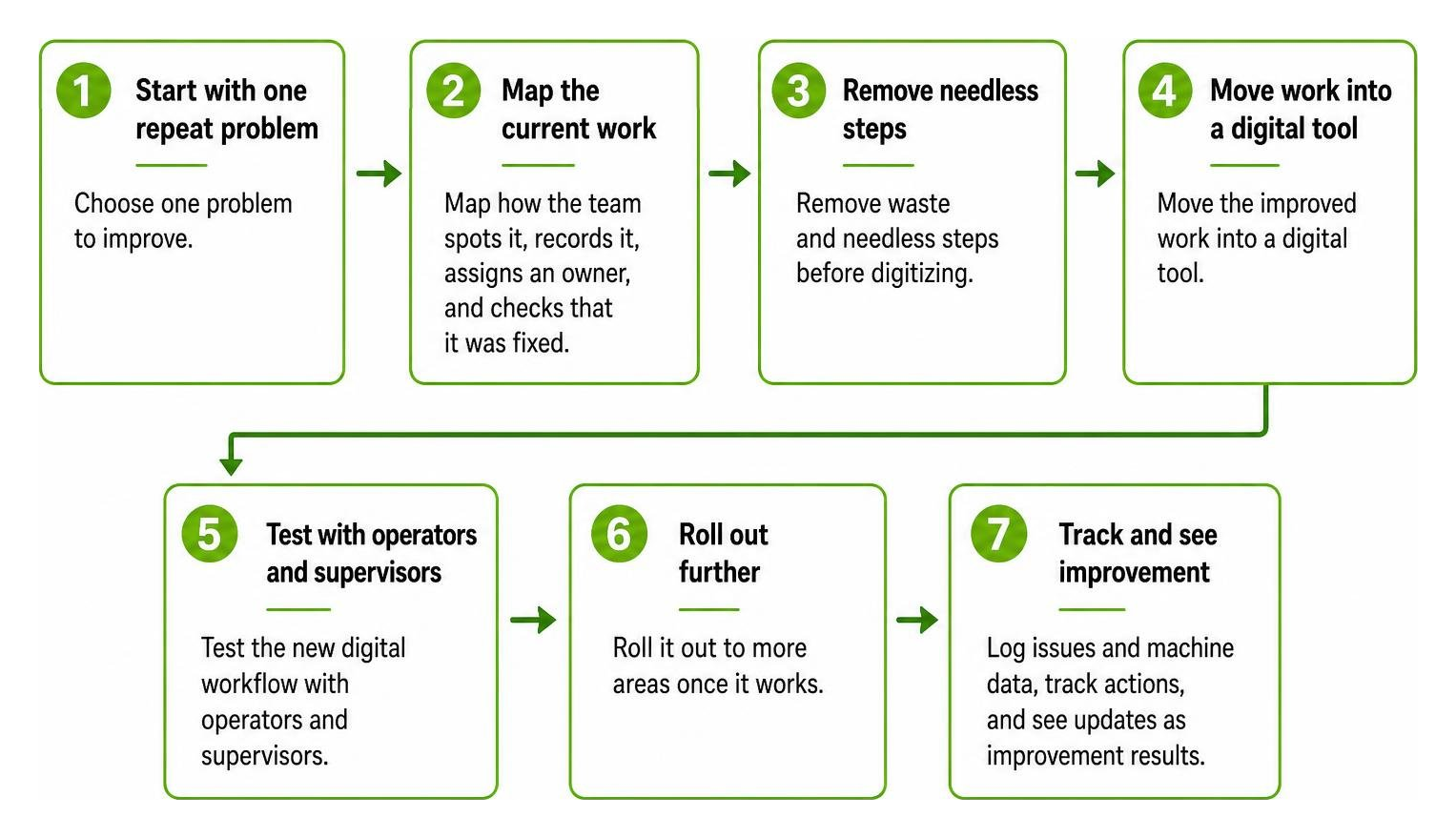
An issue gets written on a clipboard, but the next shift never sees it. To build a lean digitization system, start with one repeat problem: map how the team spots it, records it, assigns an owner, and checks that it was fixed. Remove needless steps before moving that work into a digital tool. Then test the new workflow with operators and supervisors before rolling it out further.
For small and midsize plants, Thrive is a flexible digital toolbox for that lean work. Teams can log issues and machine data, track actions, and see updates as they enter them on a phone, tablet, or desktop instead of waiting for paper reports. Thrive can also organize data imported from other systems. It is not an ERP or MES, and it does not replace either one.
Why Lean Maturity Must Precede Plant Floor Digitization
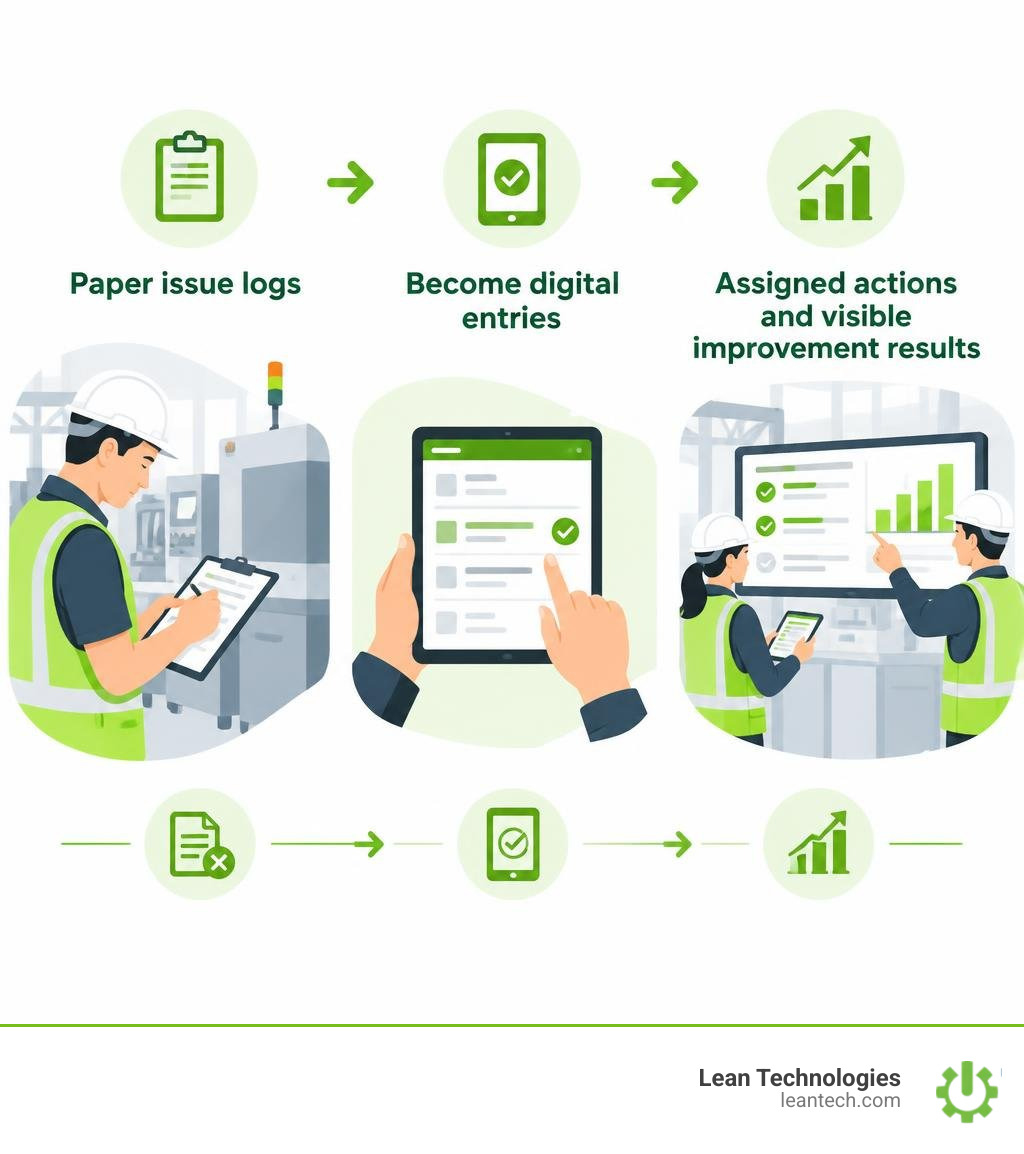
Digitizing an unstable, wasteful routine only creates automated waste. If an operator must walk past three workstations to fetch a paper inspection sheet, replacing that clipboard with a static computer terminal across the room solves nothing. True lean philosophy dictates that we eliminate process friction and information flow waste before applying software.
When information sits trapped in three-ring binders, shift supervisors waste hours compiling shift reports, quality managers chase missing sign-offs, and maintenance crews react to breakdowns that were scribbled down hours prior. Integrating proven continuous improvement methods with modern digital tools is the core of digital lean management. Before introducing software, leadership must conduct a structured digital maturity assessment to pinpoint process bottlenecks, handoff delays, and communication gaps.
According to research on operational transformation prioritization, establishing lean maturity serves as a vital foundation for digital execution (Ribeiro et al., 2022). Organizations that understand their baseline value streams can direct technical tools where they deliver genuine return on investment rather than compounding confusion.
Assessing Plant Readiness for a Lean Digitization System
Before rolling out new software across your cells or lines, evaluate these five operational readiness factors:
Standardized Work: Are standard operating procedures (SOPs) documented, accessible, and routinely practiced by operators across all shifts?
5S Discipline: Are physical workspaces organized, and are visual 5S audits actively completed rather than treated as a quarterly scramble?
Continuous Improvement Cadence: Does your plant run structured daily tier meetings where teams review frontline safety, quality, and downtime issues?
Frontline Engagement: Are production operators, line leads, and maintenance techs willing to log abnormalities at the source when provided straightforward tools?
Baseline KPI Tracking: Do you have clear, agreed-upon definitions for your key metrics, such as scrap percentage, mean time to repair (MTTR), and plan versus actual output?
If these routines are missing on paper, fix the process discipline first. Software accelerates existing habits; it cannot invent discipline out of thin air.
Core Components of an Effective Lean Digitization System
A robust digital lean setup does not require complex IT infrastructure or months of coding. It requires practical tools that mirror daily factory rhythms and eliminate manual transcription.

Modern operations rely on digital visual management to replace whiteboard clutter with accessible visual interfaces. Key elements include:
Standardized Daily Standup Hubs: Interactive displays that surface safety incidents, shift output targets, and open maintenance tickets during Tier 1 and Tier 2 meetings.
Digital Gemba Walks: Structured checklists on mobile tablets that allow operations managers and safety coordinators to record hazards, take photos, and assign corrective tasks on the spot.
Closed-Loop Action Item Tracking: Single-pane views of operational tasks with designated owners, clear due dates, and automated escalation if tasks stall.
Point-of-Use Issue Logging: Intuitive forms that let operators flag quality defects or machine stoppages in seconds without leaving their workstation.
Business Process Modeling and Digital Waste Reduction
Eliminating non-value-added activities requires clear mapping of shopfloor workflows. Traditional paper trails introduce multiple forms of digital waste: waiting for handoffs, over-processing data across redundant spreadsheets, and defects caused by illegible handwriting.
Using flexible workflows alongside customizable digital lean tools lets plant teams build digital Kanban boards, standardize handover logs, and validate data at the moment of entry. When operators enter downtime categories or quality defect codes directly at the machine, the system strips out downstream translation errors and administrative overhead.
Connecting Shop Floor Workflows to Plant Strategy
Survey data shows that 90% of organizations link their overall business performance directly to the progress made on operational transformation initiatives. Gaining consistent visibility into shop-floor workflows bridges the gap between high-level plant strategy and day-to-day execution.
When plant managers, quality leads, and maintenance supervisors look at the same operational summaries, cross-functional friction disappears. Utilizing lean shopfloor real-time data entered by frontline operators keeps production meetings grounded in actual line conditions rather than outdated impressions.
How to Prioritize Shop Floor Processes for Digitization
Trying to digitize an entire plant at once is a recipe for pilot purgatory and change fatigue. A structured rollout focuses on clear operational bottlenecks first. Many facilities launch their digital journey using a 30-day practical starter plan to secure fast operational wins before expanding.
Prioritization Framework | Primary Focus | Best Used For | Typical Plant Limitation |
|---|---|---|---|
ICE Index (Impact, Cost, Easiness) | Balanced scoring of operational value vs. effort | Rapid frontline problem prioritization | Requires honest scoring parameters |
Effort vs. Impact Matrix | 2x2 grid sorting quick wins from major projects | Tier meeting kaizen project sorting | Can oversimplify software dependencies |
Value Stream Mapping (VSM) | End-to-end information and material flow | Macro plant restructuring | Slower to execute for small work cells |
Failure Mode & Effects (FMEA) | Risk, severity, and defect occurrence | Safety and critical QA compliance | Heavy analytical burden for daily routines |
Applying the ICE Scoring Framework to Plant Workflows
The ICE framework scores candidate processes across three dimensions on a 1-to-10 scale:
Impact: How significantly will digitizing this workflow reduce scrap, improve safety, or eliminate machine downtime?
Cost: How inexpensive is the implementation in terms of direct software expenditure, hardware purchases, and administrative time? (Score 10 for lowest cost, 1 for highest).
Easiness: How simple is it for frontline operators to learn and adopt this digital routine without disrupting production?
Multiply or average these values to establish an objective rank. In enterprise transformation studies, ranking workflows to identify the top 15 high-ICE processes ensures resources target high-value quick wins first (Ribeiro et al., 2022). For a midsize facility, focusing on the top 3 to 5 workflows creates immediate momentum.
Phasing Implementation Sprints with a Lean Digitization System
Digital transformation should be tackled as focused execution sprints rather than an exhausting, multi-year marathon. Rapid iterations ensure continuous feedback from the plant floor.

A proven deployment cadence runs across three core stages:
Sprint 1: Baseline Workflow Capture (Days 1–10): Configure a single digital form (such as a Tier 1 daily shift handover or an autonomous maintenance checklist). Deploy it to one pilot line, gathering operator feedback on button layout, speed, and usability.
Sprint 2: Cross-Functional Action Loops (Days 11–20): Connect operator issue logging to maintenance and quality action boards. Ensure assigned tickets trigger visible accountability during morning standups.
Sprint 3: Review and Expansion (Days 21–30): Evaluate adoption metrics, adjust form fields based on technician input, and scale the standardized workflow to adjacent production cells.
Overcoming Implementation Challenges on the Factory Floor
Operator pushback is the most common reason plant floor digitization stalls. If operators view software as supervisory micromanagement or an extra administrative burden on top of hitting cycle times, adoption drops instantly.
To secure frontline buy-in, follow the principles laid out in our digital continuous improvement guide:
Involve Operators in Workflow Design: Have line leads and operators test tablet interfaces before full deployment. If a button is confusing, change it.
Show Immediate Results: When an operator logs a worn tooling issue on a digital tablet, ensure maintenance acts on it quickly. Seeing real action builds trust in the new system.
Eliminate Duplicate Entry: Never ask teams to fill out a paper log and type the same numbers into a computer later. Cut the paper entirely for that specific routine on launch day.
Measuring Progress and ROI Through Real-Time Dashboards
Track operational gains using dashboards built around core continuous improvement metrics:
Safety Compliance & Near-Miss Resolution: Time elapsed between hazard logging and verified safety remediation.
Shift Handover Efficiency: Reduction in lost production minutes during shift transitions.
Scrap and Defect Capture Rates: Speed of containment actions following quality alerts entered at the line.
Action Item Completion Percentage: Ratio of continuous improvement tasks completed on schedule versus tasks overdue.
Thrive delivers real-time operational visibility when your team logs issues and downtime directly at the source—via mobile, tablet, or desktop—or when relevant operational metrics are imported from connected systems. This replaces end-of-week spreadsheet scrambles with clear, actionable accountability.
Frequently Asked Questions About Lean Digitization Systems
What is the difference between a lean digitization system and an MES or ERP?
An Enterprise Resource Planning (ERP) platform handles high-level financial planning, procurement, and customer sales orders. A Manufacturing Execution System (MES) focuses on detailed machine scheduling, product genealogy, and deep control-layer tracking.
Thrive is neither an ERP nor an MES, and it does not replace either system. Instead, Thrive acts as a flexible digital toolbox for small and midsize manufacturers. It digitizes daily lean work processes—such as 5S audits, shift handovers, tier meetings, safety walks, and continuous improvement action tracking—making daily teamwork visible, structured, and easy to manage without enterprise software complexity.
How long does it take to implement a digital lean system in a midsize plant?
Using a focused, phased rollout, a plant floor team can deploy its first digitized lean workflow in under two weeks. A complete 30-day starter plan provides enough time to configure custom checklists, train operators across three shifts, and establish daily visual tier boards on pilot production lines.
What processes should small plant floor teams digitize first?
Small and midsize teams achieve the fastest return on effort by digitizing:
Daily Tier 1 and Tier 2 standup meeting boards.
Shift-to-shift handover logs and communication notes.
Autonomous maintenance check sheets and operator asset inspections.
Corrective action item tracking for safety and quality kaizen events.
What to Do Next
A successful lean digital transformation roadmap relies on simple, repeatable routines owned by the people who run your machines every day. By stripping out information waste, evaluating workflow priorities with the ICE index, and rolling out digital tools in agile sprints, your plant can build an accountable, highly productive manufacturing culture.
To explore how your team can replace paper clipboards with intuitive, frontline-ready tools, review our comprehensive guide to digital lean manufacturing and start empowering your plant floor today.
References
Juliana Basulo Ribeiro, Marlene Amorim, Leonor Teixeira. "E-roadmap to Support the Digital Transformation: Study,Design and Development of a Tool to Accelerate Digitalization in Lean Companies." Proceedings of the International Conference on Industrial Engineering and Operations Management, 2022. DOI 10.46254/eu05.20220534.