
Smarter Shop Floor Actions Through Structured Real-Time Data Logging
Bridging the Gap: The Thrive Integrated Manufacturing Solution for Modern Shop Floors
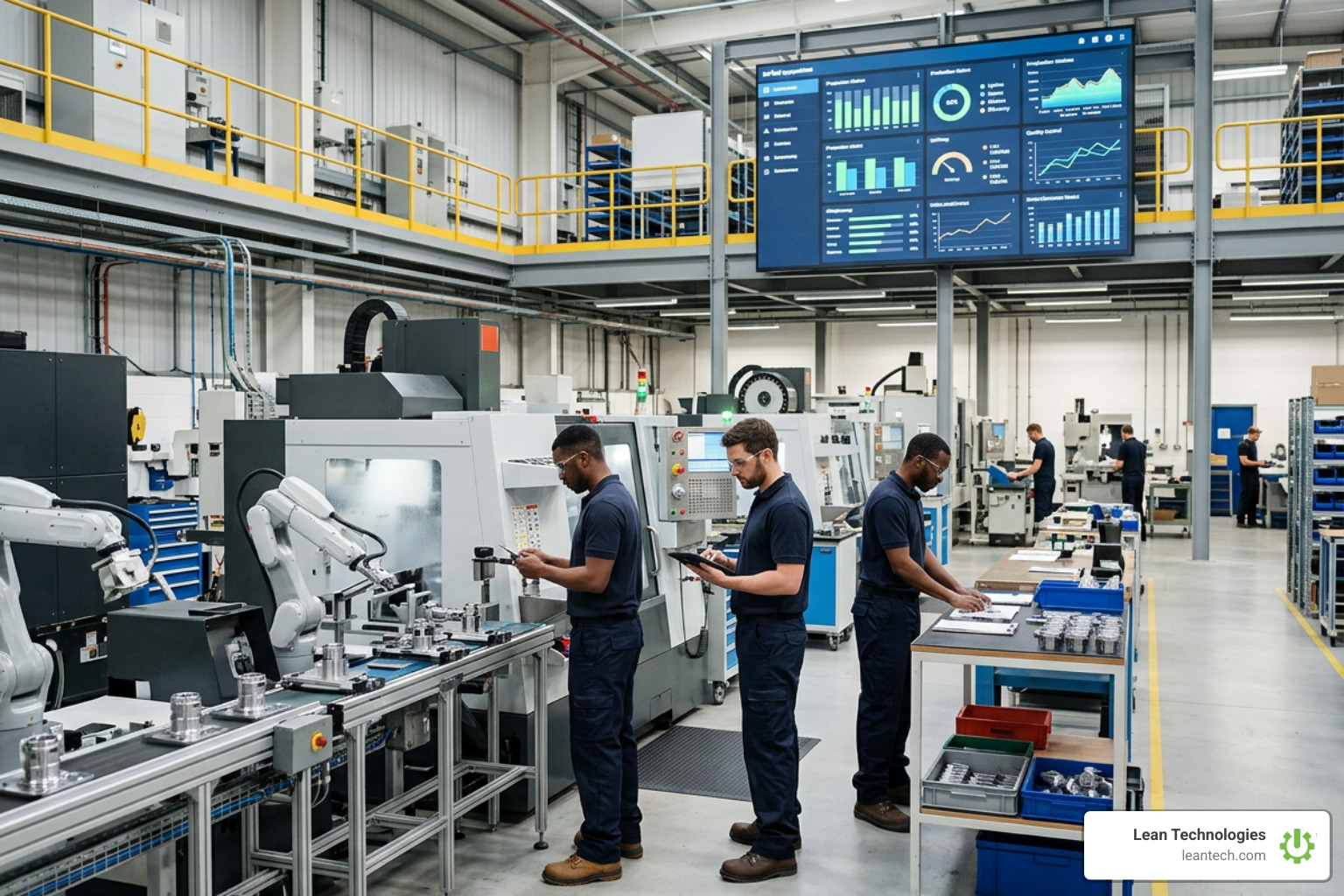
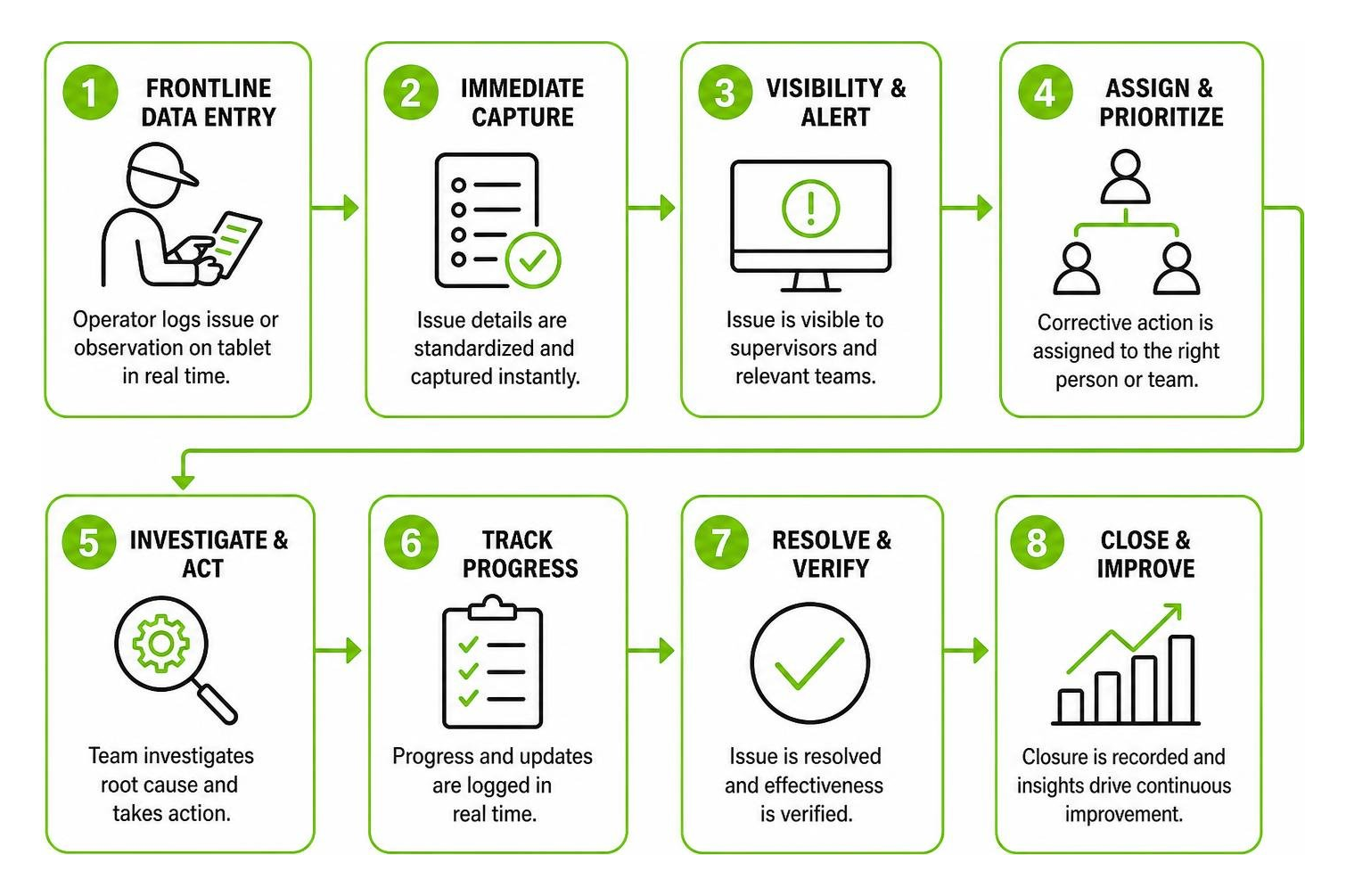
A Thrive integrated manufacturing solution enables smarter shop floor actions through structured real-time data logging by capturing frontline machine events, quality deviations, and maintenance needs directly at the source. Instead of allowing operational disruptions to get lost across handwritten notes or delayed shift summaries, digital logging immediately converts operator inputs into structured, assignable tasks that prevent downtime.
Adopting digital lean management bridges the gap between daily factory reality and high-level planning. When frontline teams encounter unexpected downtime or scrap spikes, traditional communication delays can derail an entire production schedule. Shop Floor Management Software by Thrive provides an accessible, intuitive execution layer that captures reality as it unfolds, giving teams standard operational workflows without disrupting core business systems.
Why Small to Midsize Plants Need a Thrive Integrated Manufacturing Solution
Small to midsize manufacturing facilities face a distinct challenge: high production complexity with lean administrative overhead. Large enterprises may throw millions at heavy custom software, but midmarket plants need practical agility. Frontline supervisors often juggle spreadsheets, paper logs, whiteboard notes, and verbal requests just to get through a single shift.
When a machine jams or a part runs out of spec, relying on manual paperwork creates a massive blind spot across the plant floor. By the time someone types those notes into an end-of-day report, multiple hours of production are already lost. Equipping operators with direct mobile or tablet logging removes this lag, standardizing how issues are recorded so nothing slips through the cracks.
Coexisting with Legacy ERP and MES Systems
A frequent misconception on the shop floor is that fixing workflow friction requires replacing the enterprise resource planning (ERP) or manufacturing execution system (MES). In reality, forcing operators to execute lean routines inside bulky transactional software often backfires into broken workflows and low adoption.
Thrive acts as a complementary frontline layer rather than an ERP or MES replacement. By serving as an accessible manufacturing operations management platform, it handles daily problem-solving, task escalation, and continuous improvement tracking. The ERP manages inventory valuation, order intake, and financial accounting; Thrive organizes the human actions required to keep lines running smoothly.
Core Pillars of Connected Shop Floor Management
Connected shop floor management is not about accumulating endless data. It is about converting frontline observations into structured ownership. The core framework focuses on three clear operational disciplines: Organization, Visibility, and Accountability.
Implementing a cohesive digital lean manufacturing framework unites these pillars so team members spend less time asking for updates and more time resolving root causes across plant operations.
Organization: Centralizing Actions and Eliminating Disconnected Spreadsheets
Scattered spreadsheets create information silos where task lists, maintenance requests, and audit findings drift apart. When continuous improvement ideas live on sticky notes and safety audits sit in physical binders, leaders lack a single source of truth across shifts.
Using an all-in-one manufacturing control tool centralizes tasks, projects, and work orders onto a unified screen. Operators and managers no longer waste time cross-referencing disjointed documents; every open issue is categorized, prioritized, and linked directly to the relevant production cell or asset.
Visibility: Real-Time Insights Sourced Directly from Operators
True operational transparency cannot be generated after the fact. Thrive provides real-time visibility only when processes are structured and data is entered directly at the source via mobile devices, tablets, or desktop stations.
When an operator logs a micro-stop or a quality deviation immediately, supervisors see the operational picture in real time. This immediate insight transforms shift handovers from vague verbal recaps into structured reviews supported by clear, time-stamped records that highlight recurring downtime causes.
Accountability: Structured Escalation Paths and Task Ownership
Logging an issue solves nothing if no one owns the resolution. Without automated workflows, tasks assigned in morning meetings often sit untouched for days.
Thrive addresses this by attaching clear task ownership, target dates, and automated escalation triggers to every logged event. If a maintenance request or quality hold remains unaddressed beyond a defined window, the system automatically alerts secondary owners. This structure keeps teams aligned and ensures small operational hiccups do not linger into costly downtime events.
Operationalizing Lean Principles Across Core Factory Functions
Lean principles rely on eliminating waste (muda) and establishing standard work. When applied digitally, lean manufacturing moves away from passive documentation and becomes an active part of the shift routine through practical shop floor management.

Deploying the Thrive Integrated Manufacturing Solution for Maintenance and Quality
Maintenance and quality teams thrive on proactive structure. When maintenance relies on reactive calls, machines run to failure, and unrecorded work orders obscure recurring mechanical problems. Implementing a structured maintenance work order system enables technicians to log preventive checks, capture repair details, and track asset history directly at the machine.
Similarly, pairing frontline logging with dedicated quality software allows operators to flag non-conformances instantly. By documenting scrap reasons and out-of-spec dimensions at the moment they occur, quality managers can quarantine parts faster, isolate bad batches, and protect downstream deliveries.
Driving Continuous Improvement and Daily Kaizen Routines
Traditional Kaizen boards often fail because physical sticky notes lose context and follow-up actions stall. Integrating a digital continuous improvement management system into daily stand-up huddles ensures every frontline suggestion has an assigned owner, a clear due date, and measurable verification metrics.
Operational Function | Manual / Spreadsheet Tracking | Digital Lean Logging via Thrive |
|---|---|---|
Issue Capture | Paper logs, verbal updates, sticky notes | Immediate mobile/tablet data entry at the workstation |
Shift Handovers | Inconsistent verbal recaps, missing context | Time-stamped, structured log of open and resolved events |
Action Tracking | Static spreadsheets updated days later | Live task assignments with clear individual ownership |
Escalation | Manual follow-ups, forgotten tasks | Automated notifications triggered by overdue deadlines |
Data Flow | Isolated files, duplicate manual entry | Centralized database accessible across plant departments |
Continuous Improvement | Unclosed suggestion loops, lost records | Digital Kaizen tracking from idea submission to verification |
Integration Architecture, Deployment Options, and Transparent Pricing
Modern operational software must integrate cleanly into existing factory IT infrastructure without creating security risks or operational friction. Implementing a modern smart manufacturing platform should simplify technology stacks rather than complicate them.
Connecting Machine Data and Enterprise Systems via Open API
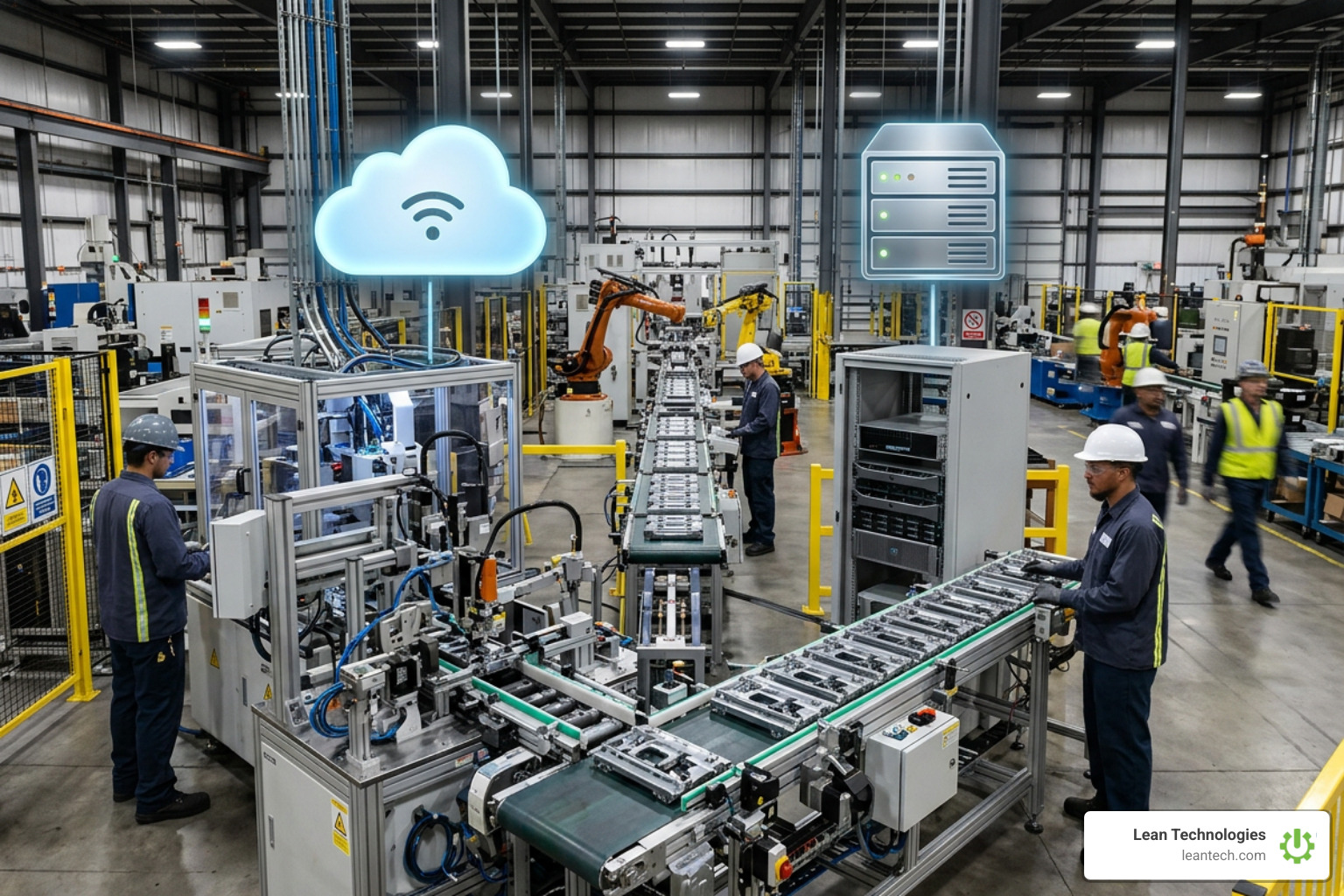
Thrive does not collect sensor signals directly or run automated predictive algorithms. Instead, it serves as an execution and action engine. It organizes action from machine data entered manually by operators or imported from external systems via an open REST API.
Through this API, plants can relay production counts, error codes, and work order statuses between legacy ERPs, production schedules, and shop floor modules. This ensures data entered on the floor syncs with enterprise systems without forcing teams to double-enter numbers.
Evaluating Hosted Cloud vs. On-Premise Deployments
Every manufacturing environment has unique IT governance, data residency, and infrastructure requirements. Thrive provides transparent deployment options designed to get facilities up and running in days or weeks rather than months:
Thrive Module Hosted ($600/month): A cloud-hosted tier for plants looking to digitize a specific operational functional area with unlimited users and all module features included.
Thrive Connected Hosted ($950/month, billed annually): A comprehensive cloud package connecting multiple functional modules across the shop floor with full API integration and unlimited users.
Thrive On-Premise ($40,000 one-time license): A perpetual deployment option for facilities requiring full internal hosting, on-site data sovereignty, and internal network integration.
Frequently Asked Questions About Shop Floor Execution Platforms
How does Thrive integrate with existing factory ERP and machinery?
Thrive integrates through a secure, open REST API and straightforward data import tools. It does not replace ERP or MES platforms; instead, it synchronizes execution data, work orders, and production updates between existing business software and frontline operators.
Does Thrive require automated IoT sensors to work?
No. Thrive is designed to organize action around data entered by operators, maintenance technicians, and supervisors via mobile phones, tablets, or desktop workstations. It can also organize data imported from connected systems, turning machine records into assigned tasks without needing dedicated IoT hardware.
What deployment options and pricing models are available?
Thrive offers hosted cloud subscriptions starting at $600/month for single modules, $950/month (billed annually) for connected platforms, and an on-premise perpetual license for $40,000. All tiers include unlimited users and continuous platform upgrades.
In summary
Transforming frontline performance does not require multi-year enterprise software overhauls or complex sensor networks. Real operational gains come from eliminating paper workarounds, capturing accurate data at the machine, and holding teams accountable to defined actions.
By implementing a Thrive integrated manufacturing solution, small to midsize plants can centralize communication, streamline maintenance and quality, and close continuous improvement loops quickly. Explore the guide to digital lean manufacturing to see how simple, structured real-time data logging turns daily shop floor updates into lasting operational excellence.