
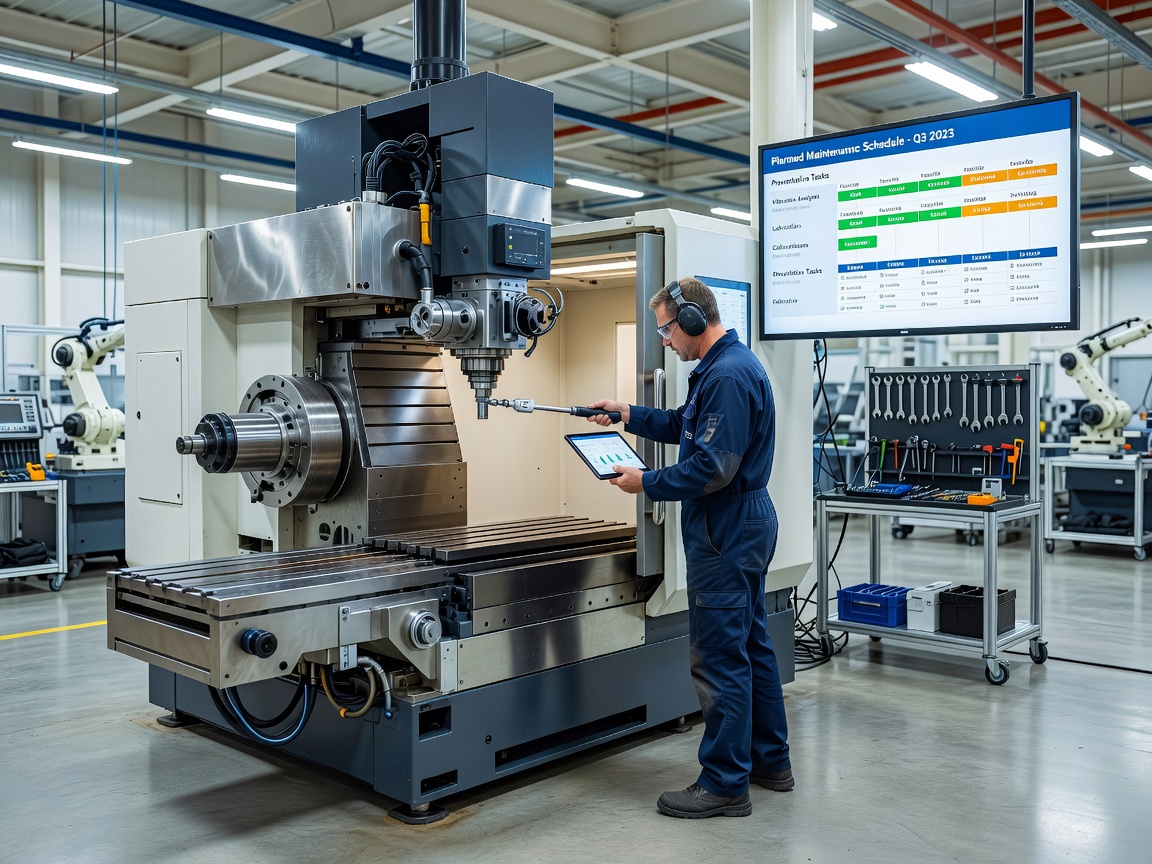
A Comprehensive Guide to Planned and Preventative Maintenance
Unplanned line stops, reactive fire-fighting, and scrambled shift handoffs burn through maintenance budgets and wreck production targets. Equipment begins to age the day it is installed: mechanical parts wear out, foundations settle, and electrical components degrade. Managing this natural aging process through a structured planned and preventative maintenance strategy helps ensure that small, manageable wear items do not turn into catastrophic line shutdowns.
Establishing routine maintenance loops shifts plant culture from constant crisis management to predictable production scheduling. When technicians systematically inspect, clean, and service assets, operations run smoothly, team morale improves, and overall plant output stabilizes.
Core Differences in Planned and Preventative Maintenance Schedules
While often spoken of together, planned maintenance and preventive maintenance represent slightly different aspects of proactive asset management:
Planned Maintenance: Refers to any work that is identified, scoped, estimated, and scheduled in advance. This includes preventive tasks, but it also covers planned overhauls, planned component replacements, tooling changes, or facility upgrades scheduled during planned downtime.
Preventative Maintenance (PM): Focuses specifically on routine inspection, cleaning, adjustment, lubrication, and minor part replacement carried out on designated intervals to prevent equipment failures before they happen.
To dig deeper into structured maintenance scheduling and downtime prevention, explore our detailed breakdown on Planned Maintenance.
Reactive vs Planned Maintenance Cost Comparison
Relying on reactive maintenance (run-to-failure) creates severe administrative and operational drag. Unplanned maintenance typically costs three to five times more than planned maintenance. Furthermore, industry research shows that every dollar of deferred maintenance spending can lead to a fourfold increase in future repair costs.
When an asset breaks down unexpectedly, you are not just paying for the replacement part. You face emergency technician overtime, expedited freight fees for components, scrap production, and lost revenue from missed delivery deadlines. Moving to a structured maintenance model cuts down emergency responses, extends asset useful life, and stabilizes your operational budget.
Key Types and Methodologies of Maintenance Management
Choosing the right maintenance strategy requires understanding standard technical classifications across industrial operations, property management, and standardized Maintenance concepts.
Maintenance Type Trigger Mechanism Primary Use Case Cost & Complexity Time-Based Calendar intervals (e.g., weekly, monthly) General inspections, filter replacements Low setup cost, simple to manage Usage-Based Operational units (e.g., operating hours, cycles) High-wear components, fleet vehicles Moderate; requires usage tracking Condition-Based Sensor thresholds (e.g., temperature, vibration) High-criticality machinery, continuous plants Higher initial hardware & software cost
Time-Based and Usage-Based Maintenance
Time-based (calendar-driven) maintenance relies on set intervals, such as servicing a compressor every 30 days regardless of output volume. Usage-based maintenance relies on operational milestones, such as lubricating motor bearings every 500 running hours or replacing tooling every 10,000 cycles. Both strategies depend heavily on OEM guidance, statutory compliance needs, and historical wear patterns. Standardizing these task intervals ensures routine upkeep happens before wear leads to failure.
For additional context on structuring periodic inspection loops and establishing disciplined routines, read our guide on Post/Preventive And Periodic Maintenance.
Condition-Based, Predictive, and Prescriptive Approaches
As facilities mature, maintenance shifts toward continuous asset monitoring:
Condition-Based Maintenance (CBM): Tasks are triggered when sensor indicators signal performance decline (e.g., thermal imaging showing electrical hotspotting or oil analysis indicating contamination).
Predictive Maintenance (PdM): Analyzes historical sensor telemetry and vibration data to forecast exact failure windows, reducing asset downtime by 35% to 45% and breakdowns by 70% to 75%.
Prescriptive Maintenance: Uses advanced modeling to recommend specific operational changes (such as dialing back machine speed or adjusting load balancing) to extend asset life until a maintenance window opens.
Note on software roles: Specialized platforms process sensor telemetry to generate alerts. Software like Thrive does not collect raw sensor data directly or run predictive algorithms; instead, it provides the flexible digital toolbox that organizes follow-up actions from machine data entered by teams or imported from external systems.
Building an Effective Maintenance Program Across Operations
Setting up a proactive maintenance culture involves balancing team resources, safety compliance, and loss prevention guidance (such as standard Maintenance Program Elements).
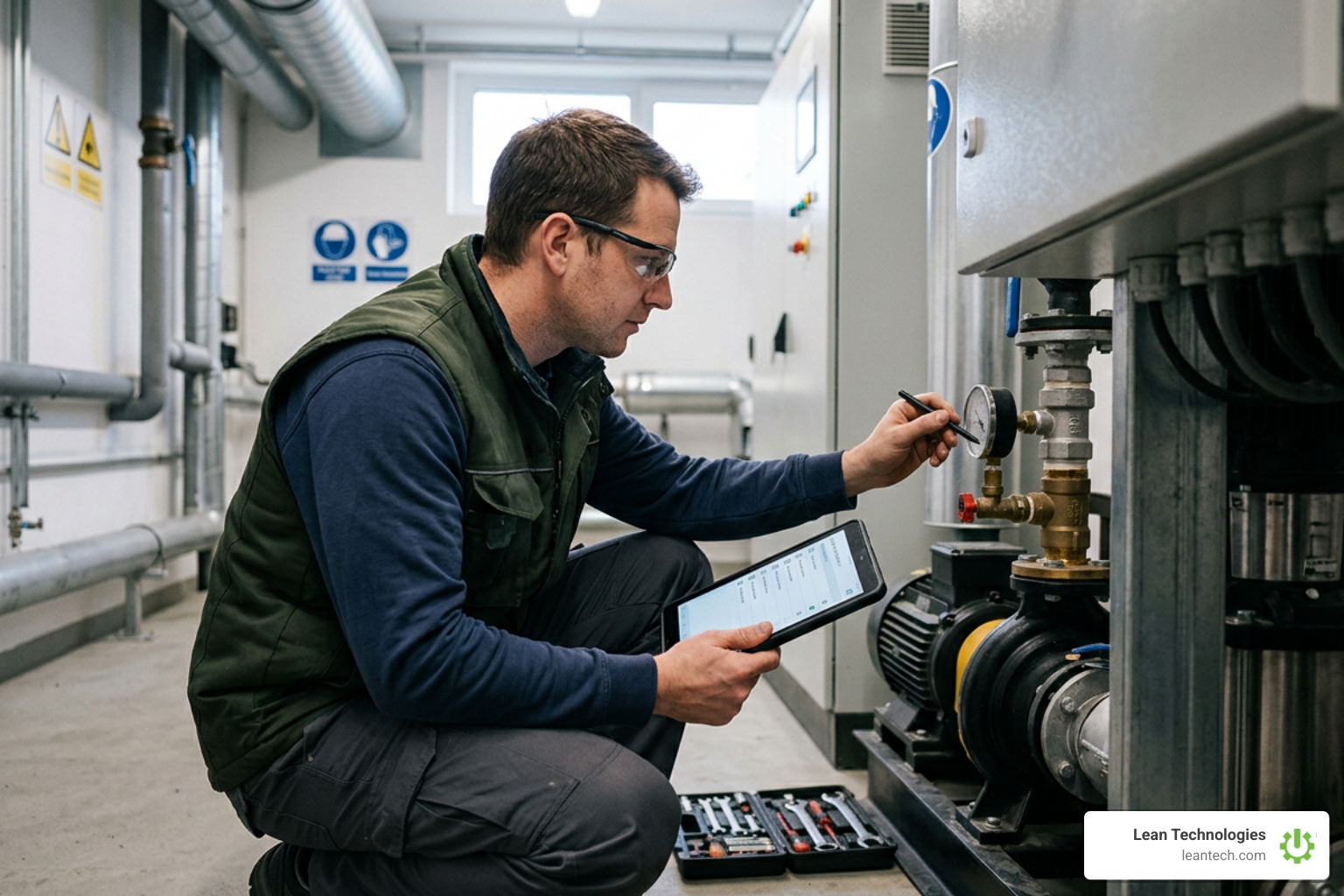
Step-by-Step Implementation of Planned and Preventative Maintenance Plans
Creating a successful maintenance plan follows a direct 5-step process:
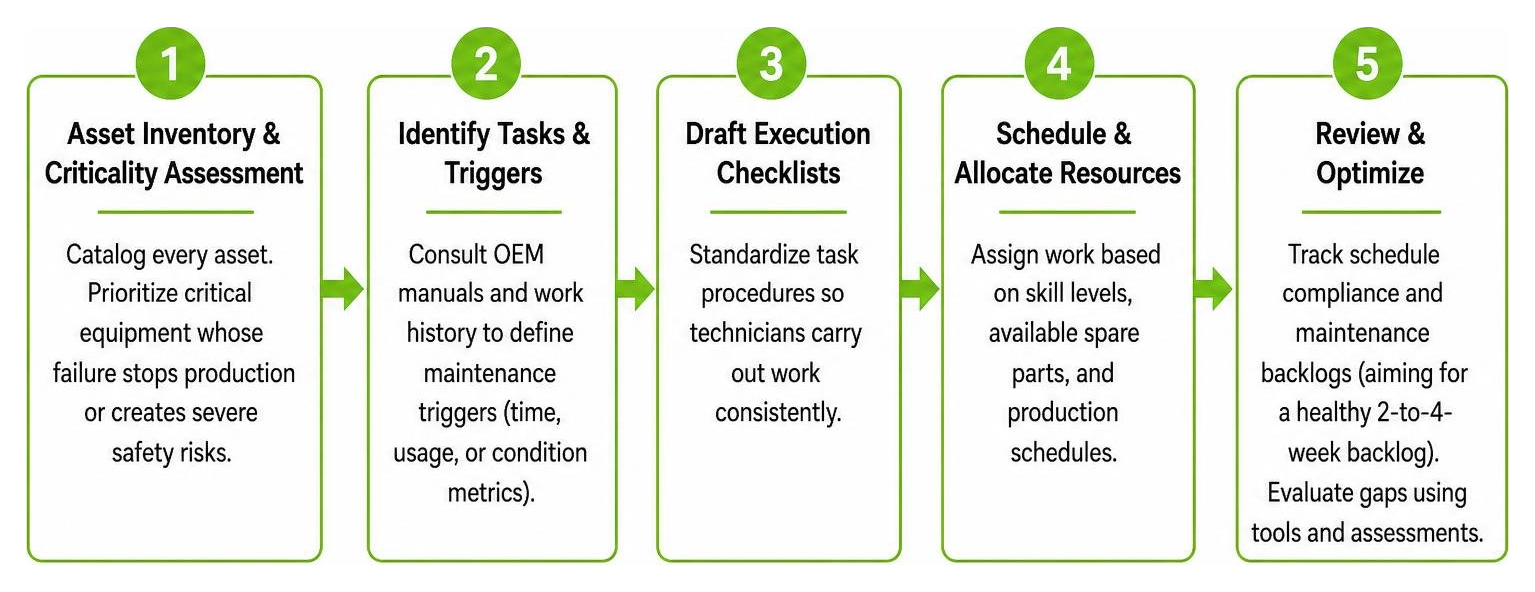
Asset Inventory & Criticality Assessment: Catalog every physical asset across your facility. Prioritize critical equipment whose failure stops production, creates bottleneck risks, or threatens operator safety.
Identify Tasks & Triggers: Consult OEM manuals, engineering specs, and past work history to define maintenance triggers (time, usage, or condition metrics) alongside exact work steps.
Draft Execution Checklists: Standardize task procedures so technicians carry out work consistently, eliminating guesswork and ensuring quality across all shifts.
Schedule & Allocate Resources: Assign work based on skill levels, available spare parts, and production schedules to minimize interference with operational targets.
Review & Optimize: Track schedule compliance and maintenance backlogs (aiming for a healthy 2-to-4-week backlog). Evaluate gaps using tools like a Pm Gap Report or run interactive assessments with a Pm Gap Report Quiz.
Compliance, Safety, and RICS Property Standards
Preventative maintenance must incorporate strict safety protocols. Standard work orders should integrate OSHA compliance guidelines, Personal Protective Equipment (PPE) requirements, and Energy Control Procedures (Lockout/Tagout). Ensuring technician safety during routine checks is as critical as machine uptime.
For physical infrastructure and facility management, built-asset maintenance aligns with standards like Planned preventative maintenance guidelines published by RICS. Incorporating standard audits and Safety Audits into scheduled maintenance loops guarantees both machine reliability and regulatory compliance.
Modern Tools and Software Supporting Proactive Maintenance
Managing maintenance via paper forms, whiteboard notes, or disconnected spreadsheets makes it difficult to analyze failure trends, track backlogs, or manage spare parts costs. Dedicated maintenance management software transforms how daily operational work gets organized and executed.
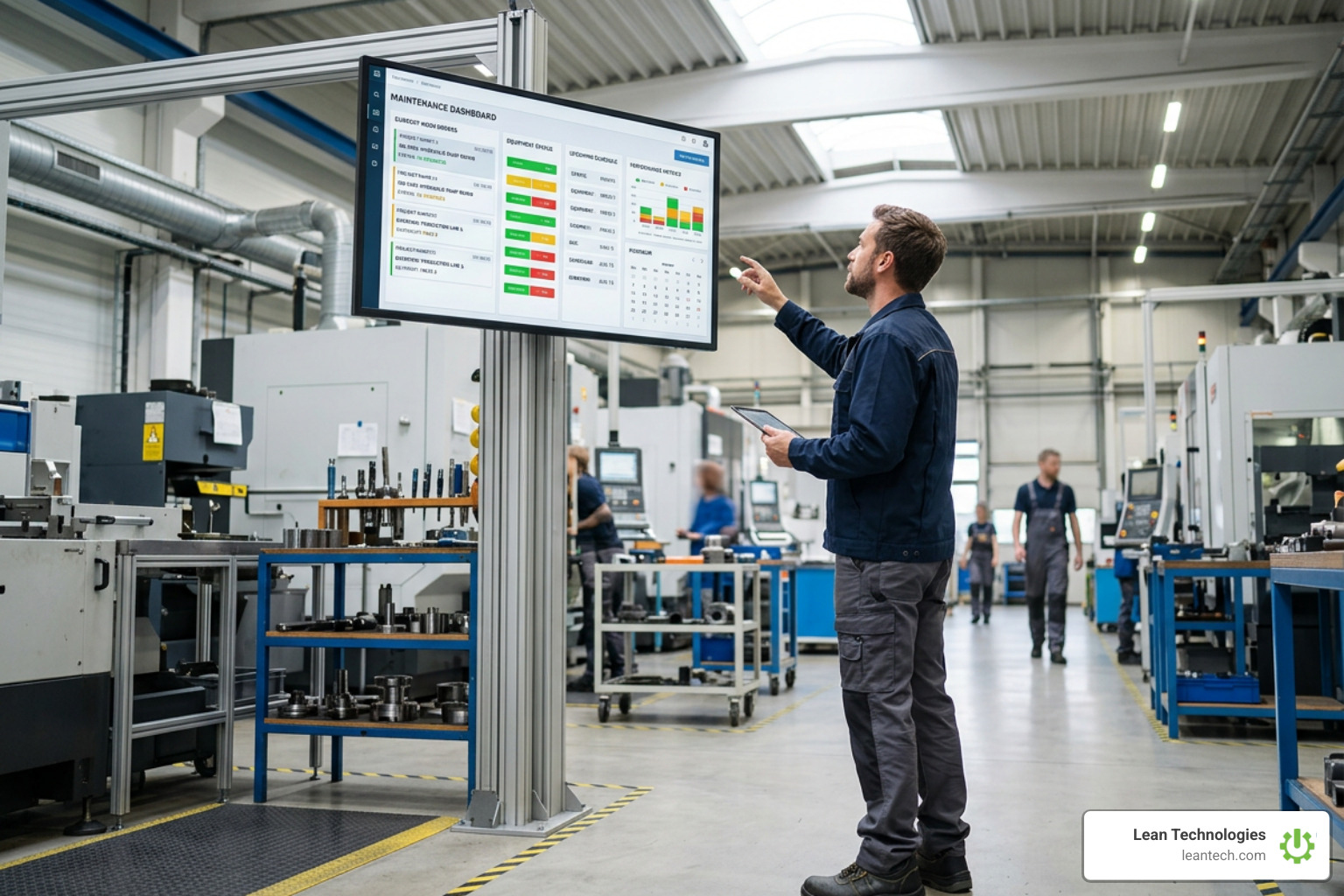
Core Software Features for Tracking and Automation
Modern software platforms like a specialized cmms streamline maintenance administration through key operational features:
Work Request Management: Centralizes incoming work requests through a clear Work Request Queue to prevent reported shopfloor issues from getting lost or forgotten.
Asset History & Tracking: Maintains complete visibility using detailed Equipment Asset Tracking and full Work Order History to identify chronic failure patterns.
Inventory Control: Connects routine checks with Parts Management and automated Purchasing Suggestions to eliminate maintenance delays caused by missing spare parts.
Mobile access on the shop floor is critical: mobile tools have been shown to improve work order response times and tracking for 73% of facility services providers, while reducing administrative workflow redundancies for 62%.
Potential Risks and Over-Maintenance Management
While proactive care is essential, over-maintenance can create unnecessary operational costs. Disassembling machinery too frequently increases labor expenses, consumes spare parts prematurely, and adds the risk of reassembly errors or infant mortality failures.
To maintain optimal labor balance, plant leaders should aim for high wrench time (targeting ~55% productive craftsperson work) and verify that task frequencies match actual operational risks rather than arbitrary schedules.
Frequently Asked Questions About Planned Maintenance
What is the ROI of implementing a preventative maintenance strategy?
Transitioning to proactive maintenance delivers major financial returns by eliminating unplanned downtime, extending asset operational life, and reducing emergency repair fees. For example, a telecommunications study by Jones Lang LaSalle showed a 545% return on investment after rolling out a structured preventive maintenance plan. Similarly, educational institutions like King's College London cut their maintenance backlog by 50% within three months of switching from reactive repairs to preventative scheduling.
How does a PPM survey differ from technical due diligence?
A Planned Preventative Maintenance (PPM) survey is an ongoing operational management tool used by current asset owners to budget maintenance expenditure and capital replacements over a 5-to-10-year period (and up to 30 years for long-term reserves). Technical Due Diligence (TDD), by contrast, is a specialized physical inspection conducted during property or business acquisition to assess immediate commercial risks and liabilities when asset ownership changes.
What ratio of proactive to reactive maintenance should facilities aim for?
World-class operational standards recommend that 85% or more of all maintenance work hours be proactive (planned and preventative), leaving no more than 15% for unexpected breakdown responses. Furthermore, schedule compliance for planned preventive maintenance tasks should target 95% to prevent backlogs from accumulating.
What to do next: Accelerating Operations with Digital Lean Maintenance
Transitioning away from paper workarounds, late downtime logs, and unclosed continuous improvement loops does not require an expensive multi-year software overhaul.
Thrive is a digital platform built for small to midsize manufacturers to digitize lean work processes in real time without replacing ERPs or MES systems. Positioned as a flexible digital toolbox for logging issues, tracking actions, and driving continuous improvement, Thrive is not an ERP or MES system, but rather the fastest path to structured, accountable work processes.
Real-time visibility occurs only when processes are structured and data is entered at the source via mobile, tablet, or desktop. By building team accountability around daily maintenance execution, you establish a solid foundation for sustainable productivity and growth.
To learn more about connecting maintenance task execution directly to shopfloor continuous improvement, check out our comprehensive Guide To Digital Lean Manufacturing or explore our practical tools for organizing Planned Maintenance today. Bringing real-time structure to your planned and preventative maintenance strategy keeps your operations reliable, safe, and profitable.