
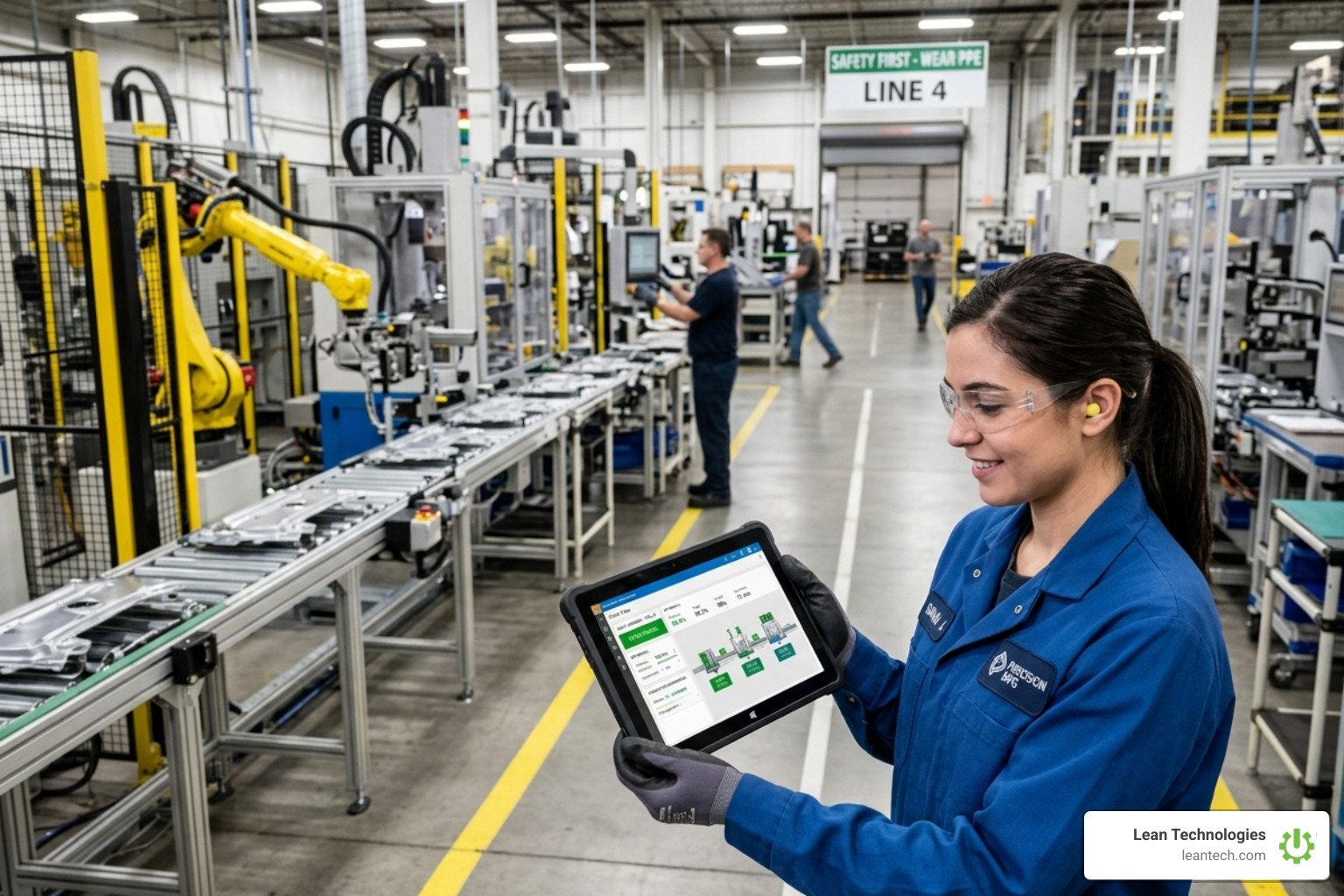
Beginner's Guide to Manufacturing Software
The Real Cost of Running Your Shop Floor Without Real-Time Data
Manufacturing software is any digital tool designed to help production teams plan, track, and improve operations — from scheduling and inventory to quality control and maintenance.
Here's a quick breakdown of what it covers:
Category What It Does Production Planning Schedules jobs, manages BOMs, tracks work orders Inventory Management Monitors stock levels, triggers replenishment Shop Floor Control Tracks labor, machine status, and output in real time Quality & Compliance Logs defects, manages audits, ensures traceability Maintenance (CMMS) Schedules PMs, reduces unplanned downtime CI & Lean Tools Tracks issues, closes action items, drives improvement
If you're an operations manager, you already know the feeling. The shift ends, someone hands you a paper log, and you're trying to piece together what actually happened — hours after it mattered. That's not visibility. That's history.
The problem isn't effort. Your team is working hard. The problem is the tools don't match the pace of the floor. Spreadsheets break down. Whiteboards don't scale. And most ERPs are built for accountants, not operators.
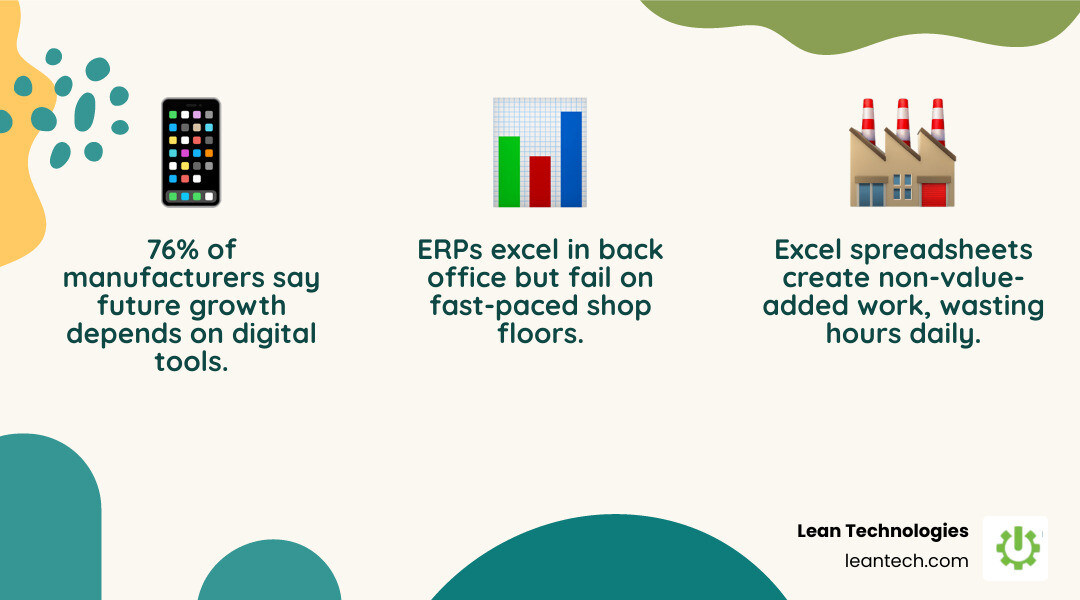
The numbers back this up. According to recent industry research, 76% of manufacturers believe future growth will depend on digital tools — yet a fraction of shops have actually made the shift. There's a gap between knowing you need to change and knowing where to start.
That's exactly what this guide is for. No jargon. No sales pitch for a system that costs six figures and takes two years to implement. Just a clear look at what manufacturing software actually does, what it costs, and how to choose something your team will actually use.
Why Your Shop Floor Needs Digital Tools
The "Excel Trap" is a quiet killer. It starts with one spreadsheet to track downtime. Then another for quality. Before you know it, your supervisors are spending two hours a day "feeding the beast" instead of coaching operators. This is the definition of non-value-added work.
General Enterprise Resource Planning (ERP) systems are great for the back office. They handle the taxes, the high-level purchasing, and the payroll. But they often fall flat on the shop floor. Why? Because they weren't built for a guy with greasy hands who needs to log a machine jam in five seconds. When software is too clunky, people go back to paper.
Industry data shows that 71% of manufacturers plan to make significant technology investments over the next three years. They aren't doing it just to be "high-tech." They’re doing it because moving from reactive to proactive operations is the only way to protect profit margins in 2026.
By adopting a Guide to Digital Lean Manufacturing, businesses move away from "real-late" data. Instead of finding out on Friday that you missed your Tuesday target, you see the red on the dashboard at 9:15 AM and fix the problem by 10:00 AM.
The Non-Negotiable Features for Real-Time Action
When you're shopping for manufacturing software, it’s easy to get blinded by fancy features you’ll never use. Forget complex 3D modeling if your team can’t even track why the line stopped. Focus on what actually drives the shift:
Issue Logging and Accountability: If an operator sees a defect, can they log it instantly? More importantly, does the right person get notified immediately?
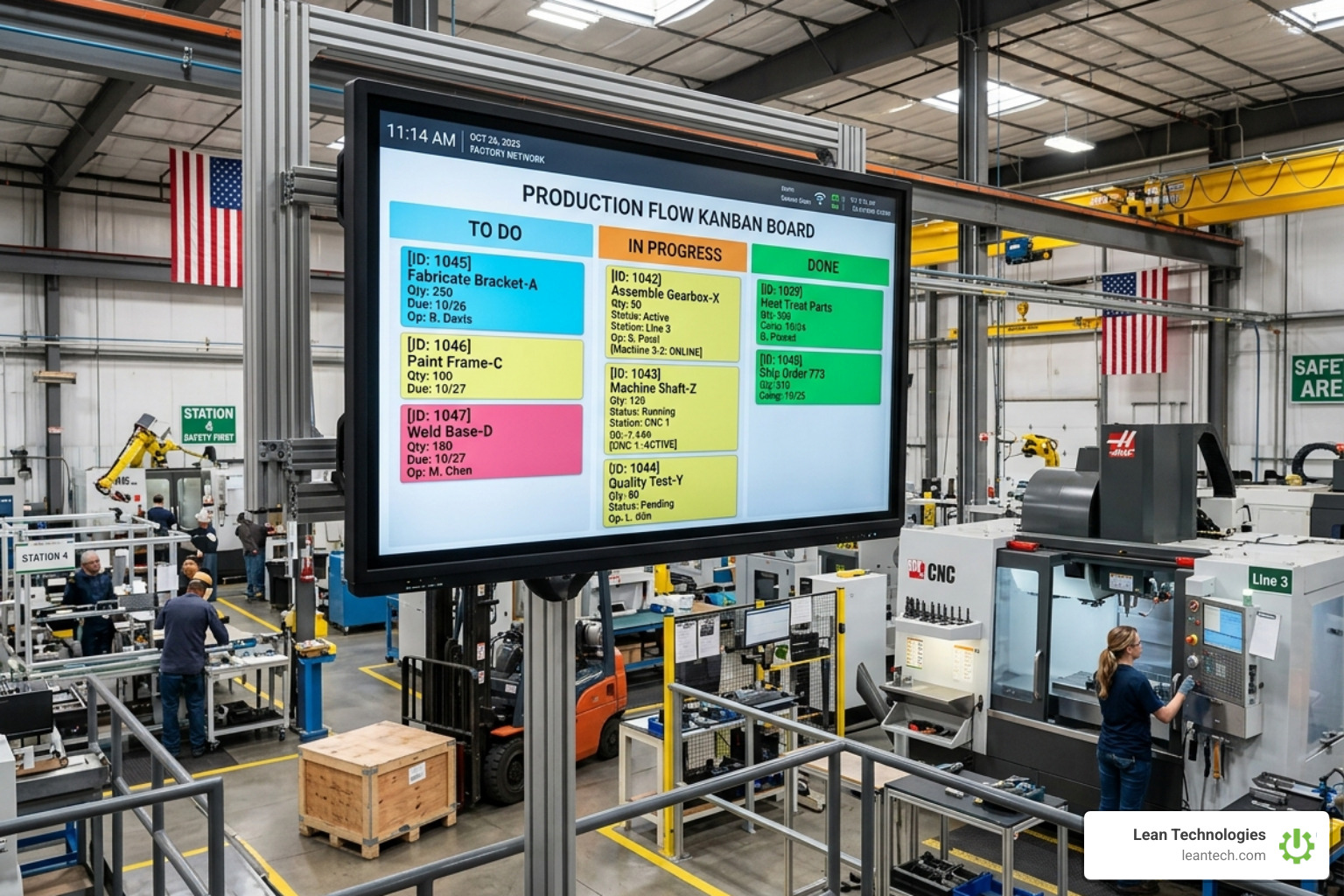
Digital Kanban Boards: Visual management is the heart of Lean. A Kanban Board Tool allows everyone to see exactly what is in queue, what’s in progress, and where the bottlenecks are.
Real-Time Action Tracking: Knowing there’s a problem is step one. Step two is seeing who is assigned to fix it and when it’s done.
Recent surveys indicate that 87% of users rate inventory management as critical, while 81% prioritize process visibility. This isn't surprising. If you don't know what you have or what your machines are doing, you're just guessing. Having a clear Work Order History allows you to spot patterns — like a specific machine that always breaks down on Thursdays — before they become catastrophes.
Selecting Software That Operators Actually Use
There is a massive difference between discrete manufacturing (making individual items like bolts or bicycles) and process manufacturing (mixing batches like food or chemicals). Your software needs to speak your language.
However, the most important metric isn't the feature list — it’s user adoption. If your operators hate the software, they will sabotage it. Look for mobile-first designs. In 2026, your team should be able to use a tablet or phone to scan a barcode, take a photo of a broken part, and move on.
Whether you are in Aerospace (where Materials Compliance is everything) or Food & Beverage (where traceability is life or death), the software must be faster than the paper it’s replacing.
Driving Shop Floor Action and Efficiency
The goal of manufacturing software is to "close the loop."
Quality Control: Instead of filing a Nonconformance report in a cabinet, digital tools allow for Defect Scrap Tracking that alerts the Quality Manager the moment a trend emerges.
Maintenance: A CMMS (Computerized Maintenance Management System) shifts you from "firefighting" to Planned Maintenance. You stop waiting for things to break and start managing Maintenance schedules based on actual machine cycles.
Safety: Safety Audits often feel like a chore. Digital checklists with photo uploads make Safety proactive. You can even manage Safety Data Sheets SDS digitally so they are always accessible.
Feature Cloud-Based (SaaS) On-Premises Setup Speed Days or weeks Months Maintenance Handled by vendor Handled by your IT Cost Monthly subscription Large upfront license Accessibility Anywhere with internet Only on-site / VPN
For small to mid-sized businesses, cloud-based solutions usually win on "speed-to-value." You don't need a room full of servers to get started. You just need a login.
Pricing and ROI: What Systems Actually Cost
Let's talk dollars. Manufacturing software pricing is usually split into two tiers:
Entry-Level: Typically starts around $450 per month. These systems usually handle the basics like inventory, simple scheduling, and Parts Management.
Premium/Enterprise: These can cost $2,500+ per month. These are often "all-in-one" ERPs that include deep financial modules and complex integrations.
The real cost, however, isn't the subscription — it's the "shelfware" risk. This happens when you buy a $50,000 system that is so hard to use that it sits on the shelf.
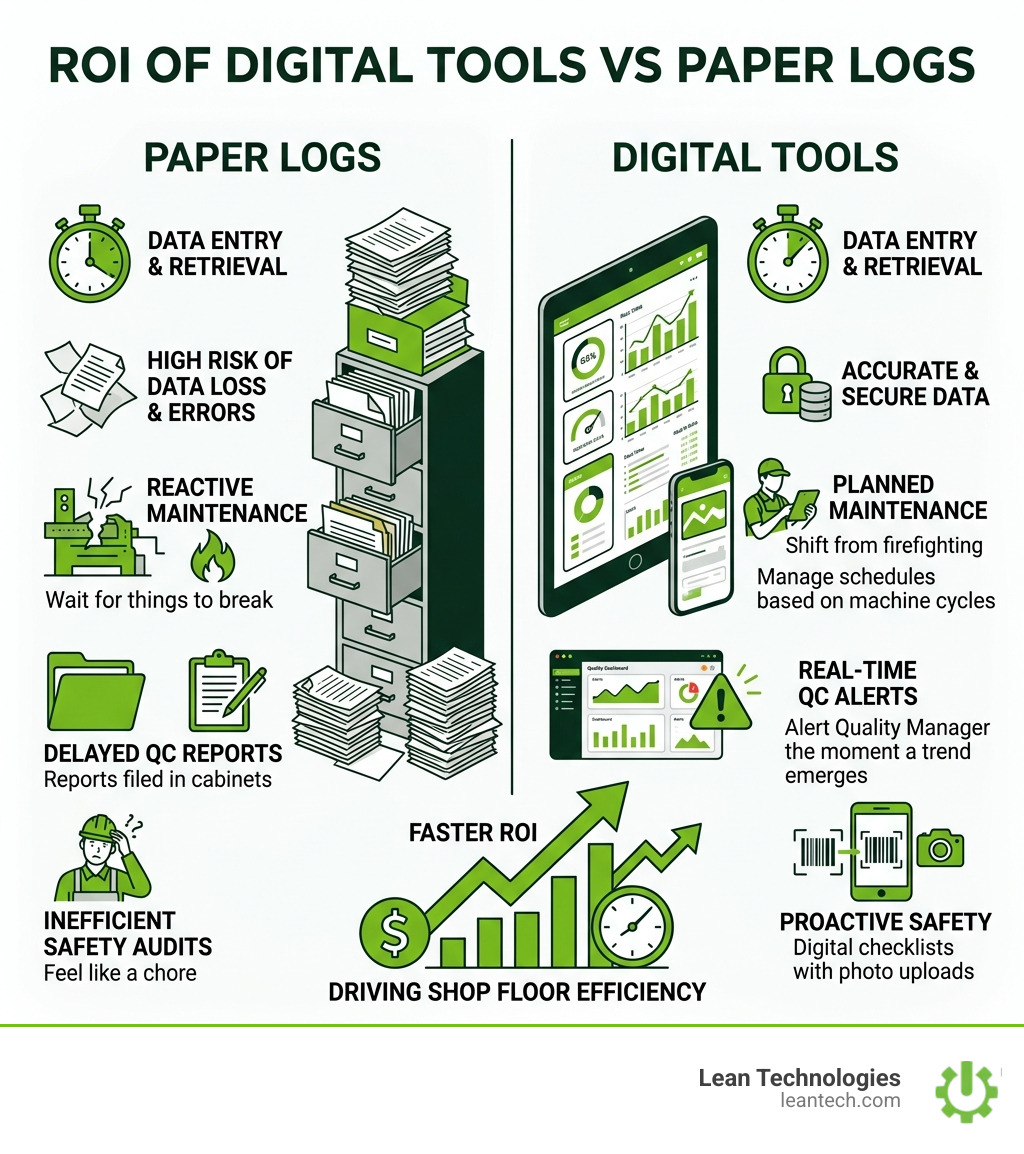
When calculating ROI, look at your downtime. If the average cost of downtime is thousands of dollars per hour, and a PM Gap Report helps you catch one major failure a year, the software has already paid for itself.
Avoiding the "Shelfware" Trap: Implementation and Trends
Roughly 38% of software implementations fail. They don't fail because the code is bad; they fail because of the "IT vs. Operations" conflict. IT wants security and "clean" data; Operations wants something that doesn't slow them down.
To succeed, you must break down data silos. Your Project Management team needs to see what the production floor is doing. Your maintenance crew needs to know when a machine is free for Gage Calibration.
The biggest trend in 2026 is AI-driven insights. We aren't talking about robots taking over; we're talking about software that looks at your Equipment Asset Tracking data and says, "Hey, this motor is running 10 degrees hotter than usual — you might want to check it."
How to Get Started Without the Headache
Talk to Your Operators First: They know where the real problems are. If they say the WiFi is spotty in the back corner, fix that before you buy software.
Start Small: Don't try to digitize the whole plant in a weekend. Start with one line or one process, like Audits or Projects.
The Power of the Free Trial: About 85% of successful adoptions start with a trial. Use this time to see if the interface is actually "thumb-friendly" for the shop floor.
Evaluate Vendors: Look for independent reviews and feedback from other manufacturing leaders to see how the software performs in high-pressure environments.
Frequently Asked Questions about Manufacturing Software
What is the difference between manufacturing shop floor software and a general ERP?
An ERP is the "brain" of the business (finance, HR, high-level planning). Shop floor software (like Thrive) is the "nervous system." It handles the real-time reactions, issue logging, and operator-level actions that the ERP is too slow to capture.
How much does manufacturing software cost for a small to midsize business?
Entry-level SaaS platforms often start around $450/month. However, for a fully integrated suite that handles quality, maintenance, and production tracking, most mid-sized shops should budget between $1,000 and $2,500 per month depending on user count.
Can manufacturing software work on tablets and mobile devices?
Yes, and in 2026, it should. If a vendor tells you their software only works on a desktop PC in the supervisor's office, walk away. Real-time data requires entry at the source.
Does this replace my existing maintenance logs?
It should digitize them. Instead of a paper binder, your Work Order History becomes a searchable database that helps you pass Thrive Quality audits with zero stress.
In Summary
At Lean Technologies, we built the Thrive platform because we were tired of seeing great manufacturing teams held back by bad tools. We aren't an ERP that tries to do your taxes. We are the digital toolbox for the shop floor, providing the manufacturing software your team needs to win.
Thrive is customizable, punchy, and built by people who have actually stood on a production line. Whether you need to tighten up your CMMS processes or you're ready to take the PM Gap Report Quiz to see where your maintenance stands, the goal is the same: Real-time visibility.
Stop managing by wishful thinking. Continuous improvement isn't a destination you reach; it’s a journey you track. Ready to see what your shop floor is actually capable of with the right manufacturing software?